
Rejuvenation only
$1.40 per sq ft ($140 a square)
- For sound, older shingles with no mold, algae or moss to clean off
- Free inspection and mold and lichen check first, with photos
- $1,500 minimum
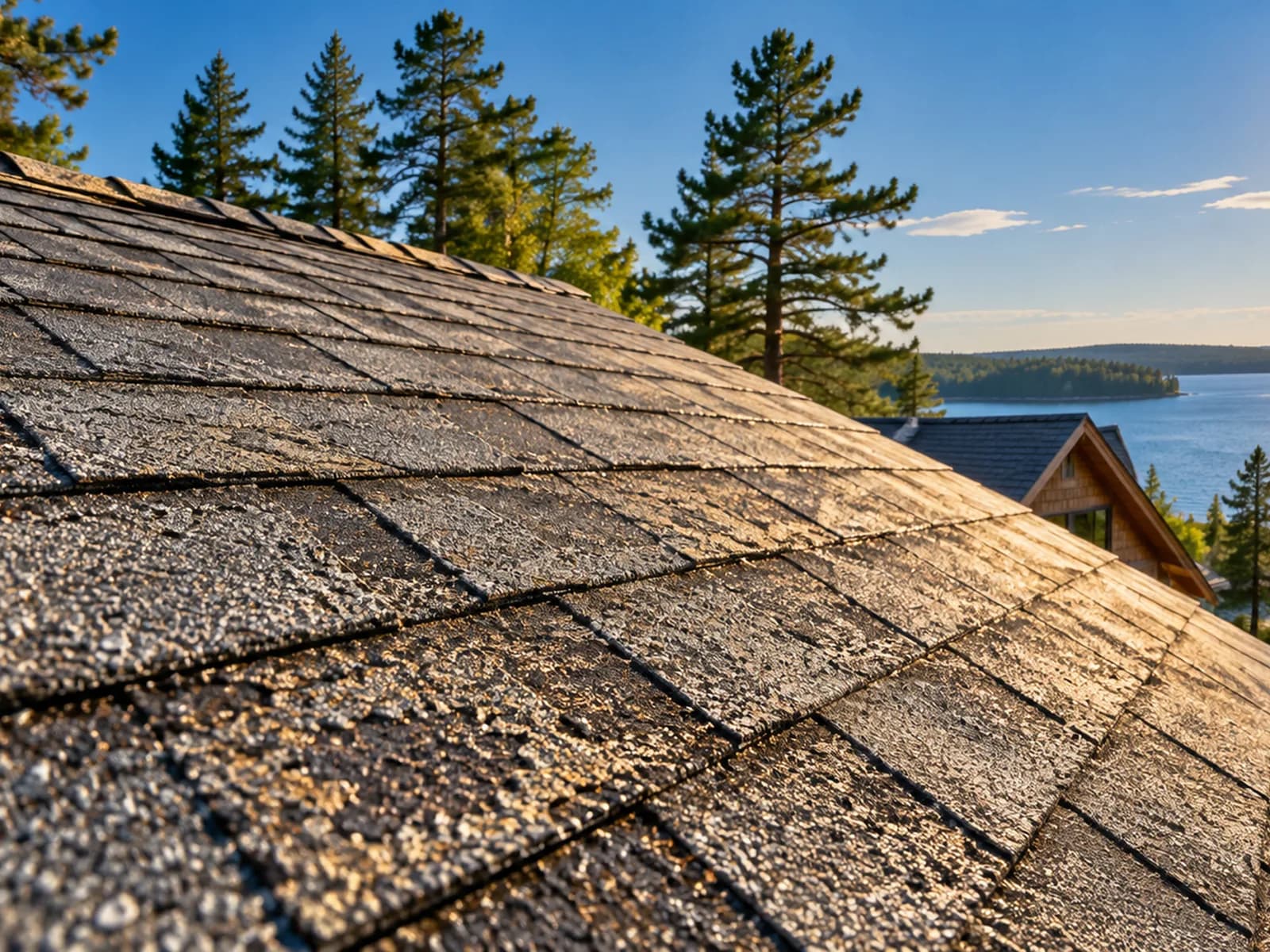
Every roof starts with a free mold and lichen assessment: photos, a granule check and a talk with you before we touch anything. We add a low-pressure soft wash to a rejuvenation for $0.40 per square foot when the roof needs it. Lichen is different, so we look first. Every job is different.
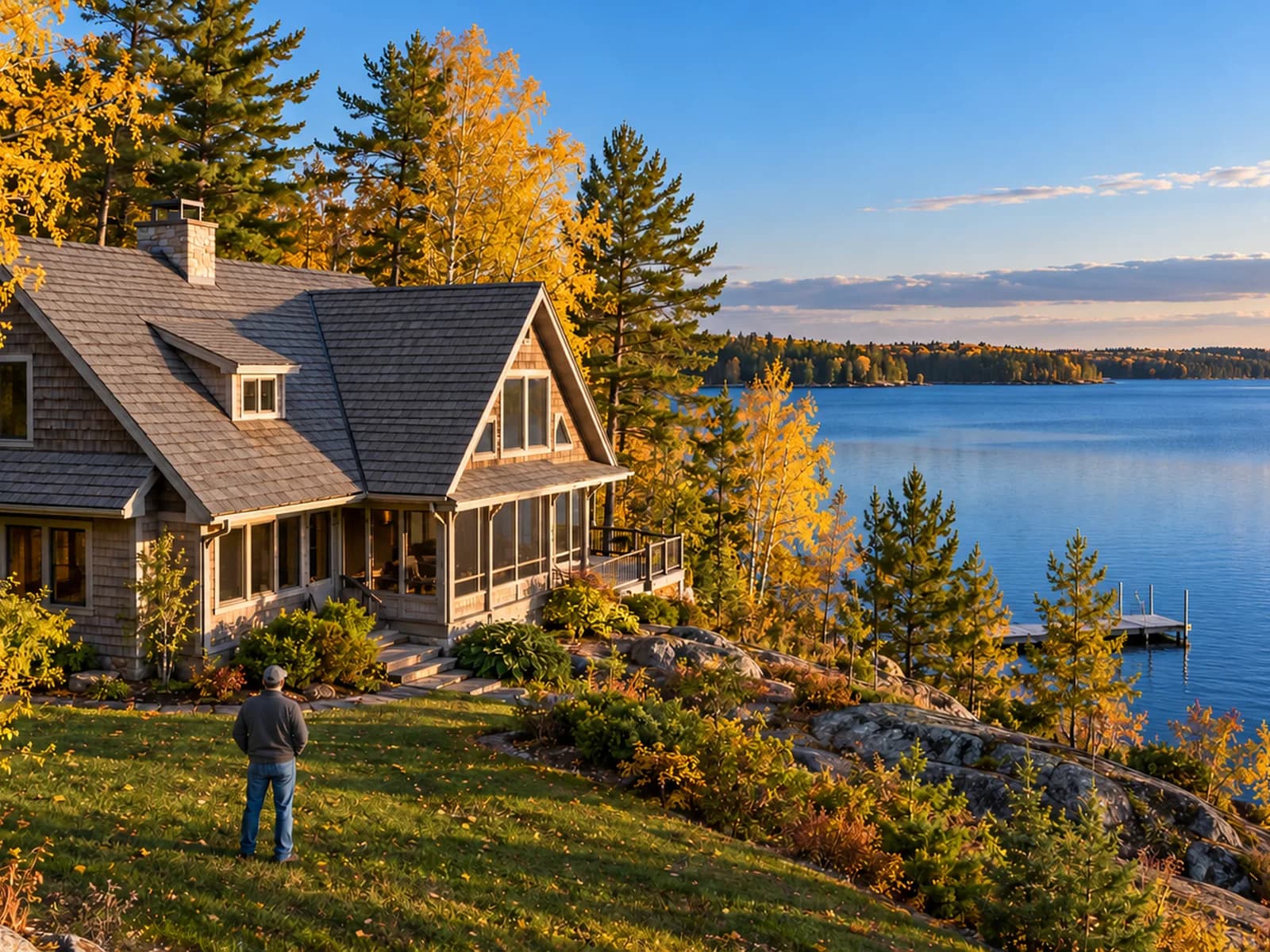
Algae is the dark streak you see on many roofs. It is a thin stain, and the shingle industry group ARMA names one kind, Gloeocapsa magma, as the most common cause. Moss is thick, green and fuzzy. Mold and mildew show up as dark spots that look a lot like algae. Lichen is the crusty, scaly patch that holds on tight.
They need the same things to grow: damp and shade. They do not do the same things to your shingles. That is why we start by finding out which one you have.
You can tell a lot from the ground. Do not climb up and scrape to find out.
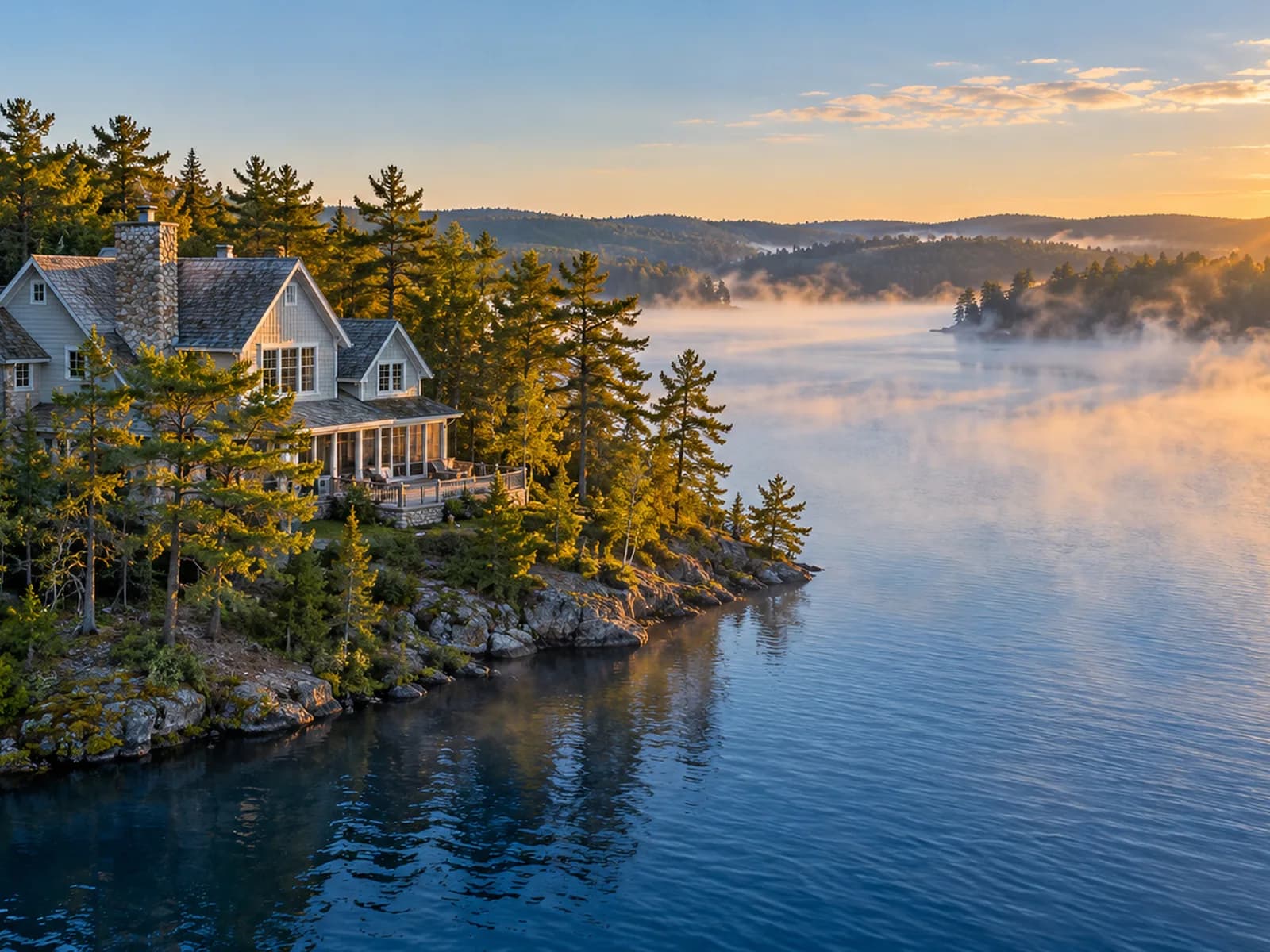
GAF, a shingle maker, says algae need moisture and that dew is the main source. They also say it grows mostly on north-facing slopes, which get the least sun.
Around the lakes there is more to it. Tall pines throw shade all day. Needles and leaves pile up in the valleys and hold water. Lake air keeps things damp. A north slope under trees can stay wet long after the rest of the roof dries.
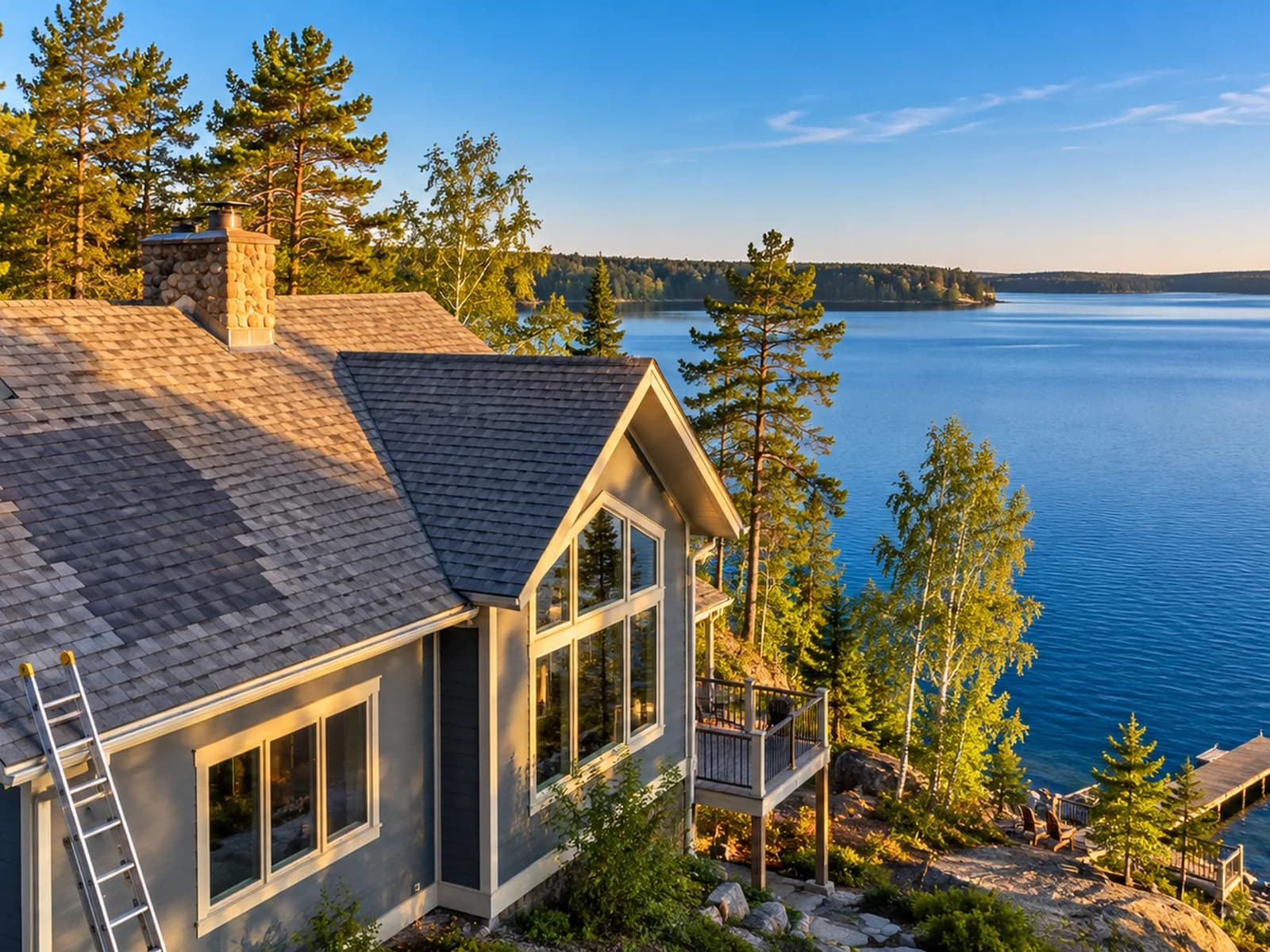
Clumps of mold, mildew and moss sit on top of the shingle. A soft wash kills them and rinses them away. The roof comes back to its true color. A gentle wash does not pull granules off the way scrubbing does.
Moss is the one to watch. It acts like a sponge and holds water against the roof. The Oregon State University Extension says to trim trees so the sun reaches the roof, because cleaning alone will not stop it from coming back.
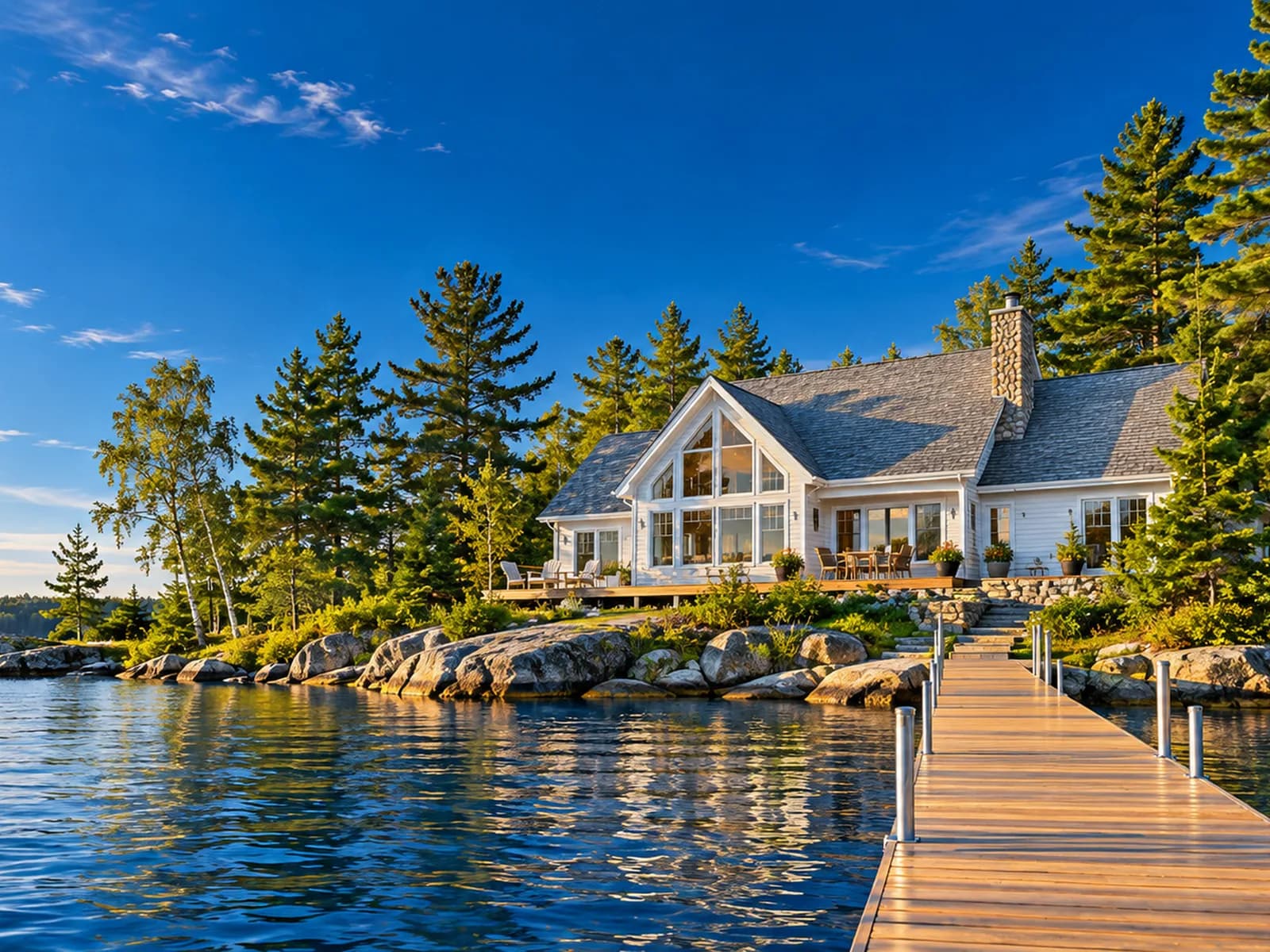
Lichen is a team of a fungus and an alga. It grows as a crust that grips the tiny stones on the shingle. The stones are called granules, and they shield the asphalt from the sun.
Pulling lichen off a roof can take granules with it. Roof inspectors report that it can leave bare asphalt and fiberglass behind. In our experience, lichen that has been on a roof for years has usually eaten the granules under it. Some sources think lichen does little harm, and no one has measured how much roof life it costs. So we say it can, not that it will.
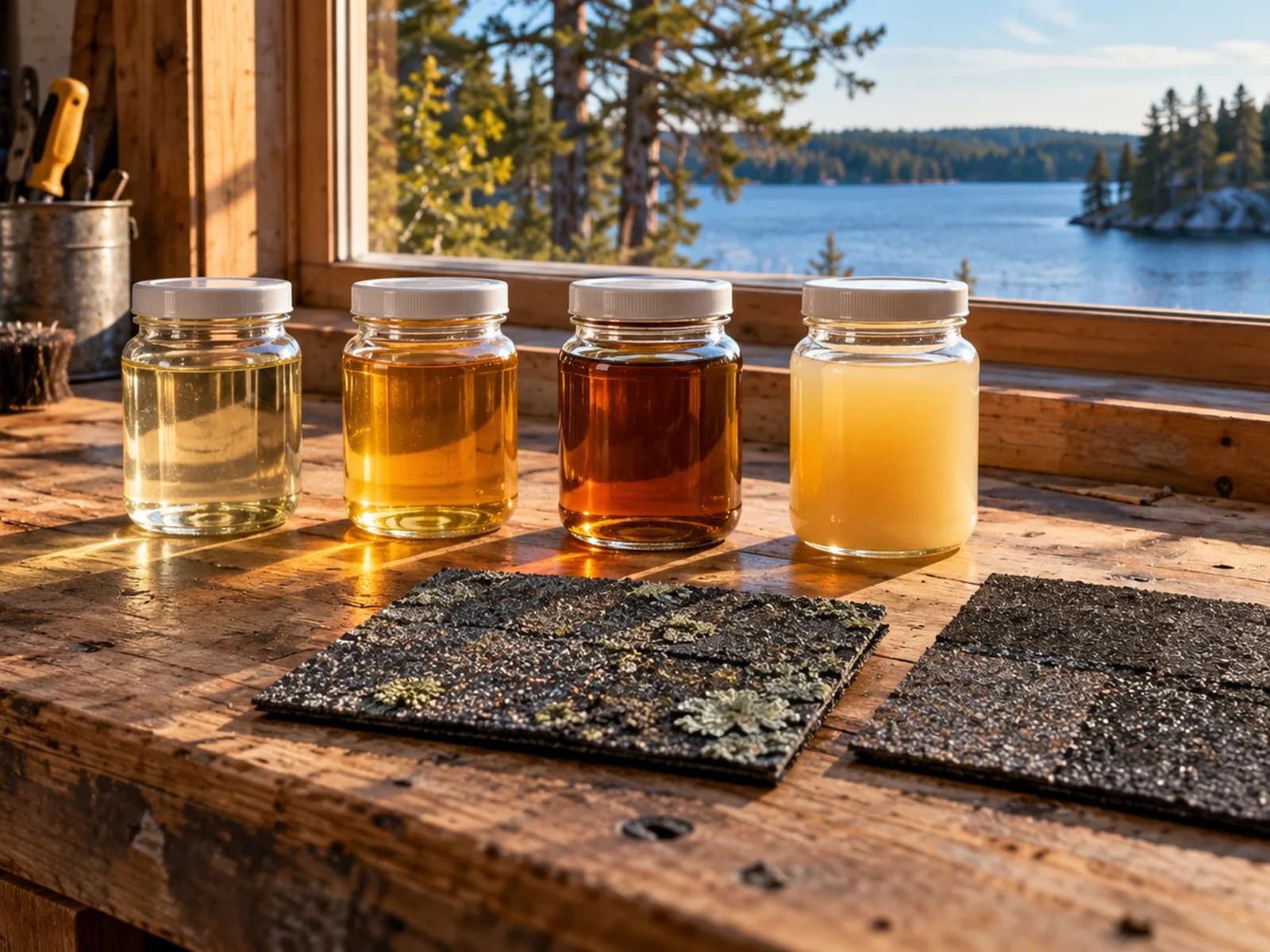
This is the part no one likes to say. Most of the time, when lichen comes off, it has already eaten the granules under it. We are not washing the granules off. The lichen already did that, over years. All that is left is the tar and the fiberglass.
That is why we look before we wash. We take photos before we start. We check the granules and the shingle underneath, and we talk with you about what we see. If the roof can take it, we clean it. If cleaning would show bare patches, we tell you, and we talk about a repair or a replacement instead. No pressure to buy either one.
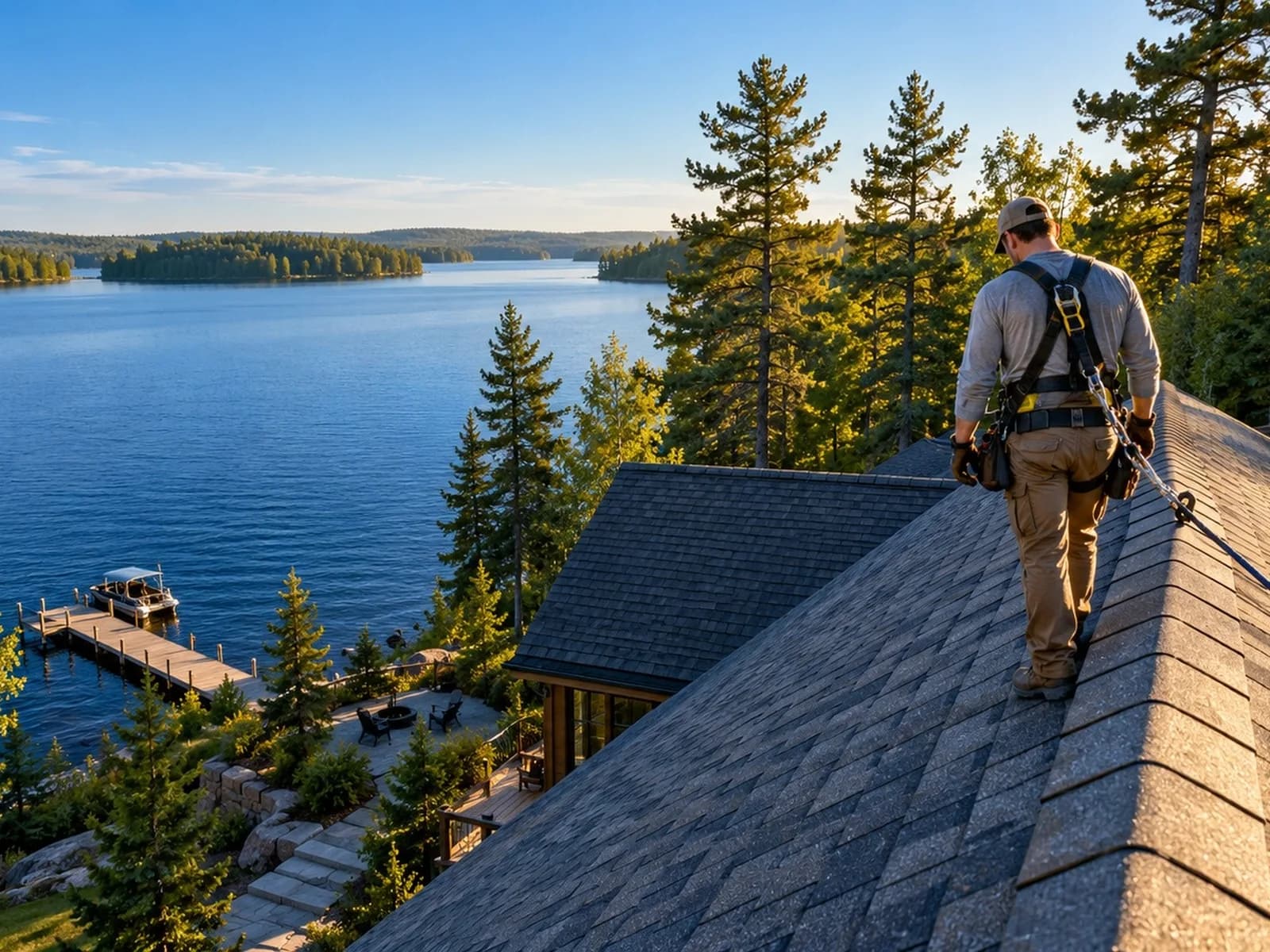
A soft wash uses a bleach-based mix, sprayed on at low pressure. It sits for about 15 to 20 minutes, then gets a gentle rinse. No brush, no broom, no pressure washer. ARMA and GAF both say not to power wash shingles, because it can knock the granules off.
GAF and CertainTeed give slightly different mixes, and ARMA gives none. So we follow the mix your shingle maker lists. A wet roof is slick, which is one more reason to hire this out.
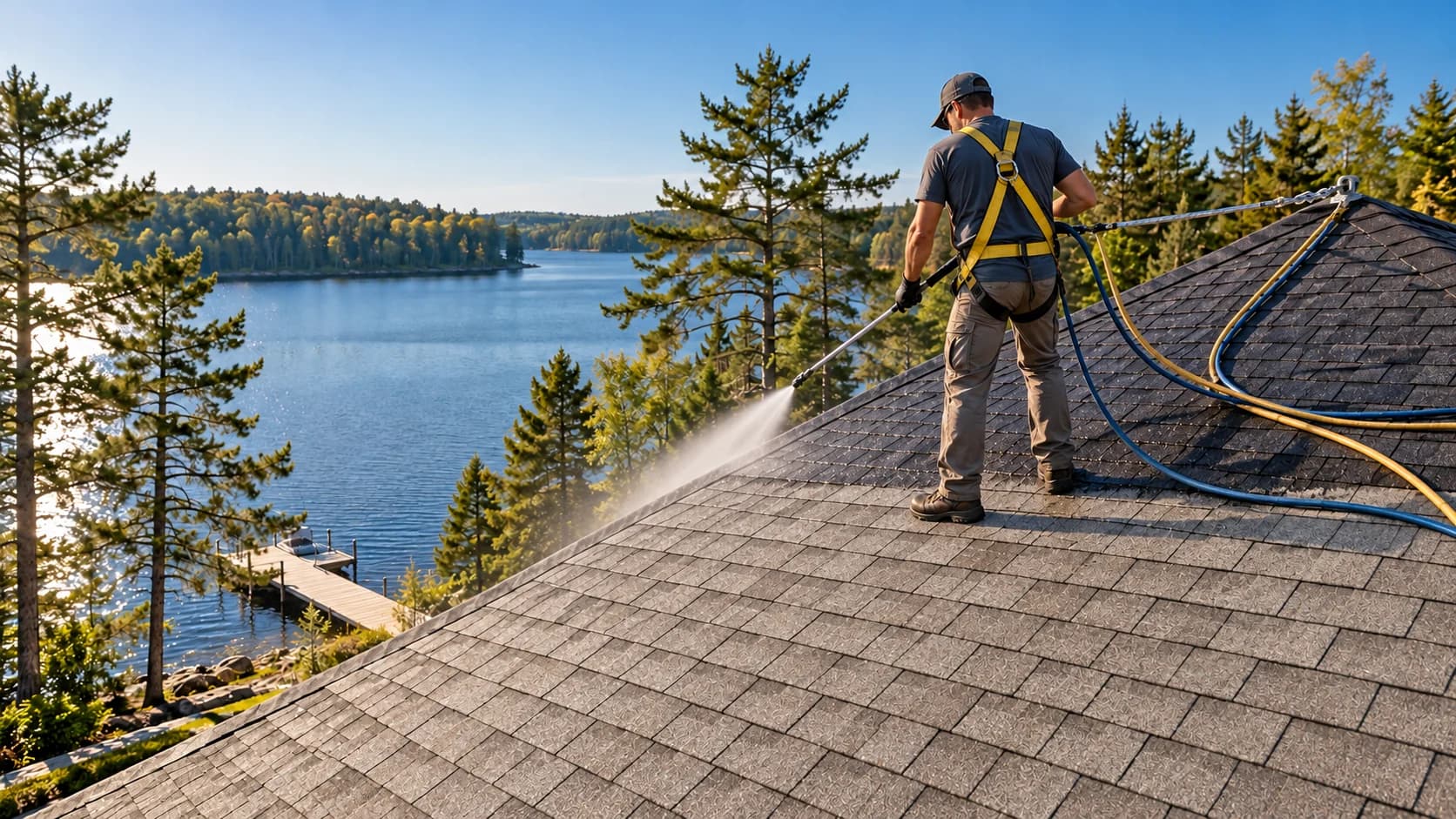
Pro roof washers use water mixed with sodium hypochlorite, which is pool-strength bleach. A soap-like additive called a surfactant helps it cling to the shingles instead of running off. Many pros mix the bleach down to about 3 to 6 percent on the roof. That strength is common practice, not a shingle maker rule. ARMA gives no number.
Mold, algae and light moss do well at the lower end. Heavy moss and lichen can call for a stronger mix or a second pass. A pump moves it at about garden-hose pressure. We do not use a pressure washer, an acid or a stiff brush.
Before we spray, we wet the plants. After, we rinse them and neutralize the runoff. We follow your shingle maker first. Where the maker says nothing, we use what careful pros use, and we tell you what that is.
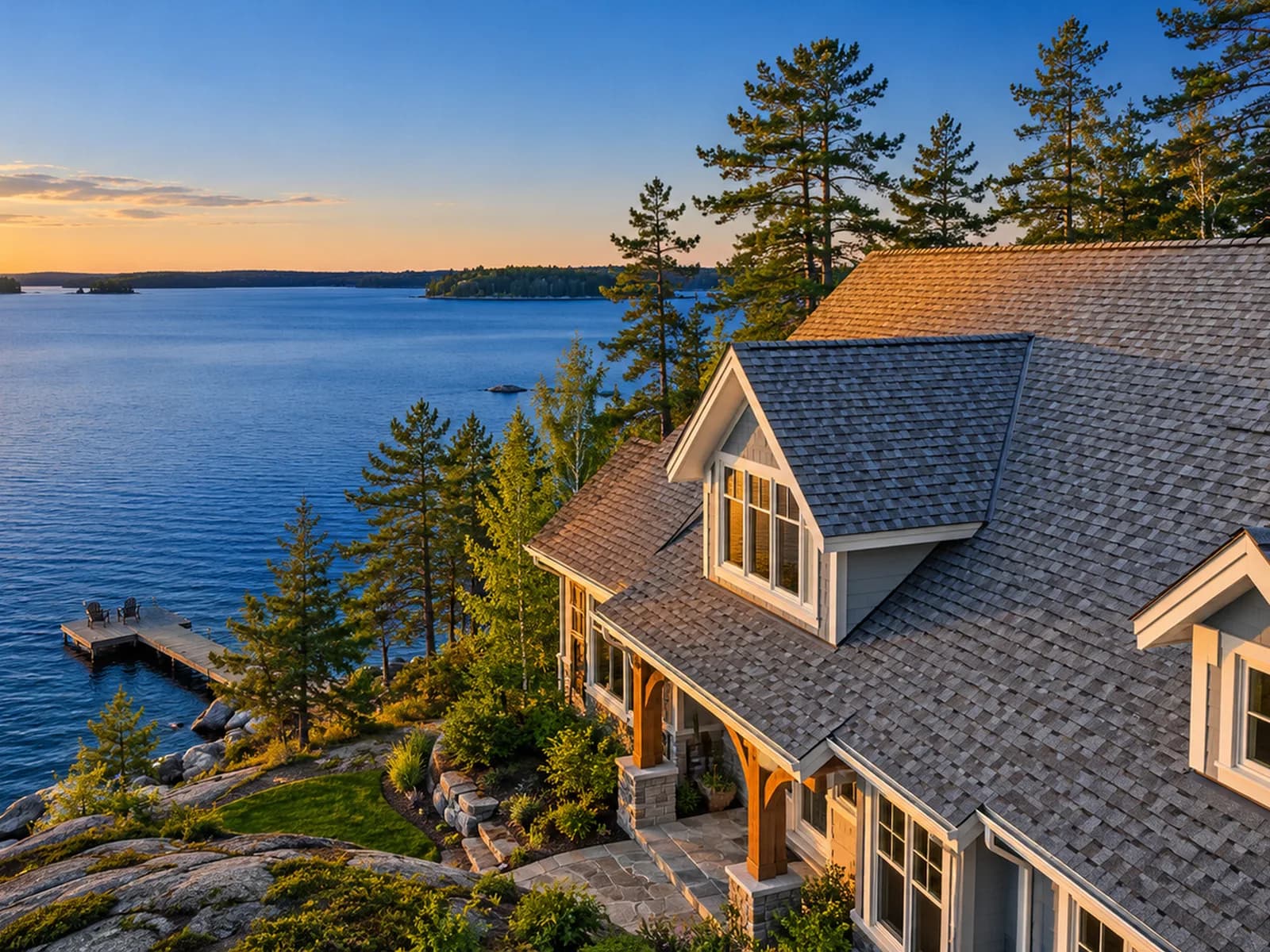
Bleach is hard on fish and plants. Many roof wash labels warn against letting it reach a lake or stream. On a lake home we wet down the plants first, keep the rinse water off the shore and use low pressure.
We found no Minnesota rule written for roof washing, so we do not make claims about one. We just keep the runoff out of the lake. Ask any roof washer how they handle it near water before you say yes.
A clean roof will not stay clean forever. ARMA says cleaning results can be temporary. How long it lasts depends on shade, trees and damp.
Three things help. Trim trees so the sun and wind reach the roof. Keep needles and leaves out of the valleys. Ask about zinc or copper strips under the ridge, which let rain carry metal down the slope and slow regrowth. Strips protect only part of the slope below them, and zinc can stain or damage copper gutters, so we check that first. When you do replace the roof, algae-resistant shingles have copper in the granules. Makers back them with warranties of about 10 to 30 years, depending on the shingle.
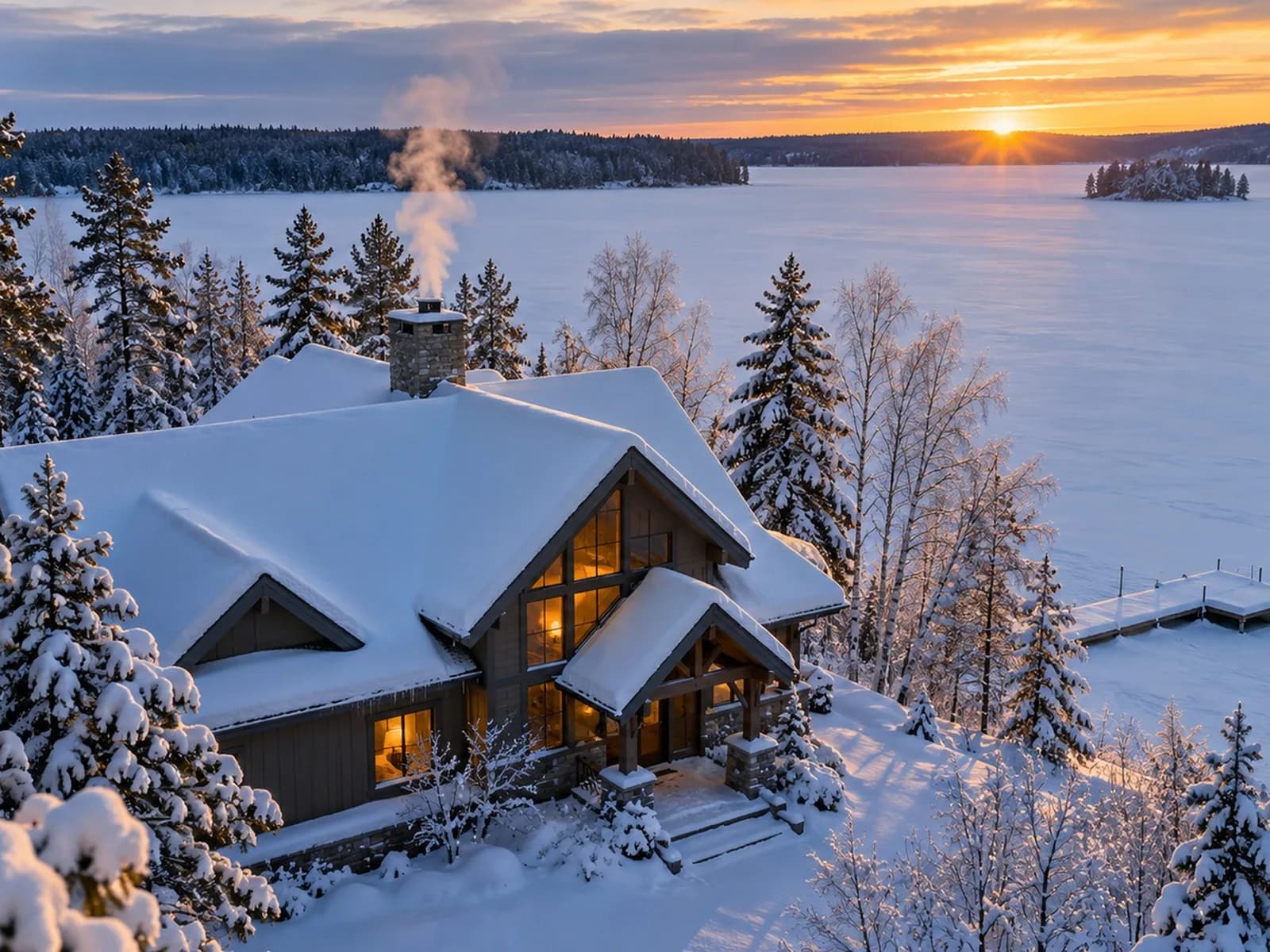
A rejuvenation spray does not clean a roof. Roof Maxx says its spray will not remove moss, algae or mildew, and tells owners to clean first. Peak 301 says nothing about cleaning in what we read.
So when a roof is a fit for rejuvenation, the soft wash comes first, as part of the package. We do not sell a soft wash on its own. When the roof has lichen, we look at the shingles before we promise anything.
Same steps every time. You see the price before we start.
We walk the roof, name what is growing and take photos of every slope. Lichen gets a closer look.
We check the granules, and we test a small spot before we wash a whole slope.
We show you the photos and tell you what we see. You get a firm price in writing before we start.
Plants get wetted down and covered. The rinse water stays out of the lake.
Low-pressure mix, a wait, then a gentle rinse. Nothing is scrubbed. The spray goes on last.
We tell you what to trim, what to clear and whether strips make sense.
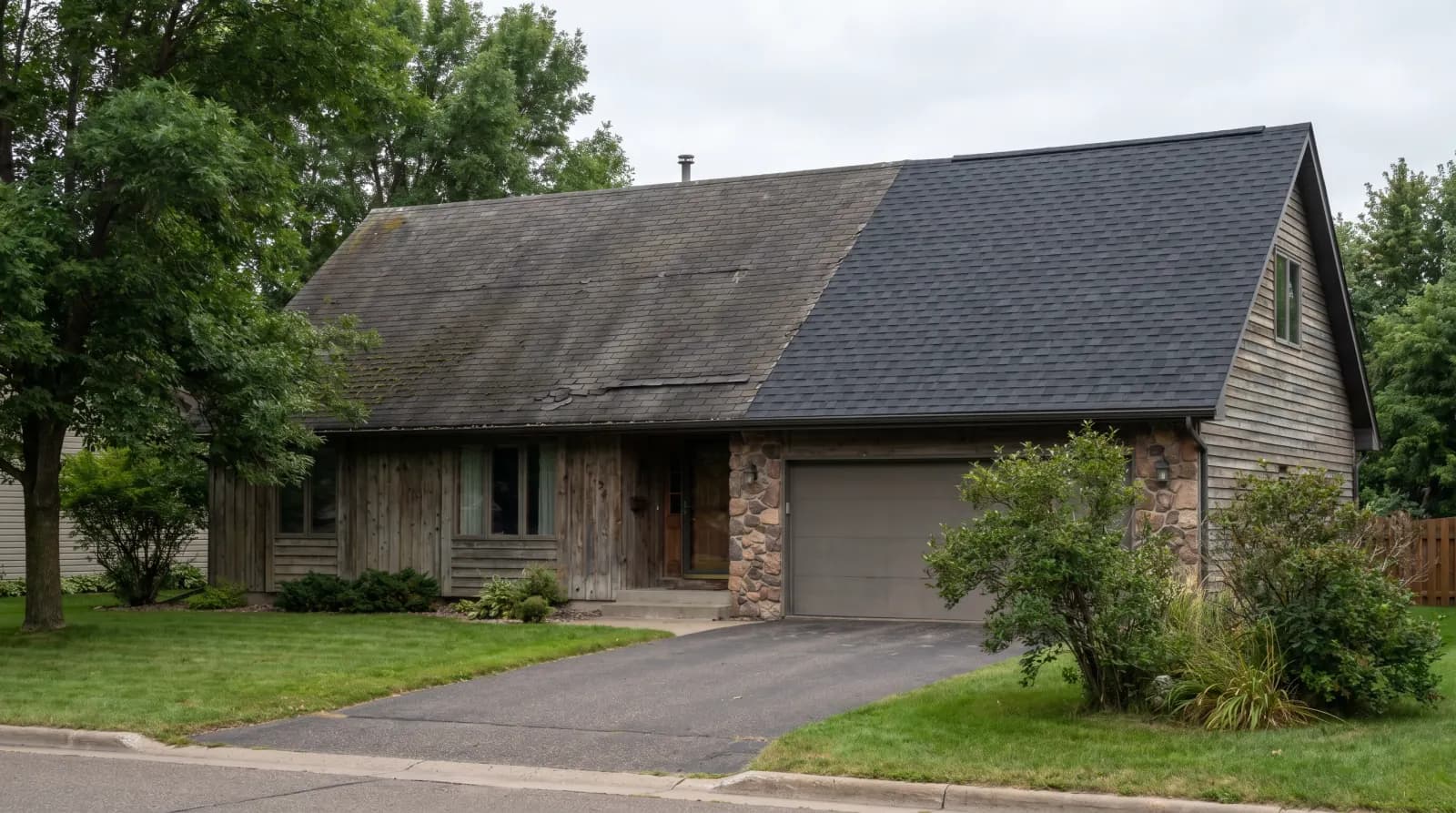
Some roofs are too far gone to wash. We will tell you, and show you why, before we take a dollar.
See roof repairIf the granules are thin, a repair or a new roof can be the better buy. We will show you the shingles and let you decide.
One price per square foot, on every roof. What changes is how we get to the roof.
$1.40 per sq ft ($140 a square)
$1.80 per sq ft ($140 + $40 a square)
Level 1
A crew member can walk the roof safely, with a ladder and a harness. The price is the one above. Most one-story and low two-story roofs are Level 1.
Level 2
Some roofs are too steep or too high to walk, like a tall two-story roof or a very steep pitch. We bring in a lift and a second crew member to run it. The price per square foot does not change. The $800 lift access fee covers the lift and the extra person for the visit.
We bill a roof as at least 10 squares (1,000 sq ft). A smaller roof pays for 10 squares. Add $800 if the roof is Level 2.
Every job is different. These are our typical prices. We give you a firm written price after the free inspection.
Book the free inspectionA rough number in ten seconds. We write the real price after we look at your roof.
Typical price for your roof
$4,320
Every job is different. This is an estimate, not a quote. The free inspection comes first.
We read what the shingle makers, their trade group and the universities say. Here is what we found.
ARMA, the shingle makers’ trade group, names Gloeocapsa magma as the most common cause of dark streaks. It says not to power wash, brush or broom a roof. It describes a gentle bleach wash left on about 15 to 20 minutes, rinsed gently and not scrubbed.
ARMA: Algae DiscolorationGAF says algae need moisture, mostly from dew, and grow mostly on north-facing slopes. It warns that power washing can loosen granules and lead to early roof failure.
GAF Technical Bulletin: Algae Staining on Shingled Roof SurfacesCertainTeed guidance says algae do not cut the serviceable life of a roof but turn unsightly over time, and it lists its own cleaning mix. This copy is posted by a reseller.
CertainTeed cleaning guidelines (reseller copy)A building inspector’s reference says lichens grip roof granules and can pull some of the protective coating off when removed. It advises against scraping.
InspectAPedia: Roof Lichens DamageNot every expert agrees. An extension service expert said they would not expect lichen to damage a roof, and that it might shield it a little, but to check with the shingle maker first.
eXtension: Ask an Expert, “Is this lichens?”Oregon State University Extension says trimming trees so the sun reaches the roof is the best long-term fix for moss, because cleaning alone will not stop regrowth.
Oregon State University Extension: roof mossLawrence Berkeley National Laboratory studies found that growth on shingles lowers how much sun they reflect, and that shingles with copper-oxide granules can hold their reflectance in humid climates.
Cool Roof Toolkit: three-year weathering tests on asphalt shinglesRoof Maxx says its spray will not remove existing moss, algae or mildew, and advises cleaning the roof before a treatment.
Roof MaxxWhat we could not find: a measured number for how much roof life lichen costs, a Minnesota study of roof growth, or a shingle maker that says a correct soft wash voids a warranty. We say so rather than guess. Ask your shingle maker in writing before any cleaning.
Rather ask in person?
We look at the roof and answer on the spot. Written estimate before any work starts.
Request free estimate(218) 772-1184Most often it is algae, which makes dark streaks. Moss is thick, green and fuzzy. Lichen is crusty or scaly, often gray-green, and it grips the shingle. Mold and mildew look like dark spots and are hard to tell from algae by eye. A free inspection tells you which one you have.
Algae is a flat stain, like a streak of dark paint. Moss lifts off in a soft mat. Lichen is crusty or scaly and stays stuck when you try to pick at it. Do not scrape it. Scraping can pull granules off the shingle.
Sometimes it can be killed, but it does not wash off like algae. Lichen grips the tiny stones on a shingle. Pulling it off can take granules with it. The research on this is thin, so we look at each roof first and tell you what we see before we touch it.
It can. Inspectors report that lichen holds on to the granules and that removing it can strip them, which leaves bare asphalt. Not every source agrees, and no one has measured how much roof life is lost. So we say can, not will, and we check the shingles first.
Yes, in most cases. A soft wash uses a low-pressure bleach-based mix that sits on the roof for about 15 to 20 minutes and is then rinsed gently. The shingle industry group ARMA describes this as the accepted way to clean asphalt shingles. No scrubbing and no pressure washer.
ARMA and GAF both say not to. High pressure can knock the granules off the shingle, and granules are what protect the asphalt from sun. Damage from a pressure washer is also not something a shingle maker will cover.
We add soft washing to a rejuvenation for $0.40 per square foot, with a $600 minimum for the wash. A 2,400 square foot roof is about $960 for the wash. Rejuvenation is $1.40 per square foot, with a $1,500 minimum. If we cannot walk the roof, a lift access fee of $800 is added. Every job is different. We give you a firm written price after the free assessment.
No. We add the soft wash to a rejuvenation when the roof needs it. Every roof still gets the free mold and lichen assessment first. If we find the roof needs a repair or a replacement instead, we say so.
A low-pressure sodium hypochlorite (bleach) mix with a surfactant that helps it cling to the shingles, then a gentle rinse. It is the kind of method the shingle makers and ARMA describe. We do not use a pressure washer, acids or a stiff brush. Ask us for the exact mix and we will tell you.
It depends on shade, trees and how damp the roof stays. ARMA says cleaning results can be temporary and the stains can come back. Trimming trees back so the sun hits the roof helps the most. Zinc or copper strips near the ridge can slow regrowth.
The north side gets the least sun, so dew and rain stay on it longer. Algae, moss and lichen all need moisture. Shade from pines and lake air make it worse. That is why one slope can look fine while the other looks green.
It can be, with care. Bleach is hard on fish and plants, so we wet down the plants, keep the rinse water out of the lake, and use low pressure. Ask any roof washer how they handle runoff near water before you say yes.
Yes. Roof Maxx says its spray does not remove moss, algae or mildew and tells owners to clean first. We offer the soft wash as an add-on to a rejuvenation job. We check any lichen before we decide if the spray is worth it.
We found no maker that says a correct soft wash voids a warranty. The makers do say to follow their cleaning steps and not to pressure wash. Ask your shingle maker in writing before any cleaning, and we will follow what they say.
Yes. Silver Loon Roofing offers roof cleaning around Crosby and the Brainerd Lakes, including the Whitefish Chain, Gull Lake and Pelican Lake. Cleaning runs spring through fall. Inspections can be booked any time of year.
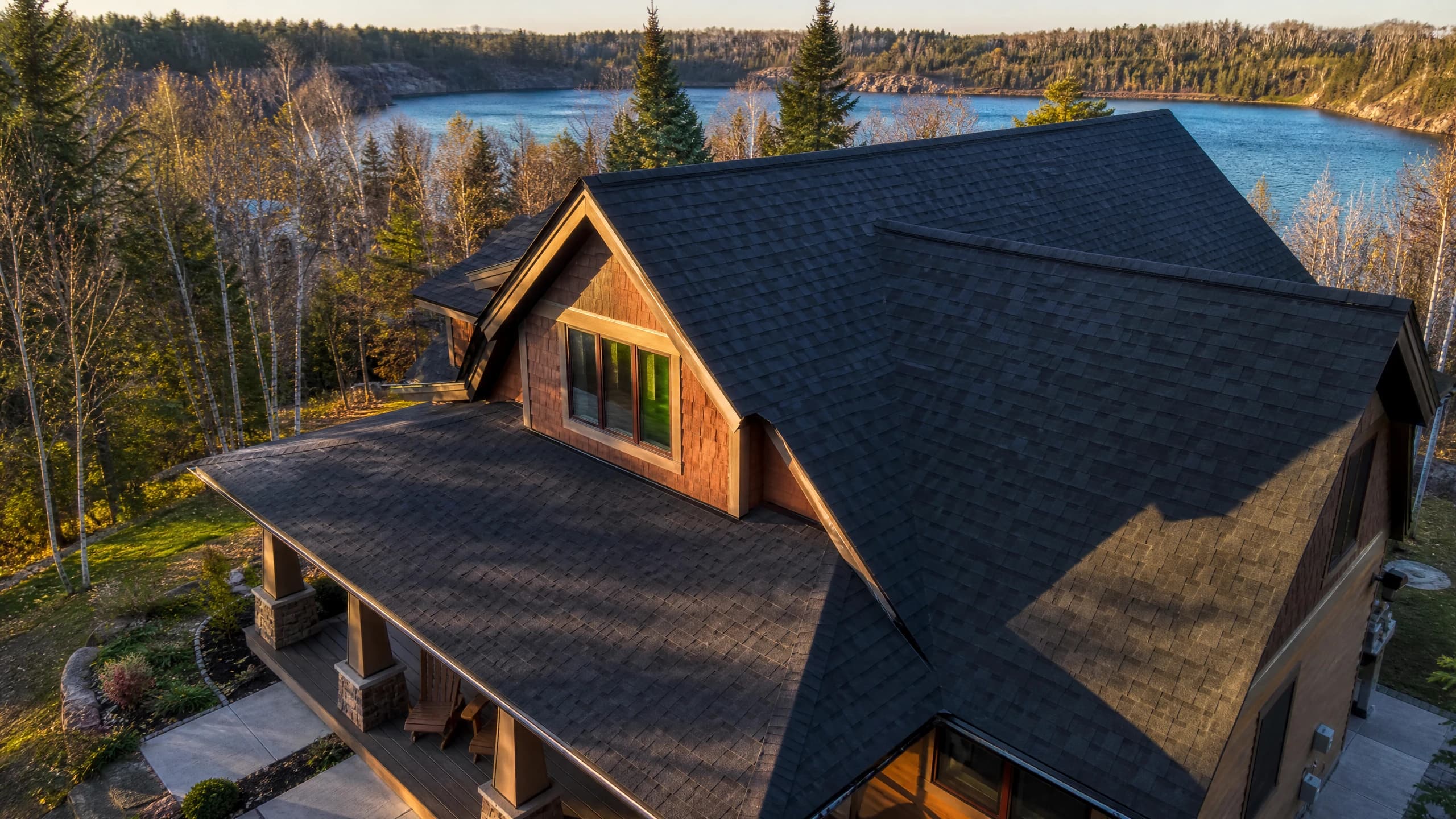
We bring roof cleaning to every lake home and cabin community we serve — the same local crew and written estimate process in every town.
We inspect, assess, and give you a line-item written estimate before any work starts. No surprise charges, no pressure to sign on the day of inspection.


