
Roof Rejuvenation
Many older roofs can be restored. Shingle rejuvenation is a plant-based spray that puts back the oils shingles lose with sun and age, so they bend instead of crack. Here is what it is, what the research says, and which roofs it can help.
The basics
What roof rejuvenation is
Asphalt shingles dry out. Every summer the sun and heat pull the light oils out of the asphalt. What is left is thicker and harder, like a rubber band left on a sunny dashboard. Stiff shingles crack. They also let go of their granules, the small stones on top that shield the asphalt.
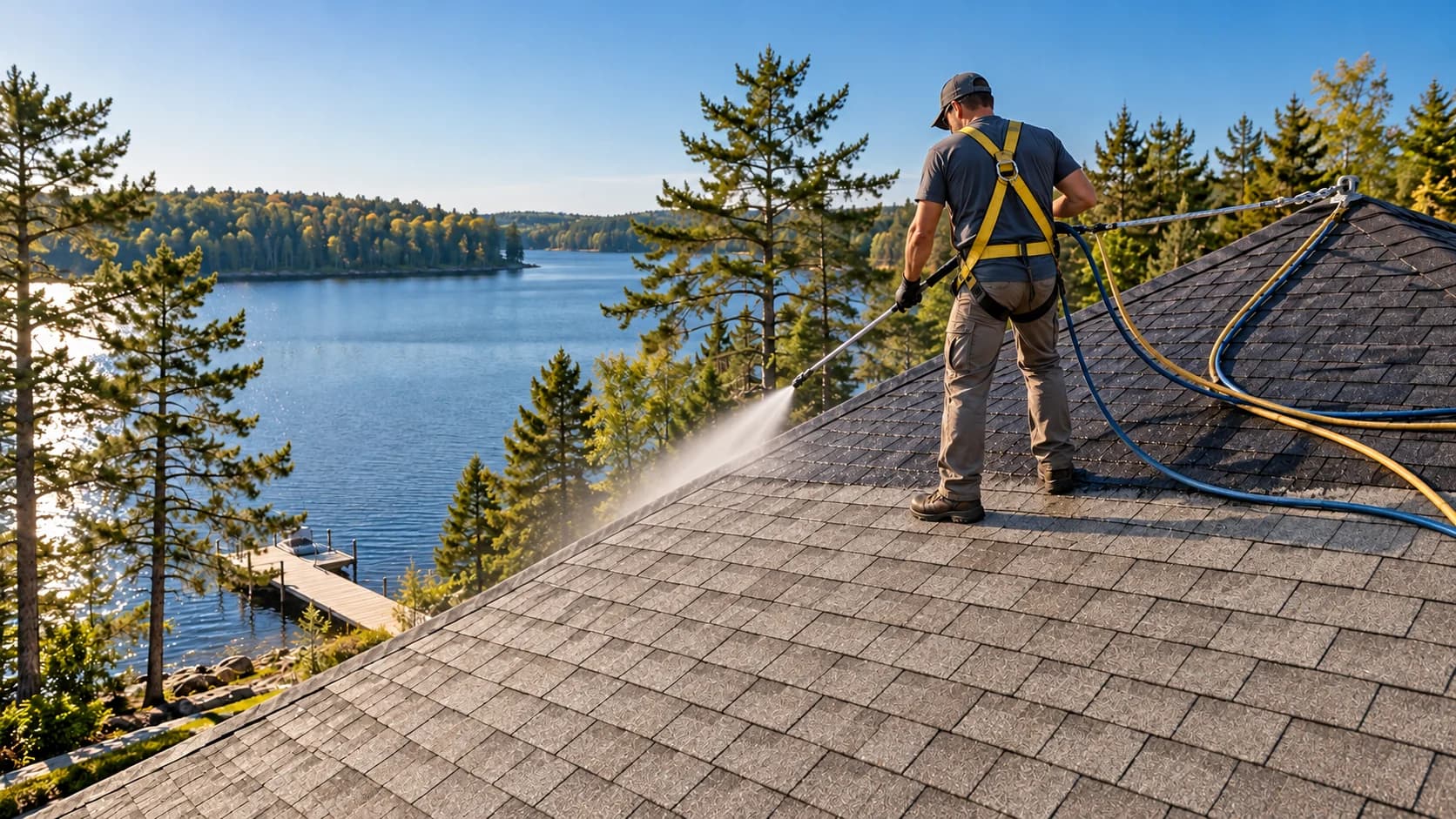
Roof rejuvenation is a spray made of oil and water. Most products use soy oil. Some use corn oil or another plant oil. The oil soaks into the aged asphalt and is meant to make it flexible again. It is not a coating, a sealant or paint.
You may also see it called shingle rejuvenation or roof restoration. It is the same idea. Silver Loon Roofing offers it around Crosby and the Brainerd Lakes. We start with a free inspection, because the first job is deciding if your roof is a fit.
What it does not do
- It does not fix a leak.
- It does not replace missing or broken shingles.
- It does not put granules back.
- It does not stop ice dams.
- It does not save a roof that is worn out.
Even the spray makers agree on that list.
How it works
Inspect first. Fix small things. Spray last.
The spray is the short part. Most of a good visit is looking and fixing.
Step 1
Inspection
We look at the whole roof, and the attic side if you invite us in. You get an honest report, with photos.
Step 2
Tune-up
Small fixes first: debris, bad shingles, nail pops, flashing and caulk, plumbing boots.
Step 3
Spray
The spray goes on last, on a dry day above 36 degrees.
Step 4
Dry time and paperwork
The roof needs dry time. You get the warranty and the safety data sheet in writing.
Sometimes the visit ends at step one. If the roof has lichen or the granules are gone, we say so and show you why. That is a good result. It saves you from paying for something that will not help.
Is your roof a fit?
Who it is for, and who it is not
Condition matters more than age. A 15-year-old roof in bad shape is a worse fit than a 20-year-old roof in good shape.
A roof that may be a fit
- Shingles that are older but still sound. Roof Maxx says it treats roofs about 5 to 25 years old, and the inspection decides.
- No active leaks and no ceiling or attic stains.
- Shingles that are whole: not missing, cracked or curled over large areas.
- Plenty of granules left. A handful in the gutter is normal.
- No lichen on the roof.
- Solid decking under the shingles.
A roof a spray will not help
- Lichen on the roof. It eats the granules, and scraping it off takes more granules with it.
- Granules already gone, or worn away by about half or more. Black asphalt or the fiberglass mat showing means there is nothing left to protect.
- Active leaks. Those need a repair or a new roof first.
- Shingles cracked, curled or missing over large areas.
- Soft or rotten decking.
- Ice dam trouble. That is a heat-loss problem in the attic, and a spray does not touch it.
Lichen looks like crusty, flat patches stuck tight to the shingle, often gray-green or pale, usually on the shady side. Moss is soft and puffy. Lichen is flat and hard. In our experience, a spray will not help a roof with lichen, a roof whose granules are gone, or a roof whose granules have worn away by about half or more. Only an inspection can decide for your roof.
The evidence
What the research says
We read the studies and reports so you do not have to. Each card names the source, says what it found, and links to it. Company claims are labeled as the company's own.
Iowa State University researchers (Kuehl and others)
In the lab, soy oil mixes made aging shingles hold their granules better. A mild 10 percent mix brought back flexibility and hail resistance and cut flame spread. A strong 30 percent mix softened the shingles too much.
A lab study on sample shingles. Field tests on real roofs are the next step.
AURI, the Minnesota Agricultural Utilization Research Institute
Minnesota crews get a spray season of only five to six months, against nine to twelve months in the Sunbelt. AURI counted fewer than 20 applicators in the whole state.
Roof Observations, Jack Gray, RRO (independent roof consultant)
Finds these treatments "partially effective" under the right conditions. He sees them as regular maintenance for a sound roof, not a cure for a failing one.
NRCIA, a roof inspector group
Asks whether rejuvenation products are a good investment. It notes the treatment warranties usually last five years and focus on shingle flexibility.
Roofing Contractor magazine
Covers how soy-based roof sprays aim to add years to a roof and keep old shingles out of the landfill. Most of the test data so far comes from the spray makers.
ARMA, the shingle makers trade group
Advises against coating installed shingles without checking with your shingle maker first.
Owens Corning technical bulletin
Lists the risks of products with unknown chemistry, like blistering, curling or softened shingles. That is why we inspect first and use a known product.
Roof Maxx
Roof Maxx says about five years per treatment, and that many roofs can be treated up to three times. Its warranty runs 60 months, is prorated, and covers shingle flexibility only. It leaves out leaks, granule loss and storm damage.
Peak 301 (Colorbiotics, a Sika company)
Peak 301 reports lab tests by PRI Group, an outside testing lab. After one coat, shingles were close to 50 percent more flexible and held their granules 55 percent better. Flame spread dropped from 44 inches to 14 inches, and the shingles still passed the hail impact test. It says one coat adds at least 6 years, with a 6-year warranty. It is USDA Certified Biobased.
The honest summary
The lab work is encouraging. The five-year numbers come from the companies. No independent study has followed treated roofs for years, and we have not seen cold-climate field data from any brand. That is why we call rejuvenation maintenance for a sound roof, not a promise.
Lifespan
How long does it last?
Roof Maxx says about five years per treatment, and up to three treatments on many roofs. Peak 301 offers a six-year material warranty. Those numbers come from the companies. A treatment warranty usually covers shingle flexibility, not leaks, granule loss or storm damage.
How much time your roof gains depends on the shape it is in when it is treated. We will not promise you a number. We will tell you what we see.
Up north
Minnesota timing
You cannot spray in the cold. Roof Maxx needs the roof above 36 degrees and dry for at least an hour after the spray. Around the Brainerd Lakes that means spring through fall, about five to six months.
Winter is the time to learn about it and book. A free roof inspection can be scheduled now, and we will line up your job for the first good weather.
Shady lake lots are worth a look. Homes under pines and birches grow lichen on the shady side, and lichen takes a roof out of the running.
Choosing
Rejuvenate, repair or replace
If your roof is too far gone for a spray, we will say so. An honest answer is the whole point of the inspection.
Rejuvenate
The shingles are aging but sound. No leaks, no lichen, plenty of granules, solid decking. A spray is meant to keep them flexible longer.
Repair
There is a specific problem: a leak, a failed flashing, a few blown shingles. Fix it first. A spray never goes over a problem. See roof repair.
Replace
Widespread cracking or curling, bare mat, soft decking, leaks in several places, or a roof past its design life. A spray will not save it. See roof replacement.
Check your shingle warranty first
Before any spray, ask your shingle maker in writing if your warranty stays in force. The spray companies say it does. The shingle makers trade group advises against sprays on installed shingles. Only your maker can answer for your roof.
FAQ
Questions people ask about roof rejuvenation
What is roof rejuvenation?
It is a spray made of oil and water, often soy oil. It soaks into aging asphalt shingles and is meant to make them more flexible again. It is not a coating, a sealant or paint. You may also hear it called shingle rejuvenation or roof restoration.
Does it really add five years to a roof?
Roof Maxx says about five years per treatment. That is the company claim. No independent study has followed treated roofs for years. We treat it as maintenance on a sound roof, not a promise.
Is my roof a candidate?
Maybe, if the shingles are older but still sound. That means no leaks, no missing shingles, no lichen, plenty of granules left and solid decking. A free roof inspection checks all of it, and we give you an honest report either way.
Which roofs can a spray not help?
In our experience, roofs with lichen, roofs whose granules are already gone, and roofs whose granules have worn away by about half or more. Roofs that leak or have soft decking need a repair or a new roof first.
Will it fix a leak or stop ice dams?
No to both. A leak needs a repair or a new roof. Ice dams come from heat leaking into the attic, so air sealing and insulation are the fix. Even the spray makers say a spray does not fix leaks.
How many times can a roof be treated?
Roof Maxx says many roofs can be treated up to three times, about five years apart. Whether that fits your shingles is a question for the inspection.
When can it be done in Minnesota?
Not in the cold. Roof Maxx needs the roof above 36 degrees and dry for at least an hour after the spray. Here that means spring through fall, about five to six months. You can book a free inspection any time of year.
Will it affect my shingle warranty?
Ask your shingle maker in writing before any spray. The shingle makers trade group, ARMA, advises against sprays on installed shingles. The spray companies say their products are fine. Only your maker can answer for your warranty.
What does the spray warranty cover?
Roof Maxx warranty covers shingle flexibility for five years, prorated. It does not cover leaks, granule loss or storm damage. Read any warranty before you agree to anything.
Is it safe near the lake, the garden and pets?
The spray companies say yes. We have not seen an independent study. Ask for the safety data sheet, and ask how the crew protects gutters, plants and docks from overspray.
What happens during a visit?
First an inspection. Then small repairs, like nail pops and plumbing boots. The spray goes on last, then the roof needs dry time. Sometimes the visit ends at the inspection, and that is the right call.
Do you offer roof rejuvenation near me?
Yes. Silver Loon Roofing offers it around Crosby and the Brainerd Lakes, including the Whitefish Chain, Gull Lake and Pelican Lake. Jobs run spring through fall. Inspections can be booked now.
Find out what your roof needs
Ask us about it. We will tell you straight if your roof is a candidate, and if it is not. You get an honest report from builders with decades of experience.