
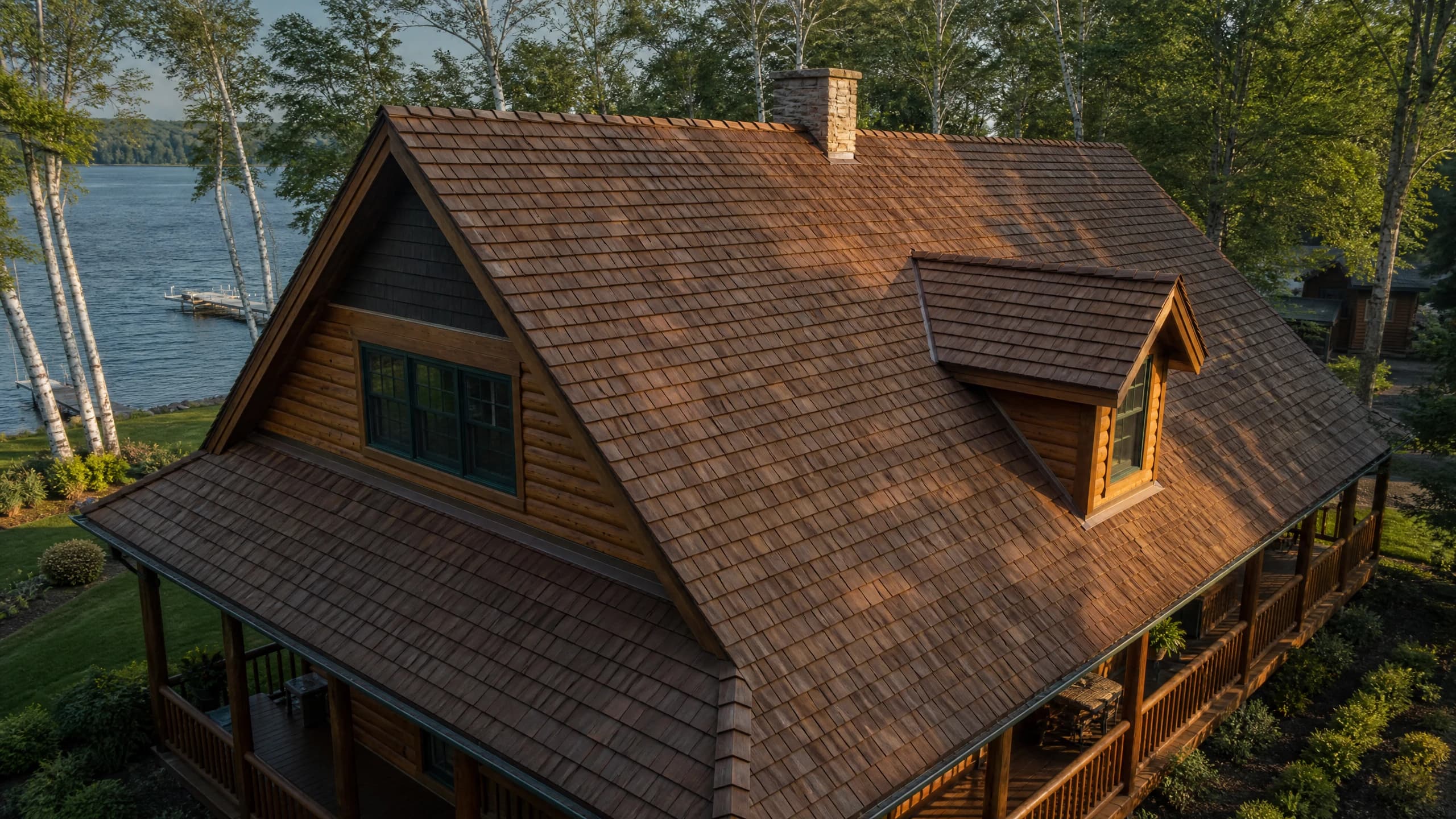
Roofing in Nisswa, MN
Gull Lake corridor · Crow Wing County
Silver Loon covers Nisswa (Crow Wing County): roof replacement, repair, storm damage, ice dams, and attic insulation. Based in Crosby, MN.
Nisswa is a small city on the north end of the Whitefish Chain of Lakes, and it carries the feel of a resort town that never entirely went out of season. The charming downtown strip draws summer visitors, and ice fishermen follow in January. A growing number of lake properties that once closed after Labor Day now stay open twelve months a year — which changes what those roofs are expected to handle. Silver Loon Roofing serves residential properties in Nisswa and the Gull Lake corridor, from traditional cabins to the larger timber-framed and custom-built homes that line the water.
Our estimation process uses phone photos and satellite measurements to produce a precise 3D model of your home. We deliver a detailed written estimate with exact roof measurements — often without an in-person sales visit.
About Nisswa, MN
Nisswa sits in southern Crow Wing County, surrounded by the Whitefish Chain's 14 connected lakes. The downtown strip on Main Street has been a destination since the resort era of the early 1900s, and it still draws summer traffic to its shops, galleries, and the weekly turtle races that have become a local institution. The housing stock ranges from small older cabins set close to the water's edge to expansive year-round lake homes built in the last two decades. Many of the older seasonal structures have been updated — or replaced outright — with full-size homes that carry custom rooflines, steep pitches, and architectural shingle or standing seam metal cladding designed to complement the surrounding landscape. The mix of cabin-era construction and newer custom builds means every roof inspection here tells a different story.
Roofing realities in Nisswa
Lakeside roofs in Nisswa face conditions that accelerate wear faster than many homeowners expect. Snow loads from Crow Wing County winters are significant, and the freeze-thaw cycle near open water extends well into March and sometimes April. Ice dams form readily on older cabins where attic insulation was never a priority. They also form on newer homes when ridge ventilation was undersized at construction. The moisture environment from the Whitefish Chain is persistent — shingles on north-facing slopes stay damp longer than they would on an inland property, which shortens product life and can encourage moss or algae growth.
Wind exposure on open lake lots runs higher than the sheltered interior lots suggest. A calm afternoon on the water can shift to a sustained 50-mph gust line within an hour during a summer storm. Hail events cross this part of Crow Wing County several times a season; a roof that passed a visual inspection in May may show split tabs and granule loss by July. South-facing slopes on properties with long roof runs absorb UV across extended summer days — we pay close attention to those slopes during inspections because they often deteriorate faster than the rest of the roof.
How we work in Nisswa
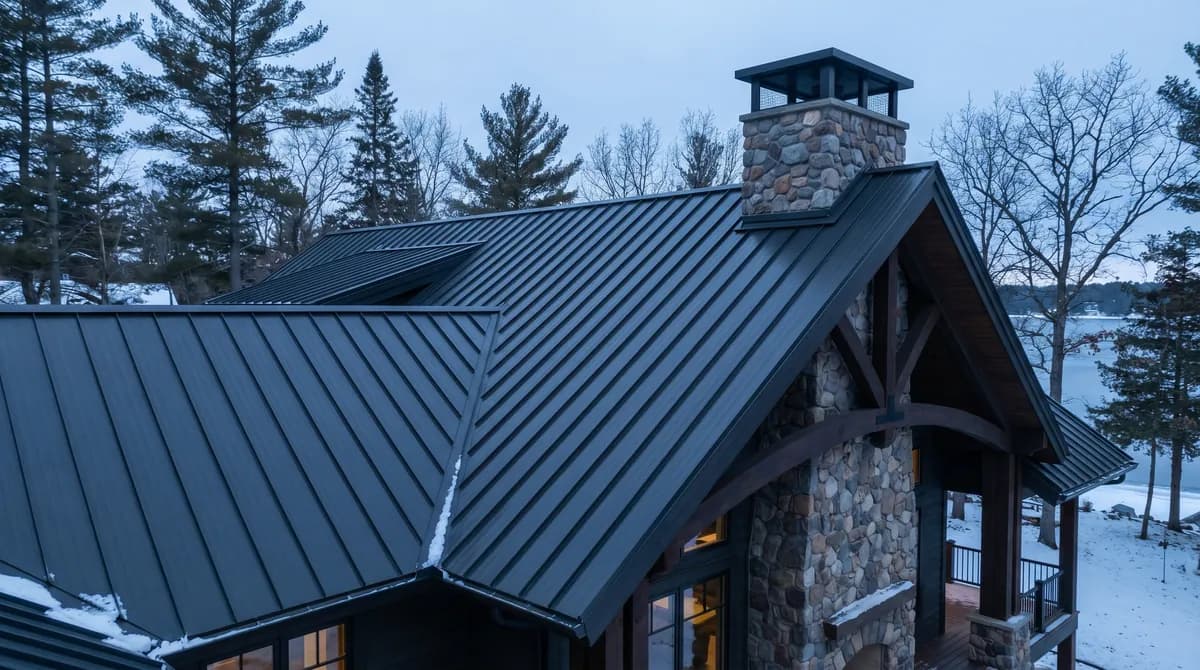
We serve residential properties in Nisswa with roof replacement, roof repair, storm damage restoration, ice dam remediation, and standing seam metal roofing. For lake homes and custom residences in particular, standing seam metal is worth a serious look. The continuous panel eliminates the seams where ice and wind find entry points, and it holds up well across decades of freeze-thaw cycles without the granule loss and UV degradation that affect asphalt over time.
Shingle projects use CertainTeed, GAF, Owens Corning, or Malarkey products specified for the roof pitch and exposure. We include ice-and-water shield to the eave line and into all valley cuts. For ice dam remediation, we assess insulation levels and ridge ventilation as part of the roofing system — not as a separate trade. We produce detailed estimates from satellite measurements and 3D roof modeling before any work begins, and we schedule by appointment with a written scope and a final walkthrough when the project is complete.
For Owners Who Aren't Here Year-Round
Away all winter? We can be your eyes on the roof.
You're two hours away. We're twenty minutes.
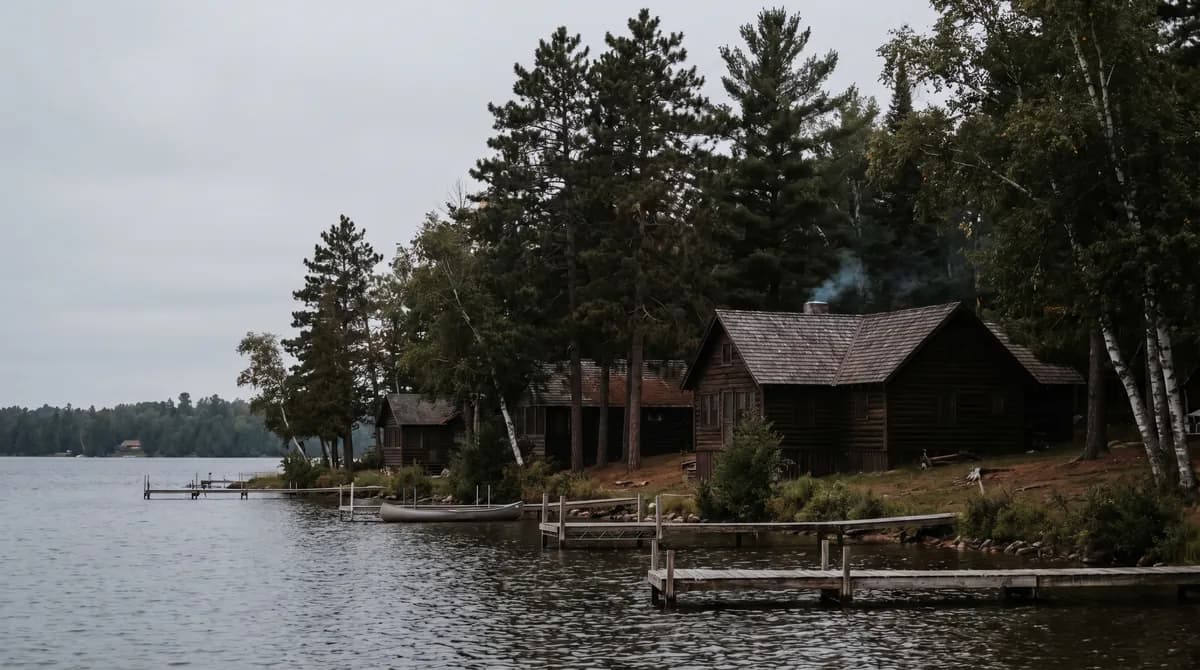
Nisswa's Gull Lake corridor is full of seasonal cabins that close for winter. We can walk the roof and gutters while you are back home.
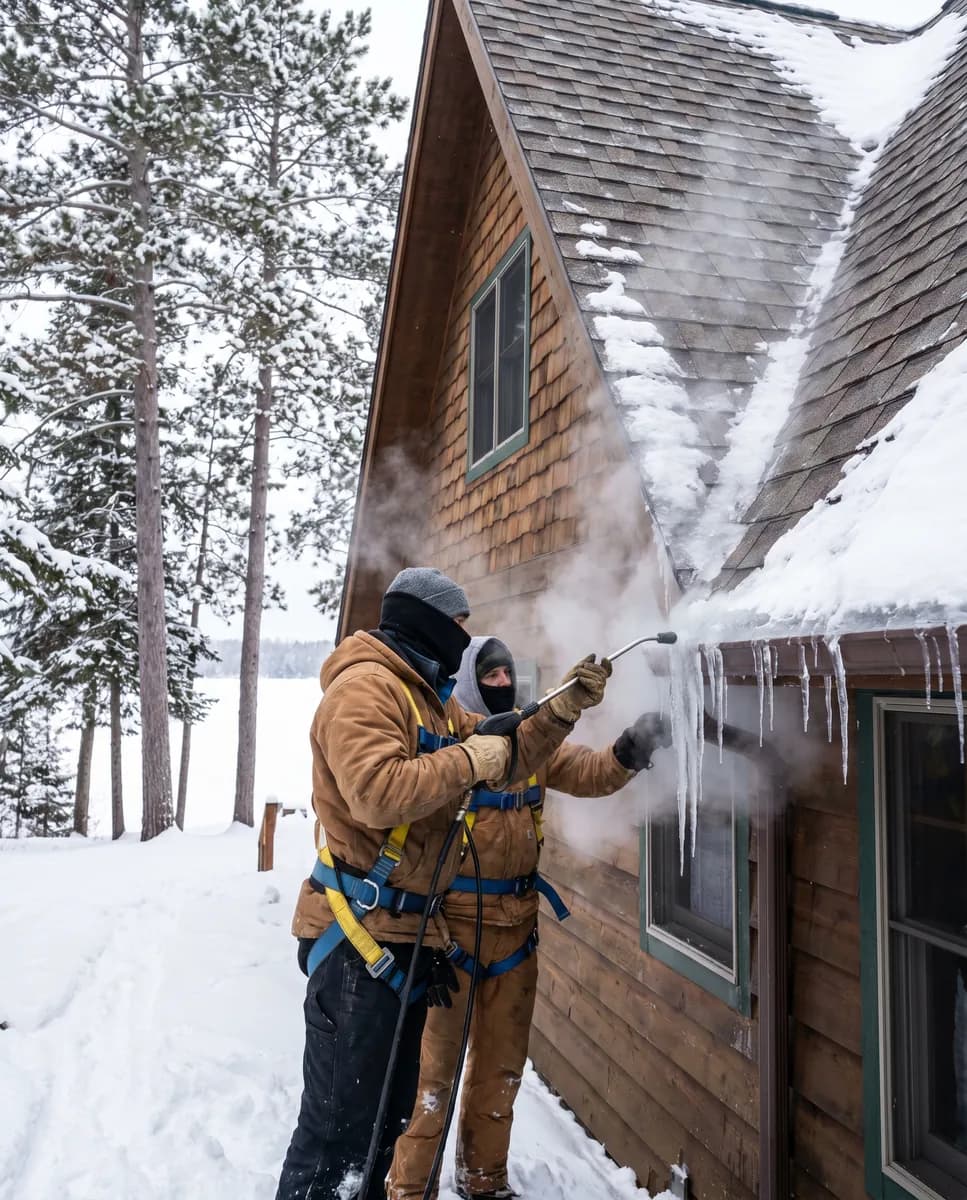
Ice dams do the most damage while a cabin sits empty. Nobody sees the ice building at the eave until water is already staining a ceiling. We do winter roof checks on request — walking the eaves, gutters, and known trouble spots, and sending you photos from the field. If we spot ice backing up, we can schedule steam removal before it gets under the shingles.
We build roofs. We don’t chase storms.
See how our ice dam and winter roof checks work →Residential Services
Roofing services in Nisswa
We offer the full residential menu from our Crosby base — the same crew, the same standards, across the lake country we serve.
Attic Insulation in Nisswa
Attic insulation and air sealing for homes and lake cabins in Crosby and the Brain…
How our attic insulation works →Ice Dam Remediation in Nisswa
Safe steam-based ice dam removal for lake homes and cabins near Brainerd and Crosb…
How our ice dam remediation works →Roof Rejuvenation in Nisswa
Roof rejuvenation is a plant-based spray that puts oils back into aging shingles s…
How our roof rejuvenation works →Roof Repair in Nisswa
Targeted roof repairs for lake homes and cabins around Crosby and Brainerd — leak…
How our roof repair works →Roof Replacement in Nisswa
Full residential roof replacement with architectural shingles, metal, or specialty…
How our roof replacement works →Storm Damage Restoration in Nisswa
Hail and wind damage assessment, insurance claim support, and full restoration for…
How our storm damage restoration works →Winter Roof Maintenance in Nisswa
Roof snow removal and winter checks for lake homes and cabins near Brainerd and Cr…
How our winter roof maintenance works →Get in Touch
Contact Silver Loon Roofing — Nisswa
- Serving
- Nisswa, MN (Crow Wing County)
- Phone
- (218) 772-1184
- Hours
- Mon–Fri 7 am – 6 pm
Sat 8 am – 2 pm
Dispatched from our Crosby home base, about 16 miles away in a straight line. No travel surcharge.
Nearby areas we serve from Nisswa
- Breezy Point
- Gull Lake
- Lake Shore
- Pequot Lakes
- Brainerd
Need roofing work in a nearby town? Request a free estimate — we cover the surrounding area without a travel surcharge.
Common Questions
Frequently asked questions — Nisswa
Ready for a straight-talk roof estimate in Nisswa?
We inspect, document, and give you a written line-item estimate before any work starts. No pressure, no surprises.