
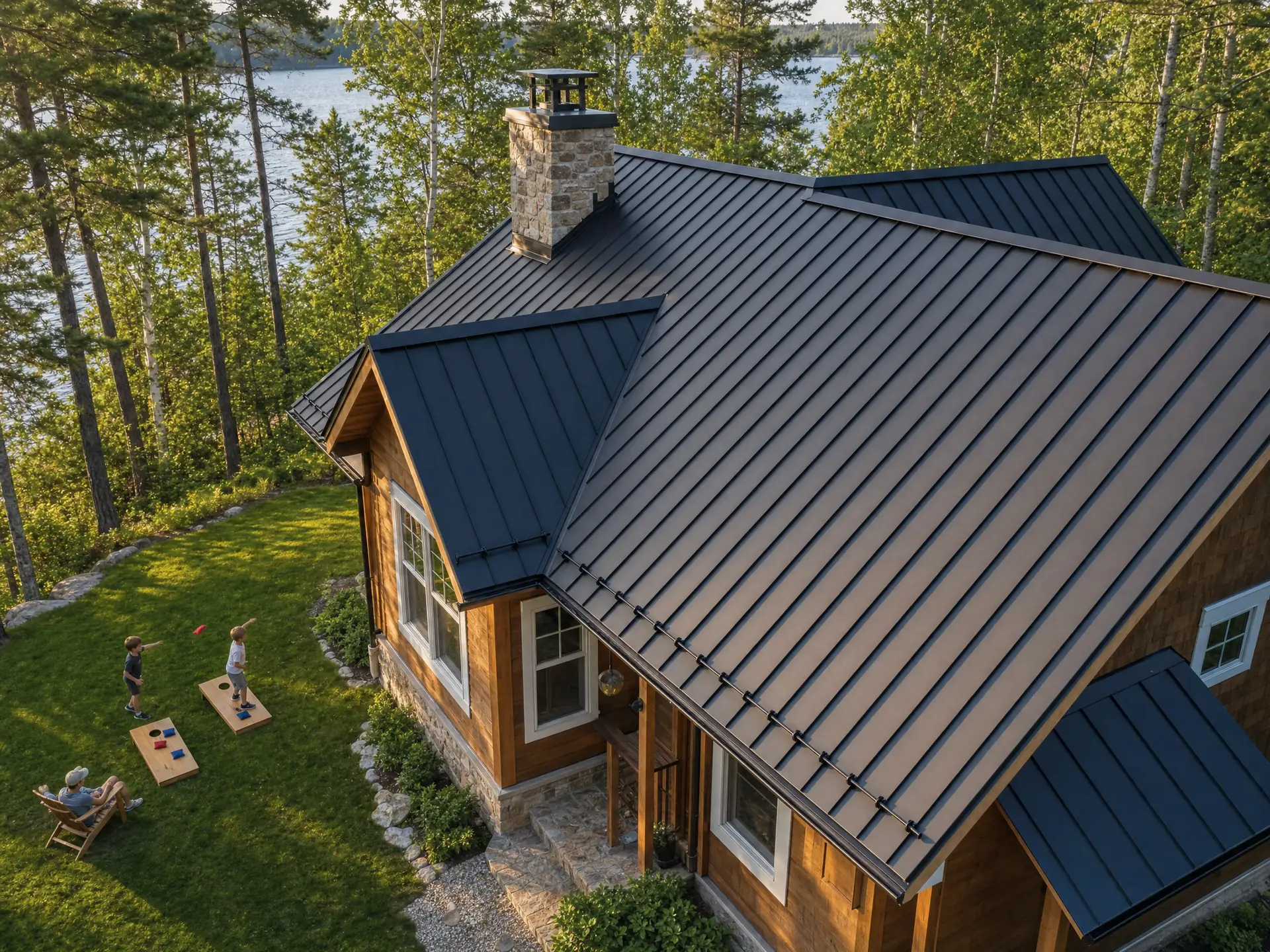
Jimmy Davidson founded Silver Loon Roofing in Crosby, Minnesota, in 2026. Before that he spent more than 30 years building custom homes in the Crested Butte area of the Colorado Rockies, mostly framing, interior and exterior trim, and roofing, with plumbing, electrical, painting and drywall work along the way. He lives in Crosby with his four kids, scopes every estimate himself and checks every job.
If your roof is near the end of its life, replace it before you add solar. In 2026, regular panels on a new roof are the safer plan for most Minnesota homes, because solar shingles have a thin track record and the federal credit for buying them is gone.
We are a roofer. We do not install solar shingles or panels, and we will say so up front. We do build the roof they sit on, so here is what we have learned from the research and from watching how roofs age up north.
Where solar shingles stand in 2026
Two names come up most: the Tesla Solar Roof and the GAF Timberline Solar shingle.
Tesla's tiles appear to be off the market. Electrek reported on August 20, 2026 that Tesla told its installers it will supply only solar panels from now on. Tesla has not made a public announcement. We wrote more in our Tesla Solar Roof post.
GAF Energy's Timberline Solar shingle is a different story. It nails down like a normal shingle. The second generation, the ES 2, produces 57 watts per shingle and mixes in with regular GAF shingles, according to the company's February 2025 release. GAF Energy began selling in Minnesota in August 2024, starting in the Twin Cities, through local roofers.
There is also news we cannot ignore. In December 2025, Solar Power World reported that GAF Energy closed its San Jose facility, laid off 138 California workers, and moved its headquarters to Texas. The company said it is "aligning our business" with the changing solar industry. We found no 2026 report that the product has been discontinued. We also found no 2026 company news at all, so check its status with GAF before you count on it.
Shingles vs. panels, side by side
| | Solar shingles | Panels on a new roof | |---|---|---| | Looks | Low profile, blends with the roof | Sits above the roof surface | | Installers | Few, and only certified ones | Many, with quotes to compare | | Roof work | Roof and solar are one job | Roof first, panels second | | Repairs later | Tied to one maker | Panels can be swapped on their own | | Track record | Short | Long |
Looks matter, and some owners love the clean line. But a single maker and a small installer pool is a real risk over 25 years. With panels, you can shop the work and replace one part without touching the roof.
The tax credit changed
This is the biggest shift. The IRS says the residential clean energy credit covers property installed through December 31, 2025. If you buy a system that is finished in 2026, the 30 percent homeowner credit does not apply.
A second route may still exist. Solar.com reports that the business credit for leased and prepaid systems runs through the end of 2027, and the company that owns the system claims it. That is a lease or power purchase deal, not a purchase. Ask an installer and a tax preparer to explain it. We cannot give tax advice.
Why the roof comes first
Panels last a long time. Shingles wear out sooner. If you put panels on a roof that is 15 years into its life, you pay to take them off and put them back when the roof is replaced. A new roof first, with solid decking, flashing, and ice and water shield at the eaves, gives the array a base that will outlast the first decade of weather.
Tell your roofer about solar before the job starts. It affects where the roof framing, vents, and flashing go.
Snow and ice in lake country
The U.S. Department of Energy advises heavy-snow sites to use modules rated at 5,000 pascals or more, against about 2,400 for a typical panel. It also says snow slides down tilted panels and piles at the lower edge. For roof arrays it advises placing modules up to the top of the roof and adding a barrier against ice dam build-up.
Panels change how snow sheds from a roof. We have not seen test data showing how that plays out for ice dams on a specific Minnesota roof, so do not take a promise from anyone. What holds true is the cause. The University of Minnesota Extension says heat leaking into the attic is often the main source of ice dams. Seal and insulate the attic before you do anything else. Do not climb up and shovel snow off an array. The DOE says to use a broom, and only if you must.
Where the state building code is enforced locally, solar installs need a building permit, and the roof framing has to carry the added weight. Your installer should handle this.
Bottom line
For most homes here, the order is roof, attic, then panels. Solar shingles are a small, uncertain market in 2026, and the homeowner tax credit is over.
Ready to plan the roof? See our roof replacement process. Typical jobs run $9,000 to $22,000 installed. Book a free inspection or contact us, and we will look at your roof and your attic.
Jimmy Davidson founded Silver Loon Roofing in Crosby, Minnesota, in 2026. Before that he spent more than 30 years building custom homes in the Crested Butte area of the Colorado Rockies, mostly framing, interior and exterior trim, and roofing, with plumbing, electrical, painting and drywall work along the way. He lives in Crosby with his four kids, scopes every estimate himself and checks every job.
More from Jimmy →