
Jimmy Davidson founded Silver Loon Roofing in Crosby, Minnesota, in 2026. Before that he spent more than 30 years building custom homes in the Crested Butte area of the Colorado Rockies, mostly framing, interior and exterior trim, and roofing, with plumbing, electrical, painting and drywall work along the way. He lives in Crosby with his four kids, scopes every estimate himself and checks every job.
Standing seam metal is a strong fit for many lake cabins. It sheds snow, it lasts a long time, and it is not as loud as people fear. It only works well if the snow guards, underlayment, and attic are done right. Here is what to expect.
For a straight cost and lifespan comparison with shingles, see our post on metal vs. asphalt in Minnesota. This one is about how metal behaves on a cabin through a north woods winter.
Snow: it slides, so plan where it lands
A smooth metal panel lets snow slide. The trade site metalroofing.com says several metal styles encourage snow shed because of their smooth surface. For a cabin you visit twice a month, that is a big plus. Less snow load stays on the roof.
But snow does not slide gently. It can go all at once. That is a problem over a front door, a walkway, a deck, or the spot where you park. Two fixes:
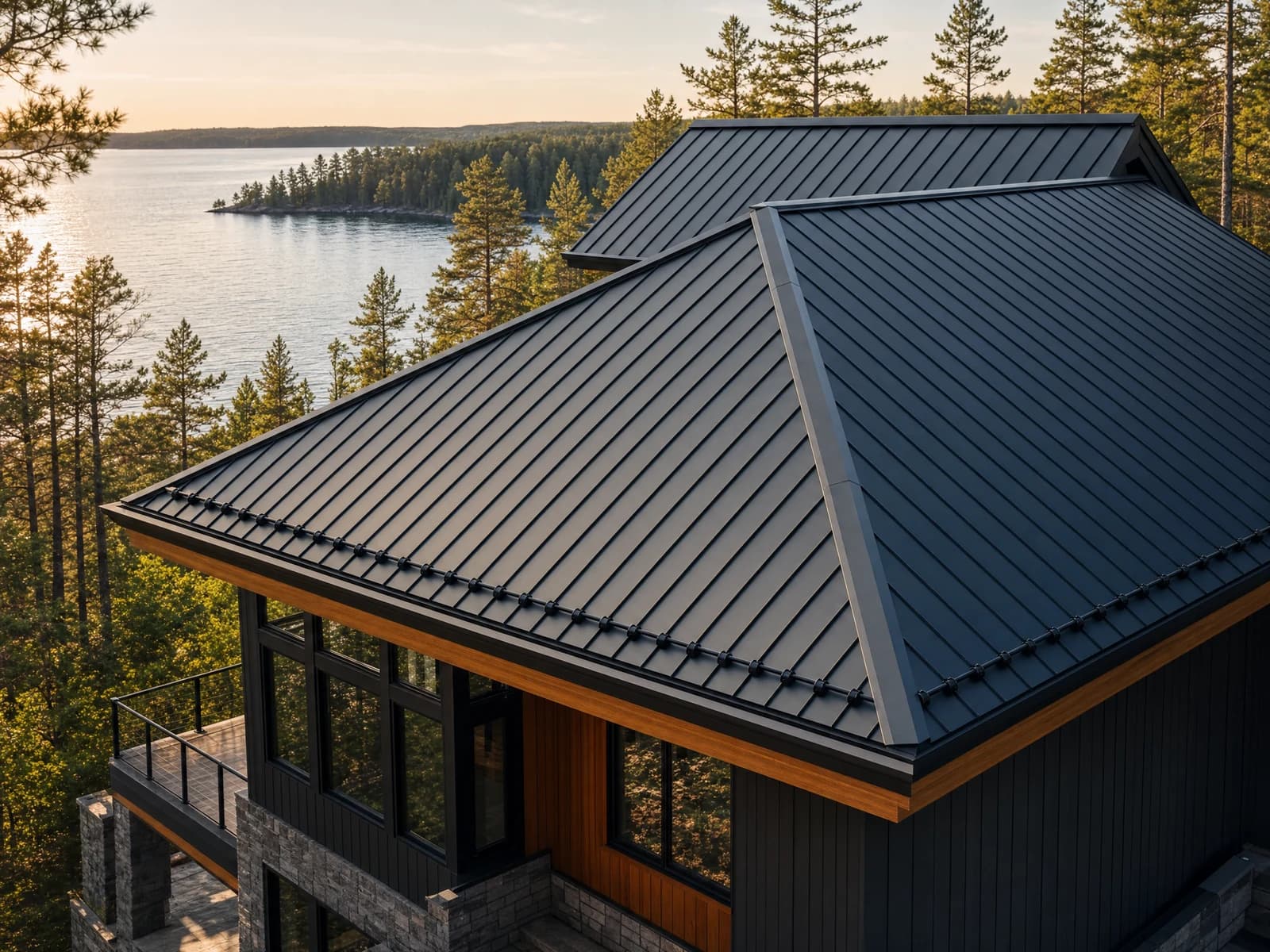
- Snow guards. These are small stops fastened along the roof to hold snow in place. The same page says they clip onto the standing seams, so no holes are punched in the panel. Position and spacing matter. We lay them out by roof pitch and what sits below.
- Smart layout. Sometimes the best fix is to point the slide toward a safe spot, like an open yard, rather than hold the snow up.
Guards hold snow back, which gives up some of the shedding. Over an entry, that is a fair trade.
Ice dams: metal helps, but the attic still matters
Metal does not stop heat from leaving the house. It only changes what happens to the snow. That site puts it this way: with proper attic insulation and ventilation, a metal roof is a highly effective barrier against ice dams.
So the order does not change. Seal the air leaks. Add insulation. Our post on attic insulation and ice dams walks through it. A leaky attic under a metal roof still melts snow from below. An ice and water membrane at the eaves under the metal is a good habit on any roof in this climate.
Condensation: the underlayment matters
Metal does not let water vapor through. On cold nights, moisture in the air can gather on the cold underside of the panels. On a cabin that sits shut all winter, this can be worse.
Your best protection is a good underlayment, a tight attic, and a gap or vented layer under the panels where it fits the roof. GreenBuildingAdvisor editor Malcolm Taylor notes that a metal roof laid on underlayment and sheathing has very little moist air in the gap to condense, and a small air space helps clear what does form. Roof designs differ, so the exact build-up depends on your cabin. We go over it before we quote.
Noise: mostly a myth on a house
Many people picture rain on a metal barn. That roof has no deck, no underlayment, and no insulation under it. A house roof is different. One metal-roof maker says that solid decking and underlayment dampen rain and hail noise, and an insulated attic cuts it more. That source is a manufacturer, so take it as one voice. A cabin with decking, underlayment, and insulation under the panels should be much quieter than a barn. Heavy hail and a very hard rain will still be heard.
Lifespan and when it makes sense
Standing seam steel usually lasts 40 to 60 years in Minnesota, compared with 25 to 30 for shingles. That is the number we use in our metal vs. asphalt comparison.
Metal makes sense when:
- You plan to keep the cabin for 20 years or more, or pass it down.
- The roof is steep, or hard to reach, so fewer visits to it is a real gain.
- You are away for long stretches and want snow to come off on its own.
- You like the look. A matte charcoal or bronze roof sits well against birch, pine, and water.
Shingles make more sense when:
- You may sell in the next 5 to 10 years.
- The budget is tight. A typical shingle replacement is $9,000 to $22,000 installed. Metal costs more up front, and we price it on the same visit so you can compare.
- The roof is small and simple, and a good shingle roof does the job.
Standing seam only. We do not put exposed-fastener panels on a house.
Bottom line
On a lake cabin, standing seam metal sheds snow, lasts a long time, and is quiet enough. It needs snow guards where snow could land on people, a good underlayment, and a tight, insulated attic. See our standing seam metal page for colors and profiles.
Want the numbers for your cabin? Book a free inspection and we will price metal and shingles side by side.
Jimmy Davidson founded Silver Loon Roofing in Crosby, Minnesota, in 2026. Before that he spent more than 30 years building custom homes in the Crested Butte area of the Colorado Rockies, mostly framing, interior and exterior trim, and roofing, with plumbing, electrical, painting and drywall work along the way. He lives in Crosby with his four kids, scopes every estimate himself and checks every job.
More from Jimmy →