
Jimmy Davidson founded Silver Loon Roofing in Crosby, Minnesota, in 2026. Before that he spent more than 30 years building custom homes in the Crested Butte area of the Colorado Rockies, mostly framing, interior and exterior trim, and roofing, with plumbing, electrical, painting and drywall work along the way. He lives in Crosby with his four kids, scopes every estimate himself and checks every job.
Fall is the best time to fix an attic because you can still get to it, and the roof is still dry. Sealing air leaks and adding insulation before the first heavy snow does more to stop ice dams than anything you can do on the roof in January.
An ice dam is a ridge of ice at the eave. It forms when heat from the house warms the roof deck, melts the snow, and the water refreezes at the cold edge. The heat is the cause. The ice is just the result. Our post on how ice dams form has the full picture. This one is about the attic fix.
Air leaks come first
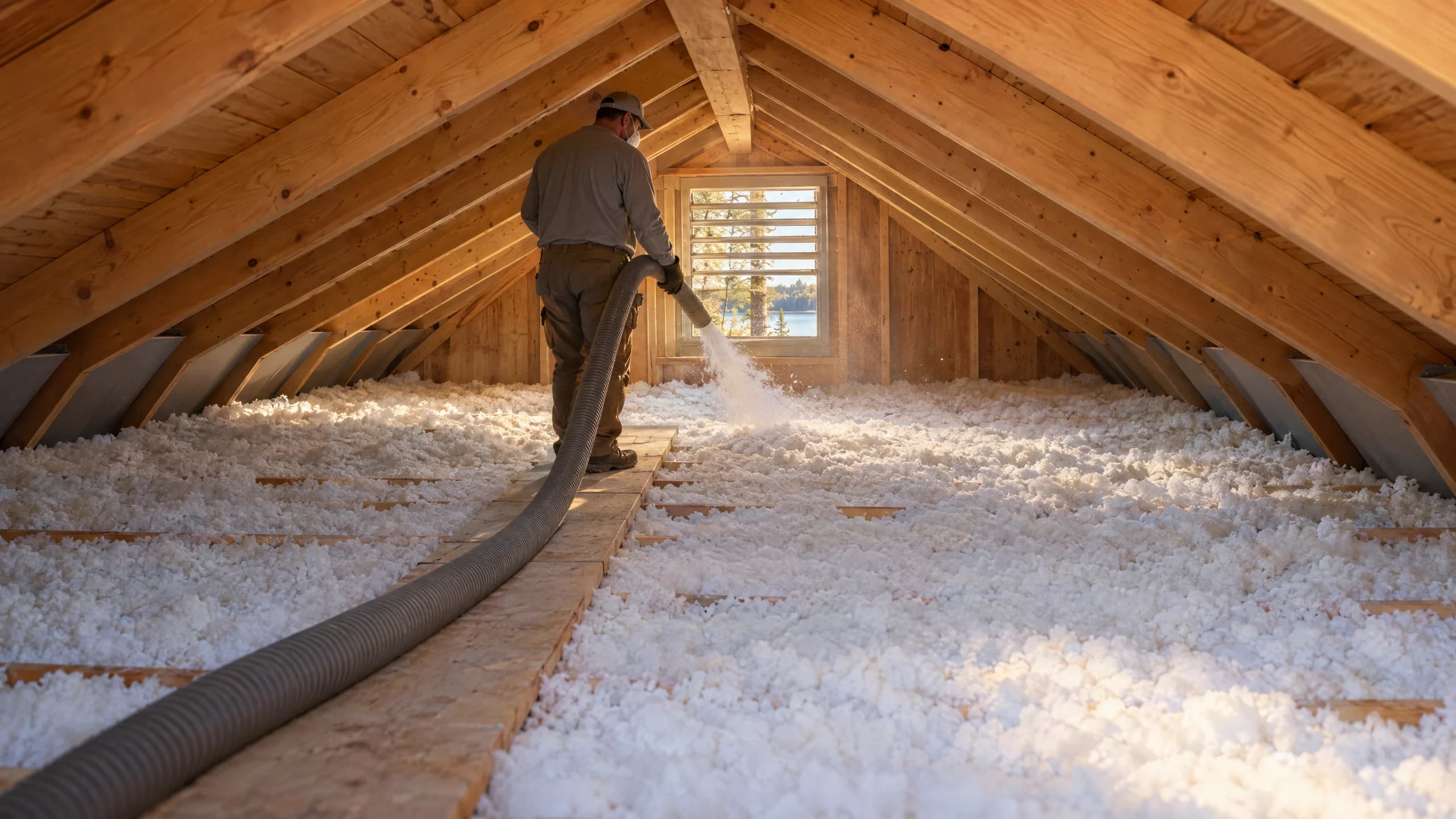
Most people think insulation is the answer. Air sealing comes first. The University of Minnesota Extension says the long-term fix is to make the ceiling airtight so warm, moist air cannot flow from the house into the attic. After that, add insulation to slow the heat that moves through the ceiling.
Why this order? Insulation slows heat. It does not stop air. If warm air leaks around a light fixture or a chimney, it moves into the attic anyway. Insulation sitting on top of a leak does not fix the leak.
The usual leak spots in a lake home or cabin:
- The attic hatch or pull-down stairs
- Recessed lights (can lights)
- Plumbing stacks and wire holes
- The top of interior walls
- Chimney chases and bath fan ducts
Older cabins add a few more. Open gaps around a stone chimney and unsealed knee walls are common.
What an attic inspection looks for
When we go up for a free attic inspection, we check the same things every time:
- Insulation depth. We measure it in inches and compare it to what the house needs.
- Air sealing. We look for dirty or compressed insulation. That is a sign that air has been moving through it.
- Frost or stains. Frost on the nails or dark spots on the deck show where warm air is getting in.
- Ventilation. We look for a clear path from the soffit to the ridge. Blocked soffit vents are common after old blown-in insulation gets pushed up against them.
- Ice dam history. Water stains near the eaves tell us where past dams formed.
You get a written report. It takes about 30 to 45 minutes. We tell you what we found before we leave. See our attic insulation service for what we do and what we do not do. For example, we add and upgrade insulation and seal leaks, but we do not remove old insulation.
What R-value should you have?
R-value is how well insulation resists heat flow. Higher is better. For northern Minnesota, aim high.
Crow Wing County is listed in climate zone 7 in Minnesota's energy rules, along with Aitkin, Cass, Hubbard, and Wadena counties. ENERGY STAR's R-value table says zones 6 and 7 both need these attic levels:
- R-60 if the attic has no insulation today
- R-49 if you already have 3 to 4 inches
The exact depth depends on the product, so we go by the R-value on the bag label, not by inches.
Many older lake cabins have 4 to 8 inches. That is well short. Adding to it is usually the best money you can spend on ice dams.
About ventilation
Ventilation helps, but it is the smaller piece. The Extension says that when the ceiling is airtight and well insulated, only small amounts of roof ventilation are needed. It also says powered attic fans are not recommended as an ice dam fix in Minnesota. They can create other attic moisture problems and pull on the house air. We keep the soffit and ridge path open and leave it there.
Why do it in October
- Dry attic. Insulation works best when it goes into a dry space.
- Warm enough to work. Attics get very cold by January.
- Before the snow. One heavy storm followed by a warm spell is all it takes to start a dam.
- Your heating bill drops too. Less heat leaves through the ceiling all winter.
If a dam has already formed this year, call for ice dam removal first. Then fix the attic so it does not happen again. See ice dam remediation.
Bottom line
Seal the air leaks. Then add insulation until you reach R-49 to R-60. Do it in fall, before the snow. That fixes the cause of ice dams, not just the symptom.
Not sure what your attic has? Book a free inspection and we will climb up, measure, and give you a written report.
Jimmy Davidson founded Silver Loon Roofing in Crosby, Minnesota, in 2026. Before that he spent more than 30 years building custom homes in the Crested Butte area of the Colorado Rockies, mostly framing, interior and exterior trim, and roofing, with plumbing, electrical, painting and drywall work along the way. He lives in Crosby with his four kids, scopes every estimate himself and checks every job.
More from Jimmy →