
Roofing in St. Paul, MN
Twin Cities Metro · Ramsey County
Silver Loon covers St. Paul (Ramsey County): roof replacement, repair, storm damage, and ice dams. Based in Central Minnesota.
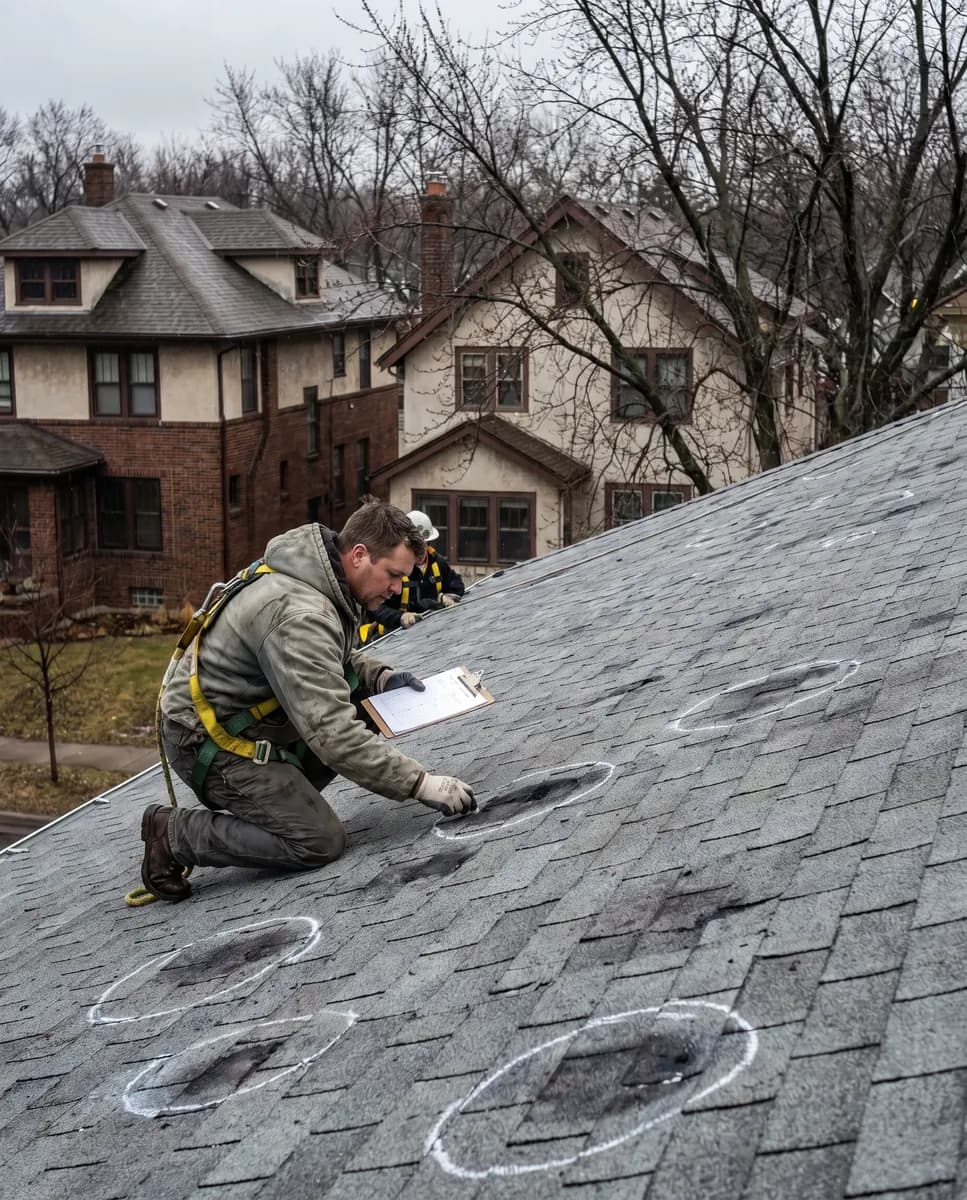
The April 2025 golf-ball hail hit neighborhoods across St. Paul that have not thought much about storm damage — Cathedral Hill, Dayton's Bluff, the Summit Avenue corridor. Hail at that size does not spare a roof because the house is historic or well-maintained. If your home absorbed that event and no one has been on the roof, the insurance documentation window is open but not permanently.
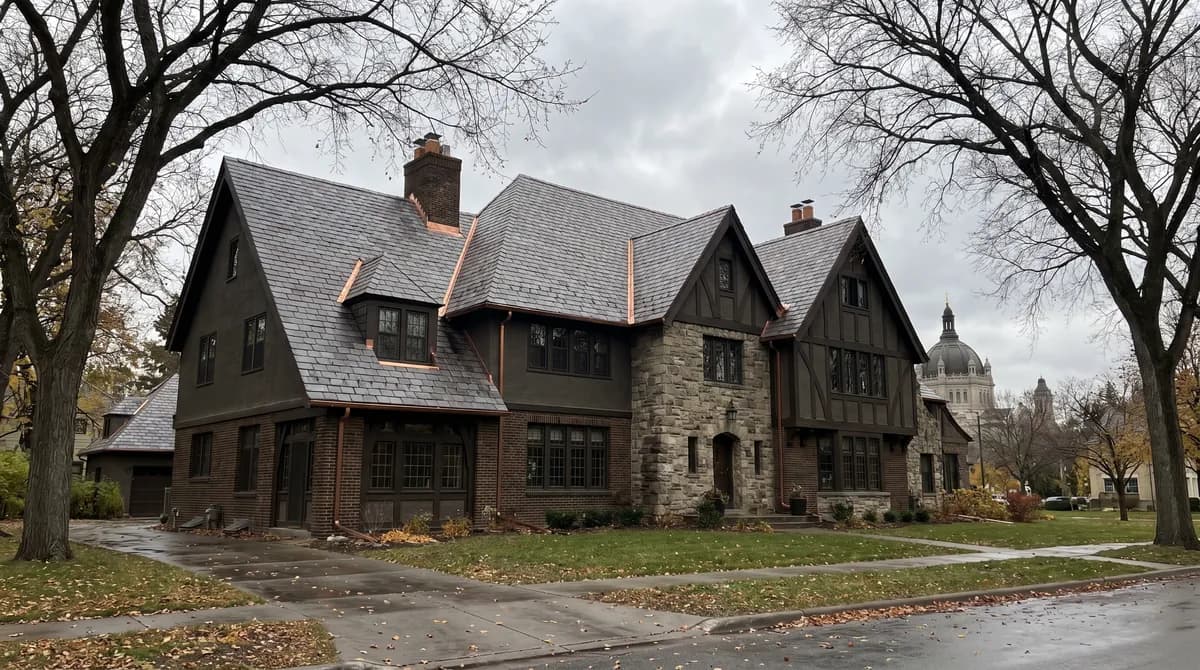
St. Paul has more pre-1920 housing than almost any city in the state, and those homes — the brownstones and foursquares near Summit Avenue, the older worker cottages in Dayton's Bluff — carry original or early-replacement flashing details that require different skills than standard suburban roofing. Lead-based flashings, complex dormers, and chimneys that have been through a century of Minnesota winters need a contractor who reads the material, not one who defaults to the same spec on every job.
About St. Paul, MN
St. Paul is Minnesota's capital city, home to roughly 306,000 residents spread across neighborhoods that have distinct personalities without losing the sense that they belong to the same place. Cathedral Hill anchors the historic core, where the Cathedral of Saint Paul — a Classical Renaissance structure with a 76-foot-diameter copper-clad dome rising 186 feet above the surrounding blocks — frames the skyline in a way that has not changed much since the building was completed in 1915. Summit Avenue runs west from Cathedral Hill for nearly five miles along the Mississippi River bluff, carrying what is often described as the longest continuous stretch of Victorian mansions in the United States. The homes along that corridor — some with steeply pitched slate roofs, others with original cedar shake and elaborate dormers — are the kind of construction that requires a contractor who understands historic materials before picking up a pry bar.
The broader city spreads east and south from that historic spine into neighborhoods with their own character. Highland Park, on the river bluffs above the Ford Site, is a family-oriented district with well-regarded schools and well-kept 1940s and 1950s bungalows. West Seventh runs from downtown toward Fort Snelling, mixing older working-class housing with a growing number of renovated properties as the corridor continues to attract investment. Payne-Phalen, on the East Side, carries a dense stock of early-twentieth-century duplexes and smaller single-family homes, many of which have seen two or three roofing cycles already and are candidates for full tear-offs and deck inspection. Dayton's Bluff and Como round out a city where very few blocks were built after 1970 — the housing stock is old, and it shows up in the roofing calls we take.
Housing stock and market
The defining characteristic of St. Paul roofing work is the age and variety of the structures. Pre-WWII construction dominates the city — the 1920s and 1930s produced most of the bungalows, foursquares, and duplexes that fill Payne-Phalen, Frogtown, and the North End. The Victorian era left Summit Avenue and the surrounding streets with architectural details that require careful assessment before any work begins: steep slopes, multiple intersecting valleys, chimneys that have been through a century of frost cycles, and original flashing that has been patched so many times the layer count is unclear. These homes do not get a standard shingle-over-shingle quote — they get a full deck evaluation first, because skipping that step on a 110-year-old structure is how a $14,000 replacement turns into a $22,000 structural repair.
St. Paul has seen a roughly 10 percent population increase over the past decade, driven by urban development interest and the city's position in the Twin Cities metro corridor. That growth has pulled younger buyers into neighborhoods they might have skipped ten years ago, and those buyers are often discovering that the seller's disclosure understated the roof's condition. We see a consistent volume of calls from new St. Paul homeowners who close in spring and call us by August when the first heavy rain reveals what the inspection missed. Median home values in the city run near $260,000, which means the cost of a replacement represents a meaningful fraction of the asset — the case for getting the scope right the first time is straightforward.
Weather and roof realities
St. Paul's continental climate does not leave much room for a marginal roof. Average annual snowfall runs over 50 inches, with the accumulation season running from November through late March in most years. Freeze-thaw cycles are the persistent winter problem: a warm stretch in January pushes daytime temperatures above 32 degrees, surface snow melts and runs toward the eave, then overnight temperatures drop back below freezing and that runoff locks into ice at the cold overhang. For any St. Paul home with under-insulated attic space — and there are many, especially in the pre-WWII stock — this cycle repeats through the winter and builds ice dams that eventually back water under shingles and into the structure. The damage is typically slow and invisible until it reaches finished ceilings or wall cavities. By then the repair scope is larger than the original dam removal would have cost.
Summer brings a different set of hazards. St. Paul's position in the metro places it directly in the path of thunderstorm tracks that develop over the southwest and move northeast through the Twin Cities. Golf ball-sized hail was reported in 2025 storm events — stones that size strike asphalt shingles hard enough to fracture the mat beneath the granule surface without leaving a hole that is visible from the ground. That kind of impact damage compromises the shingle's ability to shed water and shortens its effective life, but it rarely shows up in a homeowner's visual scan from the driveway. An adjuster who does not walk the roof will miss it entirely. We have been through enough St. Paul claim inspections to know what to document and how to present the scope so the settlement reflects the actual damage.
High winds are a consistent factor in summer storm events, and tornado risk is not abstract here. The 1904 Twin Cities tornado — one of the most destructive in Minnesota history — caused widespread structural damage across St. Paul and Minneapolis, a reminder that the metro is not sheltered from the severe weather patterns that affect the rest of the state. More recent events have produced damaging straight-line winds that lift tab shingles on older roofs and stress ridge cap installations. On any St. Paul replacement, we discuss impact-resistant Class 4 shingles with every homeowner — the protection they offer against hail is real, and several Minnesota insurers offer premium discounts for qualifying installations that can offset part of the upgrade cost over time.

Residential Services
Roofing services in St. Paul
We offer the full residential menu from our Central Minnesota base — the same crew, the same standards, across all 43 Minnesota cities we serve.
Replacement in St. Paul
Full residential roof replacement with architectural shingles, metal, or specialty…
Replacement in St. Paul→Repair in St. Paul
Targeted roof repairs for Minnesota homes and cabins — leak diagnosis, flashing re…
Repair in St. Paul→Storm Damage in St. Paul
Hail and wind damage assessment, insurance claim support, and full restoration for…
Storm Damage in St. Paul→Get in Touch
Contact Silver Loon Roofing — St. Paul
- Serving
- St. Paul, MN (Ramsey County)
- Phone
- (970) 555-0199
- Hours
- Mon–Fri 7 am – 6 pm
Sat 8 am – 2 pm
Dispatched from our Central Minnesota home office along the Rum River
Nearby areas we serve from St. Paul
- Highland Park
- West Seventh
- Payne-Phalen
- Como
- Dayton's Bluff
Need roofing work in a nearby town? Request a free estimate — we cover the surrounding area without a travel surcharge.
Common Questions
Frequently asked questions — St. Paul
Ready for a straight-talk roof estimate in St. Paul?
We inspect, document, and give you a written line-item estimate before any work starts. No pressure, no surprises.