Roofing in St. Cloud, MN
St. Cloud roofing — Granite City on the Mississippi, practical work done right.
Silver Loon covers St. Cloud (Stearns County): roof replacement, repair, storm damage, and ice dams. Based in Central Minnesota.
The August 2024 hail and wind event put Stearns County through conditions that reminded Upper Town and Lower Town homeowners why storm readiness matters this far north. Near Munsinger Gardens and along the St. Croix River corridor, roofs that had been running quietly for years absorbed a test that changed the math on how much life they have left. If your home was in that path and has not been inspected since, the documentation window for a clean claim is still open.
St. Cloud's housing stock spans more than a century — from the older brick neighborhoods near downtown to newer subdivisions on the city's perimeter. The older homes carry original flashing and attic assemblies that create ice dam risk every January; the newer ones face the same Central Minnesota storm exposure with more complex rooflines. An inspection is the starting point for understanding what you have and what it will take to keep it working.
About St. Cloud, MN
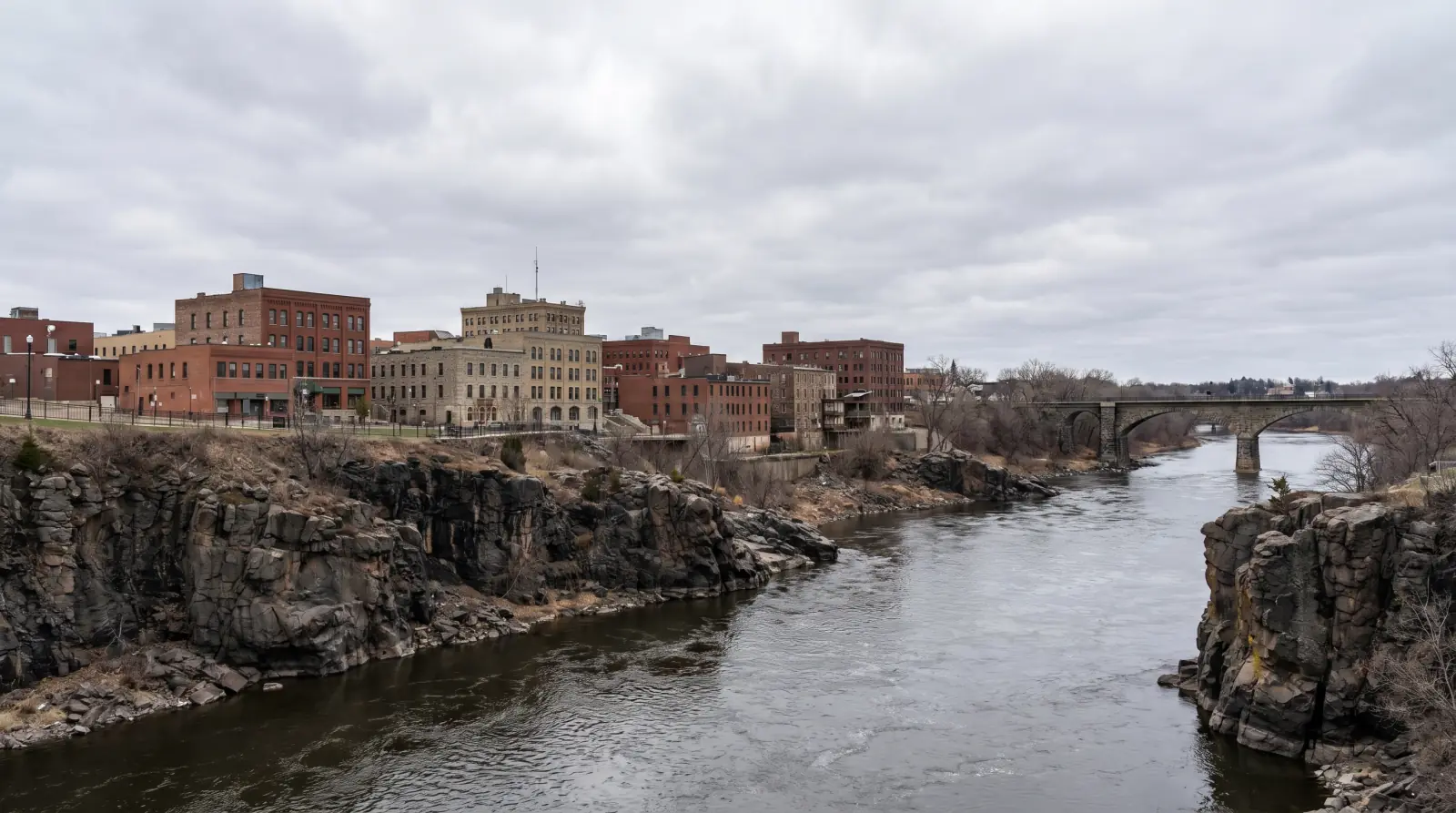
St. Cloud sits on the Mississippi River in central Minnesota, roughly 65 miles northwest of Minneapolis, and carries a nickname earned by history rather than marketing: the Granite City. The stone quarried here — St. Cloud gray granite — built courthouses, federal buildings, and monuments across the country from the 1870s through the early twentieth century, and the 1922 Stearns County Courthouse downtown still demonstrates what that industry could produce: massive columns, a glowing yellow tile dome, and an inscription marking it as a memorial to the county's pioneers. The quarrying era left its mark on the city's character — St. Cloud was built by people who worked in stone, and the practical directness of that heritage persists in how the city operates today.
With a population near 73,000, St. Cloud is the largest city in central Minnesota and the regional hub for Stearns, Benton, and Sherburne Counties. St. Cloud State University brings roughly 9,000 students to campus and keeps the city's median age around 32 — younger than most Minnesota cities of similar size. CentraCare Health anchors the healthcare sector and is one of the city's largest employers. The Somali community that settled in St. Cloud over the past two decades has made it one of the more culturally diverse cities in greater Minnesota, a shift that shows up in the commercial corridors and school enrollment numbers. Quarry Park and Nature Preserve — 685 acres of granite outcrop, wetlands, and swimming quarry — gives the city outdoor recreation that few urban areas its size can match. Munsinger Gardens along the Mississippi adds formal gardens to the riverfront, a quiet counterpoint to the granite bluffs upstream.
St. Cloud grew steadily through the twentieth century and has continued at roughly five percent since 2020, a pace sustained by the university, the hospital system, and regional retail that draws from a wide surrounding area. The city's position at the junction of US-10, US-23, and MN-15 makes it a natural service center for smaller communities in every direction — Cold Spring, Sauk Rapids, Sartell, and Waite Park all function as part of the same economic region. That concentration of activity keeps the housing market active, and the roofing replacement cycle runs continuously across a stock that spans more than 100 years of construction.
Housing stock and market
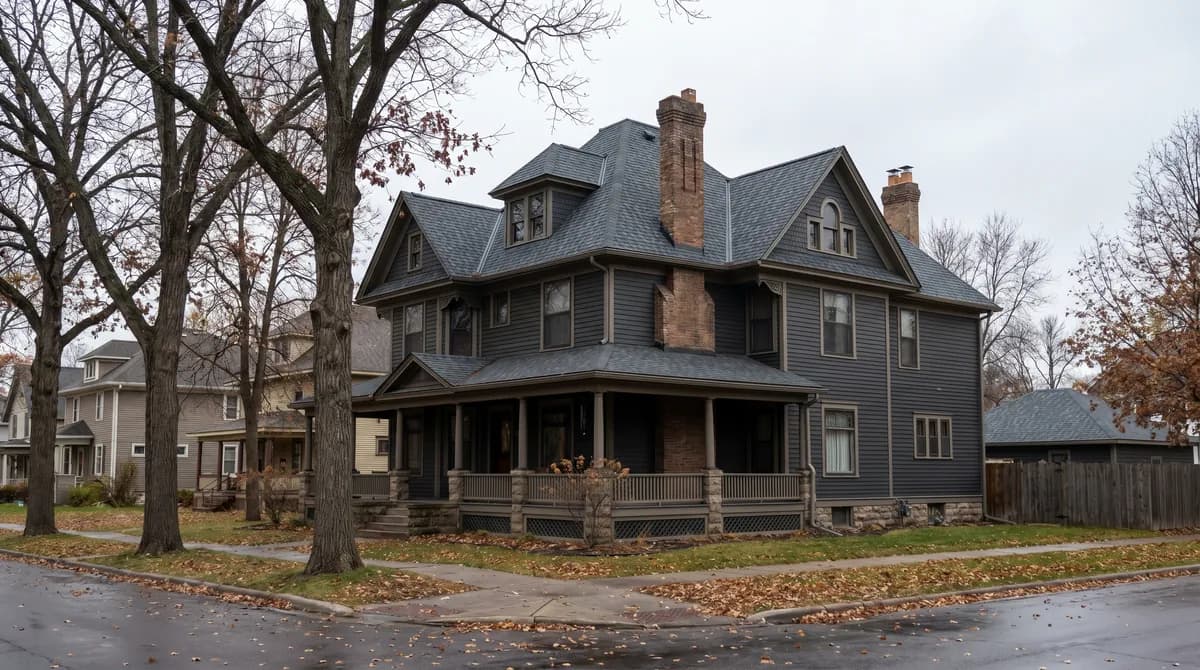
St. Cloud's housing stock reflects a longer construction arc than most Minnesota cities its size. The oldest neighborhoods — Upper Town on the east side of the Mississippi and Lower Town near the downtown commercial district — date to the granite-quarrying era of the late 1800s and include Victorian-era two-stories and worker cottages with steeply pitched roofs, complex dormer configurations, and original framing that has now been through 120 or more years of Minnesota freeze-thaw cycles. Attic insulation in most of these homes was either never installed to modern depths or was retrofitted incorrectly — conditions that produce ice dams nearly every winter that brings meaningful snowfall. Flashings at dormers and chimneys on these properties are often original or early-replacement work and warrant a full inventory before any project is quoted.
The postwar decades added the bulk of the city's residential square footage: ranch homes, split-levels, and two-story colonials built through the 1950s, 1960s, and 1970s on lots that were generous by metro standards. These homes carry the standard vulnerabilities of that construction era — low-pitch designs that accumulate snow readily, insulation levels below current code even when installed new, and original roofing systems that have been through one or two replacement cycles. University-adjacent neighborhoods near SCSU carry a high proportion of rental housing in this vintage, which tends to receive deferred maintenance. The southern and western suburban fringe added newer subdivisions through the 1990s and 2000s, but they face the same weather the older stock does. Median home values across the city run in the $230,000 to $290,000 range, somewhat below the metro. Homeowners here are not looking for upsells — they are looking for an accurate scope and a fair price, and that is the only way we quote.
The rental market near St. Cloud State University creates a secondary demand stream: investment property owners managing portfolios of older housing who need efficient, well-documented work without requiring them to be on-site for every decision. We work with rental property owners the same way we work with owner-occupants — written estimate before anything starts, permit pulled before the first crew member sets foot on a ladder, progress photos, and a final invoice that matches the estimate unless scope changed with written approval at the time of change.
Weather and roof realities in St. Cloud
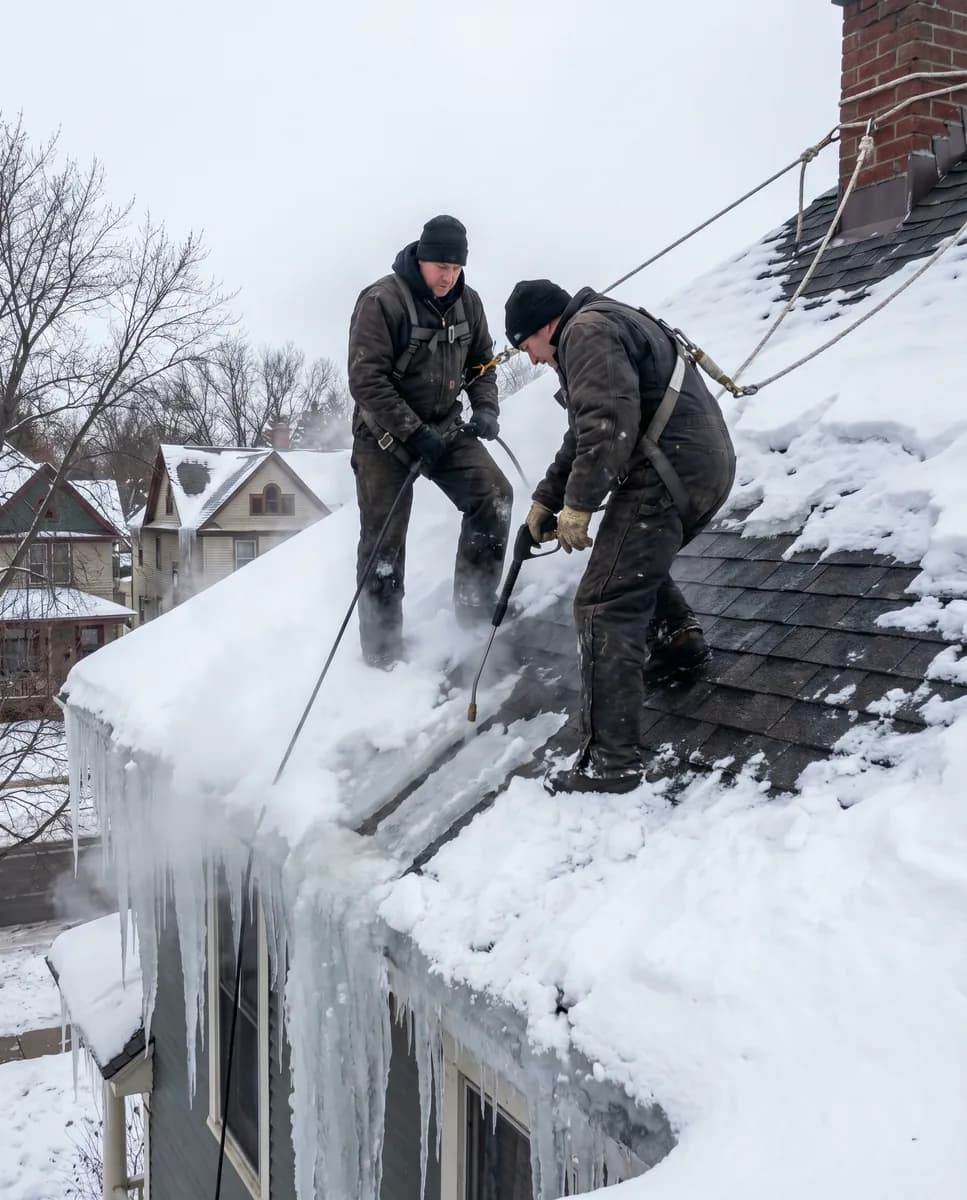
St. Cloud averages 45 inches of annual snowfall, and the season reliably runs from November into late March. The continental climate here — no large bodies of water to moderate temperature swings — means the freeze-thaw cycle hits hard and often. Temperatures cross the 32-degree mark multiple times per week during January and February in a typical year, which is exactly the condition that drives ice dam formation: attic heat escapes through an under-insulated deck, warms the roof surface enough to melt snow, and that meltwater runs down the slope until it hits the cold eave overhang and refreezes. On Upper Town and Lower Town homes where the original attic insulation has never been brought to current depths, this happens every meaningful snow year. The dam backs up water behind it, and water under pressure finds whatever gap is available — a failed step flashing at a dormer, an unsealed nail penetration, a short ice-and-water-shield termination. The damage appears as a ceiling stain; the structural cause is in the attic assembly, and that is where the fix has to happen.
The Mississippi River corridor through St. Cloud creates storm exposure that extends beyond typical central Minnesota patterns. The river valley funnels southwest storm tracks northeast through the city, and St. Cloud sits in a region with a documented history of significant tornado events. The 1886 Sauk Rapids F4 tornado — one of the deadliest in Minnesota history, killing more than 70 people in Sauk Rapids just north of the city — is the most extreme marker, but the region sees active storm seasons regularly. August 2024 brought meaningful hail and high-wind events across the St. Cloud area. Hail damage on asphalt shingles often does not show from the ground: the granule layer absorbs the visible impact while the mat underneath bruises or cracks, shortening the roof's serviceable life by years without producing an obvious ceiling stain. An inspection after any event producing hail larger than quarter-sized is worth scheduling regardless of whether interior evidence has appeared.
Heavy snow loads compound the ice dam risk on St. Cloud's older housing stock. A wet Minnesota snowfall deposits 15 to 20 pounds per cubic foot on a flat surface. At 45 inches of annual accumulation across a typical home footprint, the structural math adds up fast on low-pitch roofs — the ranch designs common in the city's postwar neighborhoods do not shed snow the way a steeper Victorian pitch does. Wind gusts during severe thunderstorm warnings regularly exceed 60 mph across Stearns County, and the open terrain along the Mississippi corridor concentrates that exposure on homes near the river and the bluffs. Impact-resistant Class 4 shingles are worth specifying on any St. Cloud replacement, both for the protection they provide across subsequent storm seasons and for the homeowners insurance discount they can qualify for in Minnesota. We go through that cost-benefit calculation at every estimate — not as a pitch, but because it is information you need to make a decision that will stand up for 25 years.

Residential Services
Roofing services in St. Cloud
We offer the full residential menu from our Central Minnesota base — the same crew, the same standards, across all 43 Minnesota cities we serve.
Replacement in St. Cloud
Full residential roof replacement with architectural shingles, metal, or specialty…
Replacement in St. Cloud→Repair in St. Cloud
Targeted roof repairs for Minnesota homes and cabins — leak diagnosis, flashing re…
Repair in St. Cloud→Storm Damage in St. Cloud
Hail and wind damage assessment, insurance claim support, and full restoration for…
Storm Damage in St. Cloud→Get in Touch
Contact Silver Loon Roofing — St. Cloud
- Serving
- St. Cloud, MN (Stearns County)
- Phone
- (970) 555-0199
- Hours
- Mon–Fri 7 am – 6 pm
Sat 8 am – 2 pm
Dispatched from our Central Minnesota home office along the Rum River
Nearby areas we serve from St. Cloud
- Waite Park
- Sartell
- Sauk Rapids
- Cold Spring
- Richmond
Need roofing work in a nearby town? Request a free estimate — we cover the surrounding area without a travel surcharge.
Common Questions
Frequently asked questions — St. Cloud
Ready for a straight-talk roof estimate in St. Cloud?
We inspect, document, and give you a written line-item estimate before any work starts. No pressure, no surprises.