Roofing in Richfield, MN
Richfield roofing — inner-ring suburb, postwar homes, honest estimates.
Silver Loon covers Richfield (Hennepin County): roof replacement, repair, storm damage, and ice dams. Based in Central Minnesota.
The April 2026 hail event hit Richfield at a time of year when most homeowners are not thinking about their roofs yet — and hail that size on a postwar rambler does real damage that the granule layer absorbs quietly. Near Wood Lake Nature Center and through the established grid neighborhoods that define most of Richfield, a lot of those roofs have been through the 1951 F3, decades of Minnesota winters, and now this. At some point the math stops working in the shingle's favor.
Richfield's postwar ramblers are genuinely solid construction — but they were built to 1950s standards, which means attic depth, insulation, and ventilation that was not designed for current energy reality. Ice dam formation in those homes is annual, not occasional. The root fix is in the attic assembly, not on the roof surface, and we assess both in the same inspection visit.
About Richfield, MN
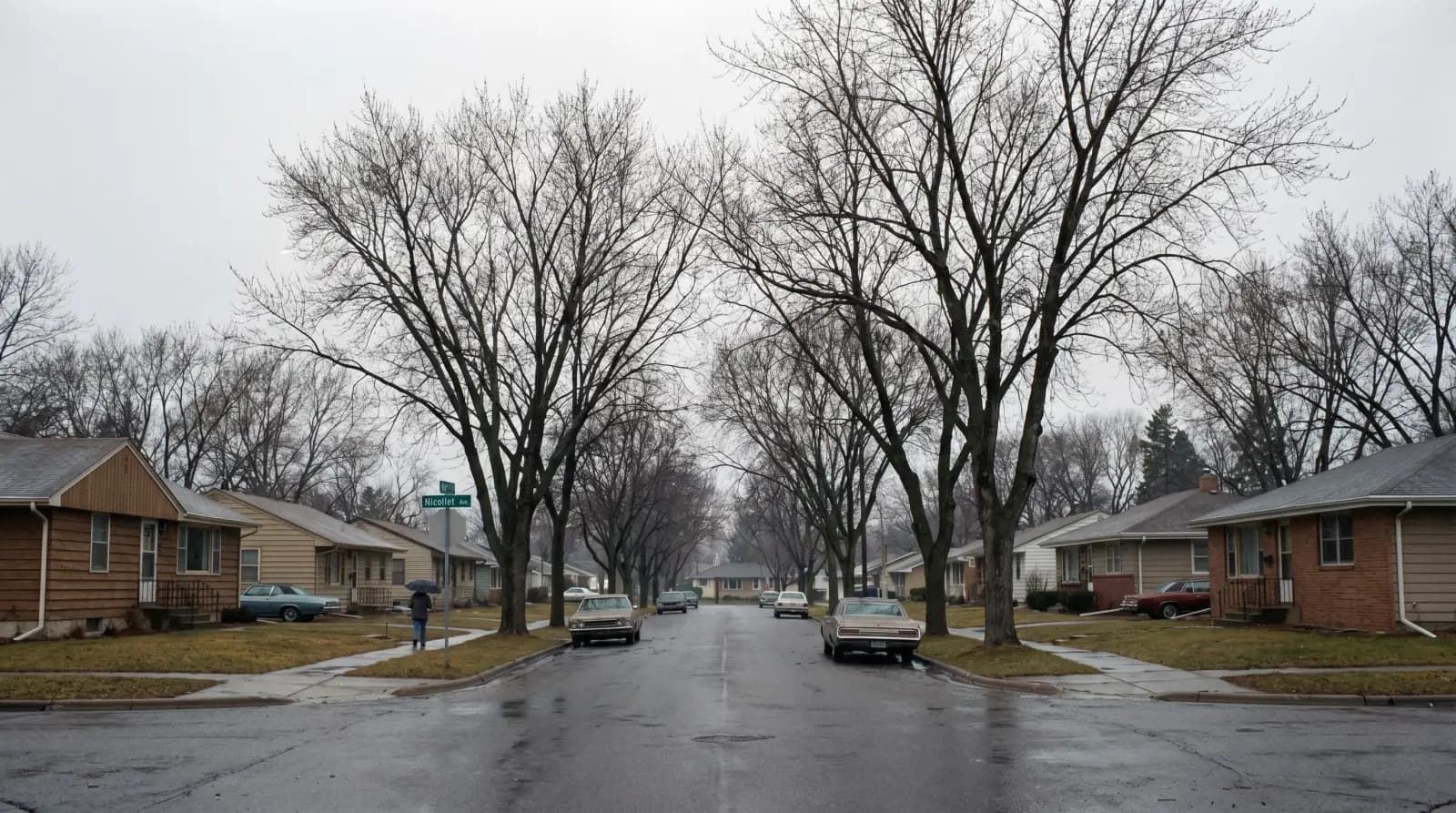
Richfield is one of the oldest suburbs in Minnesota — a seven-square-mile first-ring city of around 37,000 residents that borders Minneapolis on three sides and sits roughly two miles north of MSP Airport. The city grew almost entirely in a single compressed period: the decade and a half after World War II, when veterans and young families arrived faster than developers could grade lots. Richfield peaked near 50,000 residents in 1970 and then stabilized as the metro expanded further south and west. Today the housing stock, the street grid, the park network, and the commercial corridors all carry that postwar origin clearly. Shallow-pitched ramblers with attached single-car garages, split-levels with brick veneers and picture windows, small capes with second-story dormers — these are the homes that define Richfield's residential blocks, built by a generation that intended to stay and constructed accordingly.
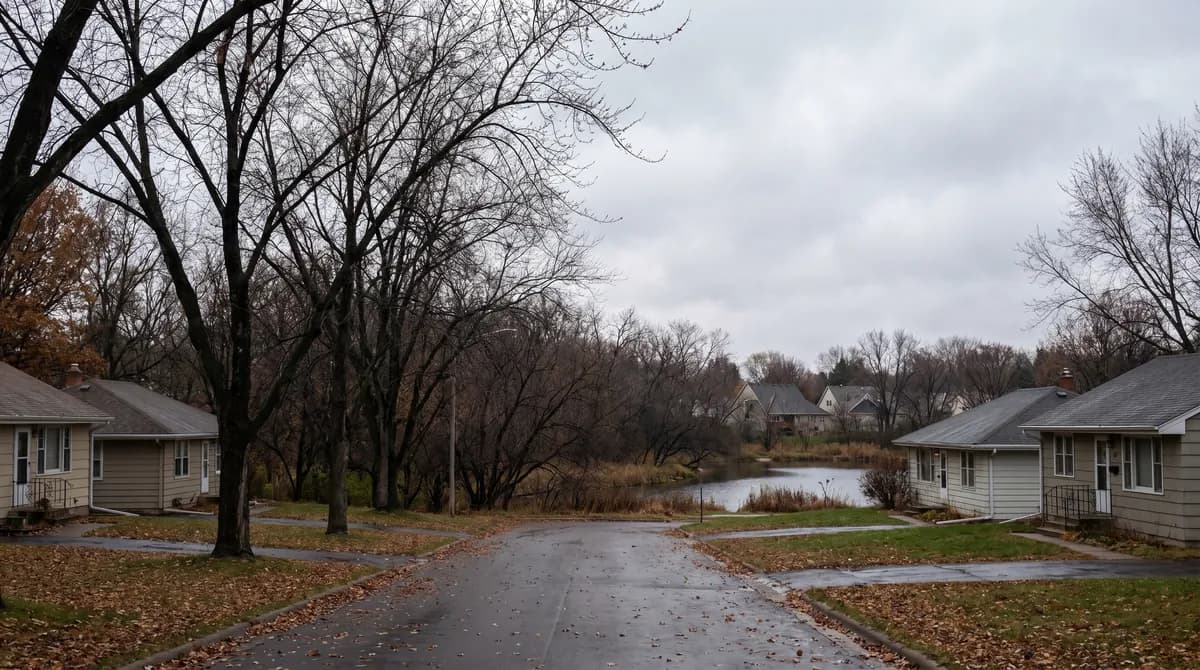
The Honoring All Veterans Memorial in Veterans Memorial Park anchors the community's civic identity: a bronze bust of World War II Iwo Jima flag-raiser Chuck Lindberg mounted on a twelve-ton taconite rock, surrounded by black granite tablets etched with veterans' names from multiple conflicts and six columns bearing military branch seals. It is a substantial piece of civic infrastructure that reflects something true about Richfield's character — the community takes its commitments seriously and builds them to last. Wood Lake Nature Center, a 150-acre restored wetland near the geographic center of the city, functions as the ecological anchor of Richfield's park system. Trails and boardwalks extend through cattail marsh, oak woodland, and open water, with a recently completed visitor center bringing updated facilities to what remains a significant piece of habitat inside a fully built-out first-ring suburb.
Best Buy's global headquarters sits on the edge of the I-494 corridor near the Highway 77 interchange, anchoring Richfield's commercial and employment identity within the metro. For homeowners, that employment anchor translates to a stable residential market despite the aging housing stock. Median home values in Richfield have held in the $340,000 to $360,000 range through 2024 and into 2025 — a solid figure for homes built predominantly in the 1950s and 1960s, and a sign that buyers value the proximity to Minneapolis, MSP Airport, and the Mall of America corridor that Richfield's location provides.
Housing stock and roofing realities
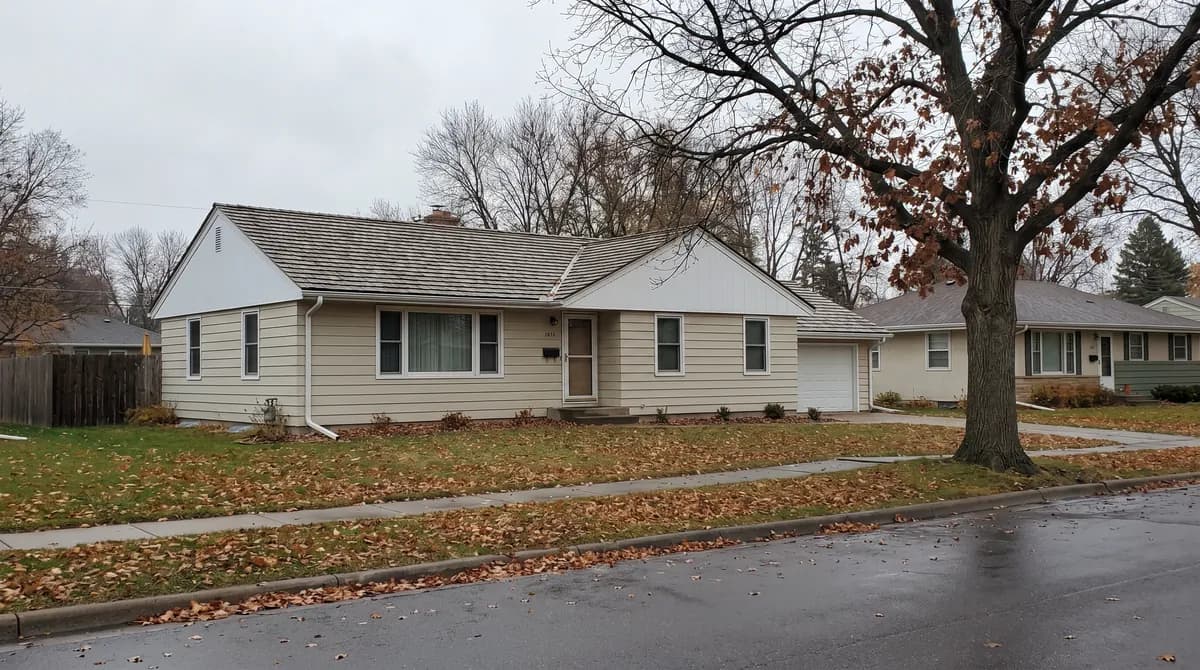
The postwar housing stock in Richfield creates a specific and recurring set of roofing challenges that differ from what you find in newer suburbs. Ramblers — single-story homes with low-pitched roofs, often a 3:12 or 4:12 slope — are the most common structure type in the city. At those pitches, standard architectural shingles are within manufacturer specifications, but snow does not shed the way it does on a steeper 8:12 or 10:12 roof. Snow sits longer, accumulates more total weight per square foot of deck, and creates the thermal conditions for ice dams whenever attic air temperatures stay above freezing during a cold snap.
Attic insulation in most Richfield ramblers compounds the problem. A home built in 1955 or 1960 may have batt insulation installed to the standards of that era — R-11 or R-13 over the ceiling joists. Current Minnesota energy code calls for R-49 to R-60 in attics. That gap is not a minor inefficiency; it is a direct driver of heat loss through the roof deck, which is exactly the condition that produces ice dams. We walk the attic and check insulation depth before quoting any replacement in Richfield — not to add line items, but because a new roof over a heat-leaking deck will repeat the same damage cycle in three to five years. Split-levels, common in Richfield's mid-1960s neighborhoods, present a different geometry: two roof planes at different heights with a valley between them. Valleys concentrate water flow, and they are also where granule loss from hail concentrates and where aging shingle seams are most likely to open.
Cape Cods with dormers add flashing complexity — anywhere roof planes intersect or terminate at a vertical wall is a potential failure point, and those intersections require step flashing and counterflashing installed correctly to stay watertight through Richfield's freeze-thaw seasons. None of these are unusual or difficult problems, but they require attention during inspection and accurate accounting in the estimate. Nothing surfaces as a change order mid-project on a job that was scoped carefully at the start.
Weather and what it does to Richfield roofs
Richfield averages 54 inches of annual snowfall, slightly above the Twin Cities average, and the freeze-thaw cycle through January, February, and March is relentless. A typical Richfield January week crosses the 32-degree mark multiple times in both directions — cold enough to freeze, warm enough to melt, cold enough to freeze again. Every one of those crossings is a stress cycle on whatever shingles are on the roof. When attic heat escapes through an under-insulated deck, it warms the roof surface enough to melt snow; that meltwater runs down the slope, hits the cold eave overhang, and refreezes into a dam that backs standing water up the slope and into any gap — a failed flashing joint, an unsealed nail penetration, a short ice-and-water-shield termination.
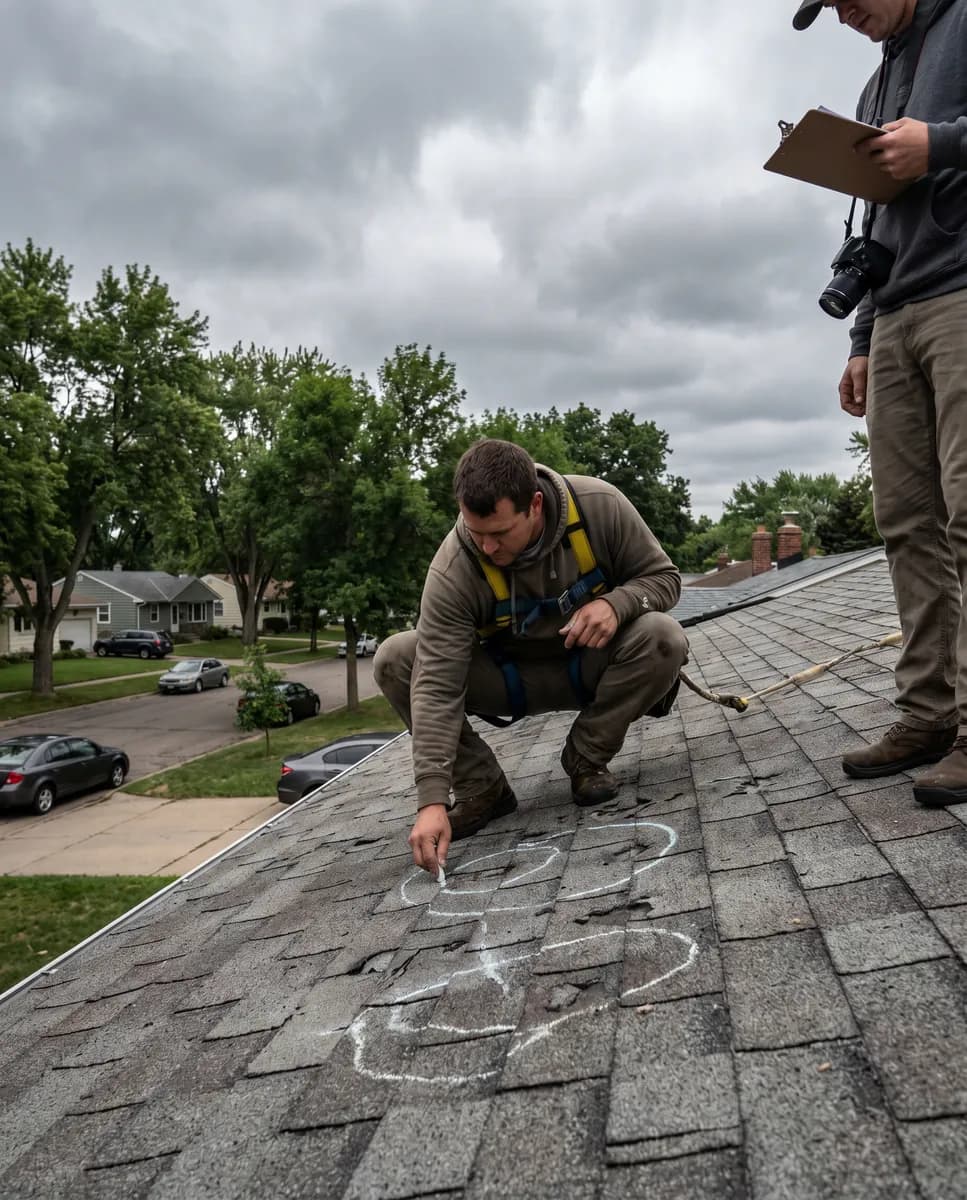
Tornado history in Richfield is not abstract. An F3 tornado tracked directly through the city in July 1951, causing significant structural damage across residential blocks. The May 1965 outbreak — one of the most destructive tornado sequences in Minnesota's recorded history — affected the broader south Minneapolis suburban area, including communities immediately adjacent to Richfield. More recently, the April 2026 hail events that crossed the Twin Cities metro produced documented damage across Hennepin County, with large-hail stones striking asphalt shingles at speeds that cause mat bruising even when the stones do not punch through the granule layer outright. Bruised mat beneath an intact surface does not produce an obvious leak immediately — it shows up as accelerated granule loss over the following two to three years and premature shingle failure. You need someone on the roof walking the field, not making a ground-level assessment from a ladder at the gutter line.
Impact-resistant Class 4 shingles are worth specifying on any Richfield replacement. The protection through future storm seasons is the primary argument, but Minnesota homeowners insurance carriers commonly offer premium discounts for Class 4 roofs, and on a full replacement that reduction can recover a meaningful portion of the upgrade cost over five to seven years. We present that math in writing when we quote a replacement so you can make the decision with actual numbers rather than a general recommendation. Summer thunderstorm risk across the metro extends from late May through August, with wind gusts during severe thunderstorm warnings in Hennepin County regularly exceeding 60 mph. After any significant event we provide written post-storm inspection reports with photo documentation at no charge before a contract is signed, and we attend adjuster inspections so damage assessments reflect actual roof conditions rather than what is visible from the street.
Residential Services
Roofing services in Richfield
We offer the full residential menu from our Central Minnesota base — the same crew, the same standards, across all 43 Minnesota cities we serve.
Replacement in Richfield
Full residential roof replacement with architectural shingles, metal, or specialty…
Replacement in Richfield→Repair in Richfield
Targeted roof repairs for Minnesota homes and cabins — leak diagnosis, flashing re…
Repair in Richfield→Storm Damage in Richfield
Hail and wind damage assessment, insurance claim support, and full restoration for…
Storm Damage in Richfield→Get in Touch
Contact Silver Loon Roofing — Richfield
- Serving
- Richfield, MN (Hennepin County)
- Phone
- (970) 555-0199
- Hours
- Mon–Fri 7 am – 6 pm
Sat 8 am – 2 pm
Dispatched from our Central Minnesota home office along the Rum River
Nearby areas we serve from Richfield
- Minneapolis
- Bloomington
- Edina
- Eden Prairie
- Minneapolis-St. Paul Airport area
Need roofing work in a nearby town? Request a free estimate — we cover the surrounding area without a travel surcharge.
Common Questions
Frequently asked questions — Richfield
Ready for a straight-talk roof estimate in Richfield?
We inspect, document, and give you a written line-item estimate before any work starts. No pressure, no surprises.