Roofing in Mankato, MN
Mankato roofing — Blue Earth County river city, written estimates, reliable work.
Silver Loon covers Mankato (Blue Earth County): roof replacement, repair, storm damage, and ice dams. Based in Central Minnesota.
The 2006 F3 near Mankato caused fatalities and structural destruction that put southern Minnesota's storm exposure in a category that the 1946 tornadoes had already established. Baseball-size hail has been recorded in the region, and the older homes in Old Town and Lincoln Park carry roof assemblies that have been through more of that history than most owners realize. If your home dates to before 1970, a flashing and attic inspection is worth doing regardless of whether you have seen any interior signs of water.
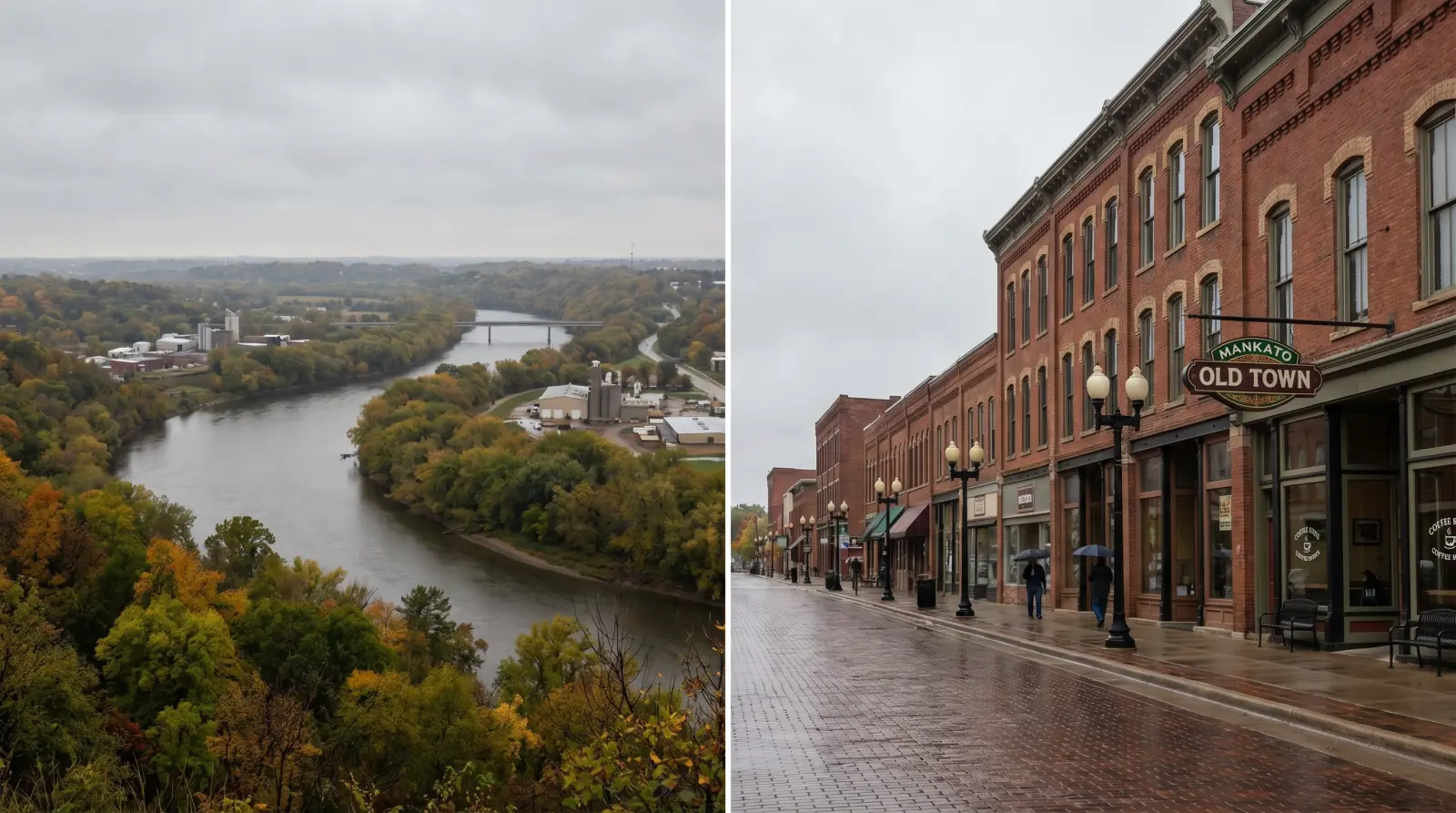
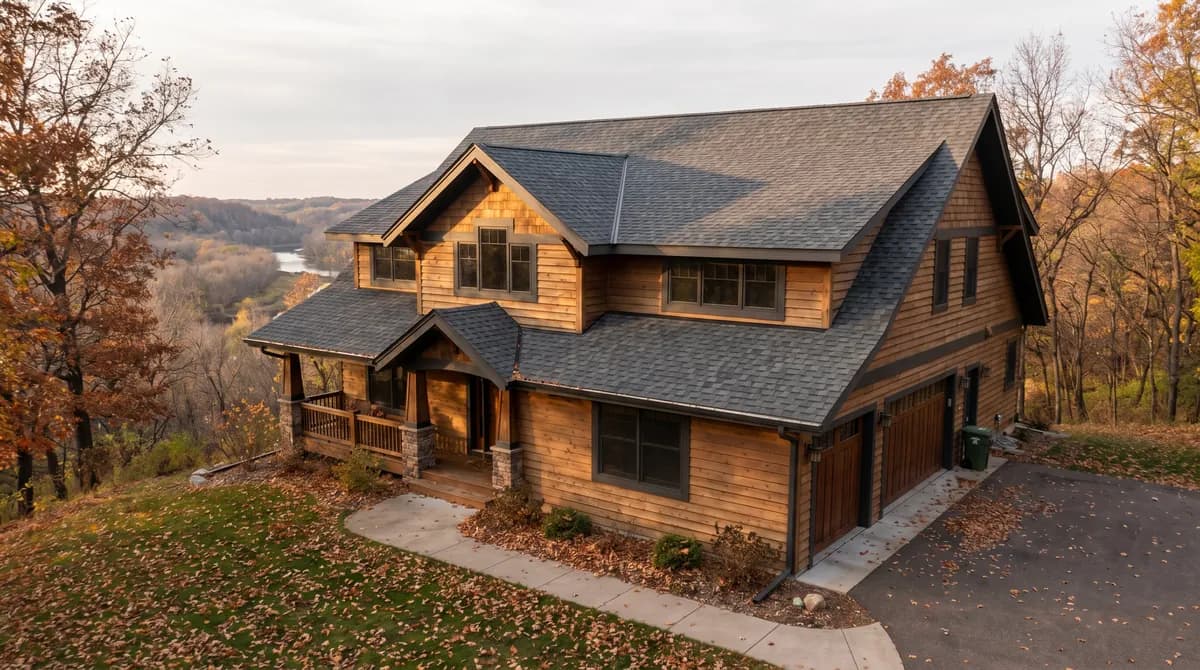
Mankato sits at the confluence of the Blue Earth and Minnesota Rivers, and the river valley terrain concentrates storm wind along the bluff-edge neighborhoods in ways that homeowners on the Cherry Creek bluffs notice directly. Roofs on those exposed streets see measurably more wind uplift stress than sheltered interior blocks. That factor goes into every estimate we write — not as an upsell, but because a roof specified without accounting for local exposure will underperform its rated lifespan.
About Mankato, MN
Mankato is the county seat of Blue Earth County and sits at one of the most historically significant confluences in Minnesota — the point where the Blue Earth River meets the Minnesota River at what the Dakota people called Mahkato, meaning bluish-green earth, a reference to the clay deposits in the riverbanks. The city of roughly 47,000 residents anchors southern Minnesota's economy as a regional hub for healthcare, manufacturing, and higher education. Minnesota State University Mankato brings approximately 14,000 students annually, pulling the median age down and keeping the rental and entry-level housing market active. The university also provides the city with cultural anchors — concerts, athletics, and a population that treats Mankato as more than a stopping point.
The eight 135-foot grain silos on the Ardent Mills campus bear one of Minnesota's most visible public art installations: a massive mural by international artist Guido van Helten, painted in 2018 and inspired by imagery from the Mahkato Wacipi powwow held each September at Land of Memories Park. The mural is visible from US-169 and from the river, and it says something accurate about the city — Mankato carries history soberly and lets the landscape do the talking. The 1862 US-Dakota War ended with the largest mass execution in American history at a site near downtown, and the community has worked steadily to acknowledge that history rather than bury it.
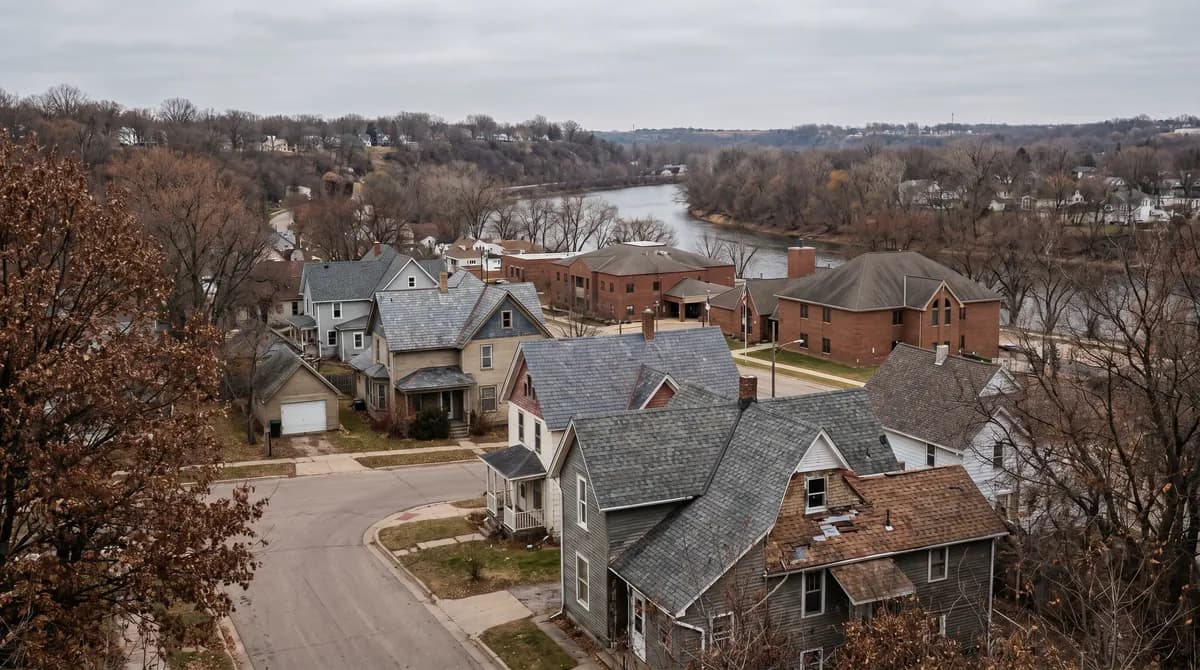
The neighborhoods range from established historic blocks near Old Town and Lincoln Park — where 1890s and early 1900s housing lines streets with mature elm and oak canopy — to newer subdivisions on the eastern and northern edges of the city built through the 2000s and 2010s. The Cherry Creek bluffs rise to the south, giving the city a terrain character that separates it from the flat agricultural plain surrounding it and creating elevation changes that affect how storm wind behaves across different parts of town.
Housing stock and market
Mankato's housing stock reflects a city that grew in distinct waves. The oldest residential blocks near downtown and the river carry Victorian-era and early Craftsman homes — two-story structures with steep pitches, multiple dormers, and original framing that has been through more than a century of southern Minnesota freeze-thaw cycles. Insulation in most of that housing was never brought to current Minnesota code, and the heat loss through those decks makes ice dam formation a nearly annual event on properties where the attic has not been air-sealed and brought up to depth. Flashing around chimneys, dormers, and sidewall transitions on these homes requires close inspection — lead-based original flashings are common, and sealant failure at those points is one of the most consistent slow-leak sources we find in the Old Town corridor.
The university area carries a mix of rental conversions and owner-occupied homes from the 1950s through the 1980s — split-levels, ramblers, and modest two-stories on smaller lots. Deferred maintenance is more common here than in owner-occupied neighborhoods with higher median values, which means roofs that would have been replaced five years ago in another part of town are still running on granule loss and surface cracking. Identifying those roofs before they fail in a winter storm is part of what the inspection process is for. Mankato median home values run in the $230,000 to $280,000 range, which is below the Twin Cities metro but reflects a market with real homeowner investment in maintenance — people who bought in Mankato for the affordability and the quality of life are not casual about protecting what they have.
Newer construction on the city's perimeter — subdivisions along Madison Avenue, near Eagle Lake, and in North Mankato across the Minnesota River — follows standard post-2000 construction practices with engineered trusses, OSB decking, and architectural shingles. Those roofs are generally in better condition than the older stock but face the same storm exposure. Hip-and-valley geometry on newer homes handles wind uplift better than gable ends, but every flashing point is a potential entry point given enough years of southern Minnesota weather.
Weather and roof realities in Mankato
Mankato sits on the southern flank of Minnesota, which gives it a different weather profile than the north-central lakes region but not a gentler one. Annual snowfall averages 43 inches — lower than Brainerd or Duluth, but more than enough to drive ice dam formation on under-insulated homes. The freeze-thaw window runs November through March, with January and February regularly crossing the 32-degree threshold multiple times in a single week. Snow that melts off a warm roof slope refreezes at the eave overhang, backs water up the slope behind the ice dam, and finds every weakness in the flashing system. On older homes in Old Town and Lincoln Park where attic insulation was never updated, this is not a rare event — it is a seasonal expectation. Steam-based ice dam removal clears the dam without shingle damage, but the permanent fix is addressing the attic assembly: air sealing at the floor and continuous ventilation from soffit to ridge.
Southern Minnesota's position on the edge of the Great Plains tornado corridor means Mankato carries genuine severe weather exposure that northern Minnesota cities generally do not. The 1946 tornadoes caused widespread damage in the Mankato and North Mankato area. The F3 that struck near Mankato in 2006 was more severe — it caused fatalities and structural destruction that put the local housing stock through conditions most Minnesota cities never see. Baseball-sized hail has been recorded in southern Minnesota outbreaks, and hail that size hits asphalt shingles at velocities that crack the mat and cause granule loss even when individual stones do not punch through outright. Impact-resistant Class 4 shingles are the right specification for any full replacement in Mankato — they handle both the hail impact and the wind uplift, and they can qualify for homeowners insurance discounts available under Minnesota policies.
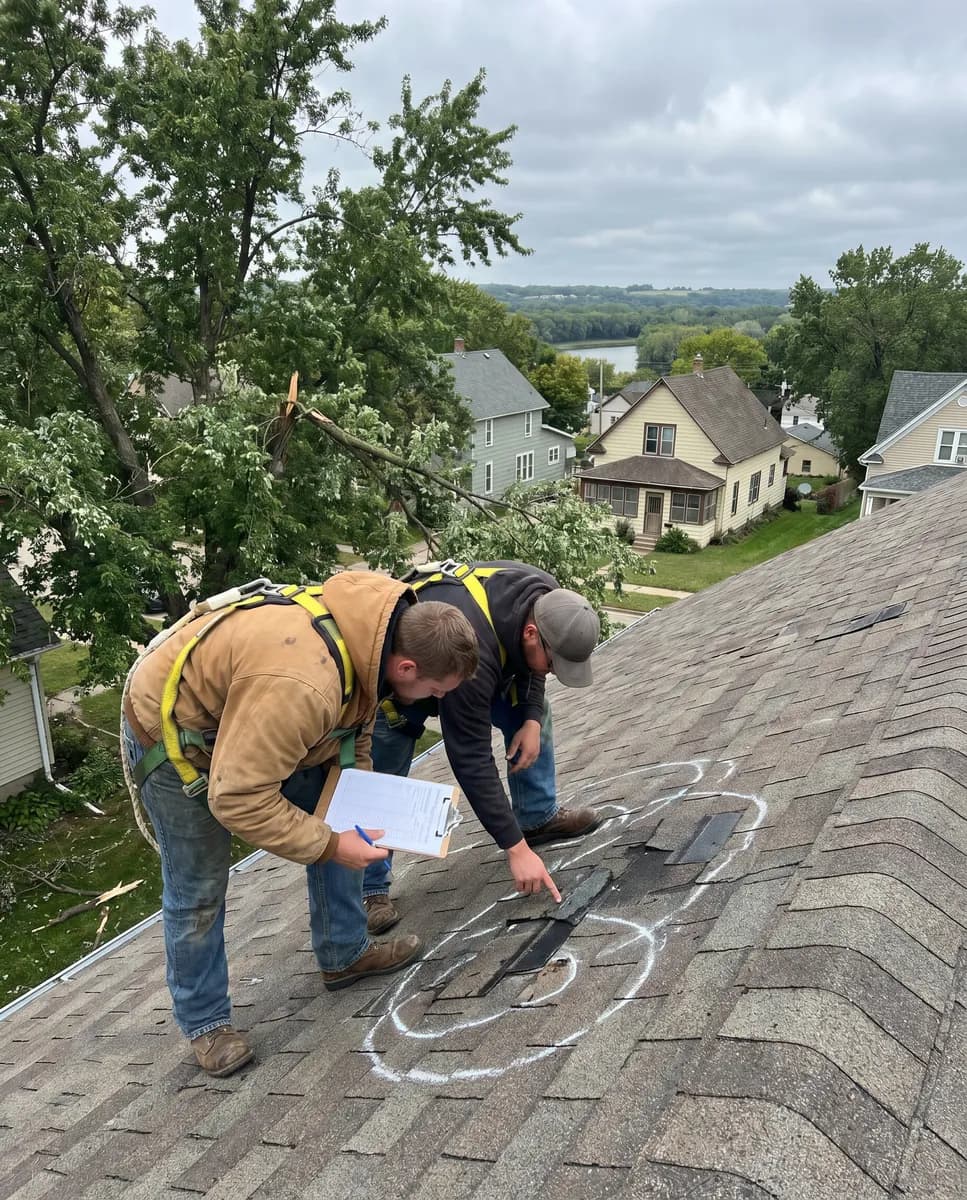
The river valley terrain at the confluence of the Minnesota and Blue Earth Rivers contributes to storm behavior in ways that homeowners on the bluffs and riverside streets notice directly. Open river corridors do not slow fronts the way developed terrain does. Storms that track northeast across the Minnesota River plain reach Mankato at speed, and the elevation change from the river bottom to the Cherry Creek bluffs concentrates gusts along the bluff-edge neighborhoods. Wind uplift stress on ridge caps, hip shingles, and gable-end trim is measurably higher on properties facing the valley than on sheltered interior blocks. That factor goes into material specification on every Mankato estimate we write — not as an upsell, but because a roof specified without accounting for local exposure will underperform its rated lifespan. We inspect suspected storm damage on a same-day or next-morning basis after major events, document before the adjuster arrives, and walk the inspection with your insurer to make sure nothing is missed or settled below replacement cost.
Residential Services
Roofing services in Mankato
We offer the full residential menu from our Central Minnesota base — the same crew, the same standards, across all 43 Minnesota cities we serve.
Replacement in Mankato
Full residential roof replacement with architectural shingles, metal, or specialty…
Replacement in Mankato→Repair in Mankato
Targeted roof repairs for Minnesota homes and cabins — leak diagnosis, flashing re…
Repair in Mankato→Storm Damage in Mankato
Hail and wind damage assessment, insurance claim support, and full restoration for…
Storm Damage in Mankato→Get in Touch
Contact Silver Loon Roofing — Mankato
- Serving
- Mankato, MN (Blue Earth County)
- Phone
- (970) 555-0199
- Hours
- Mon–Fri 7 am – 6 pm
Sat 8 am – 2 pm
Dispatched from our Central Minnesota home office along the Rum River
Nearby areas we serve from Mankato
- North Mankato
- St. Peter
- Madison Lake
- Eagle Lake
- Lake Crystal
Need roofing work in a nearby town? Request a free estimate — we cover the surrounding area without a travel surcharge.
Common Questions
Frequently asked questions — Mankato
Ready for a straight-talk roof estimate in Mankato?
We inspect, document, and give you a written line-item estimate before any work starts. No pressure, no surprises.