
Roofing in Inver Grove Heights, MN
Inver Grove Heights roofing — Dakota County river communities, clear estimates.
Silver Loon covers Inver Grove Heights (Dakota County): roof replacement, repair, storm damage, and ice dams. Based in Central Minnesota.
The July 2025 storms hit Dakota County with 70-mph gusts and hailstones large enough to bruise asphalt shingles across a wide area. Homes along the Pine Bend Bluffs above the Mississippi — the most exposed properties in the city — took the full force of that event from the southeast. If your roof has not been walked since that storm, the documentation window for a clean insurance claim is closing.
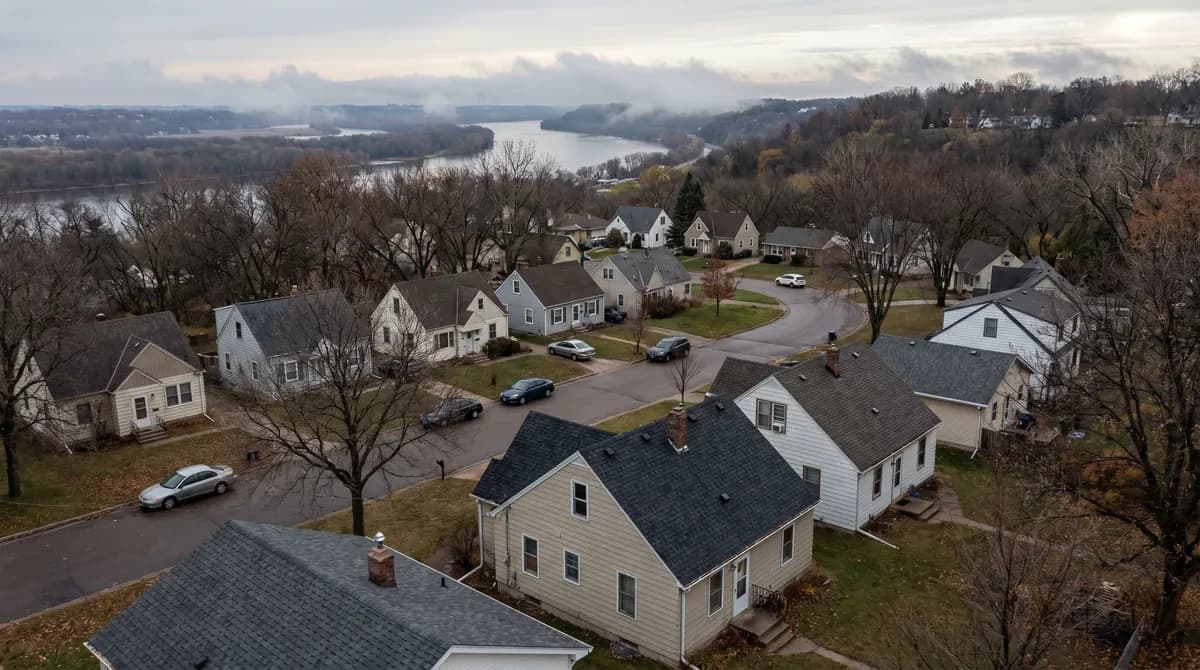
Near the Rock Island Swing Bridge and through the bluff neighborhoods, the housing stock runs from 1960s split-levels to newer two-stories, and both ends of that range are now in the inspection window. The older homes carry the ice dam risk that comes with 1970s attic insulation; the newer ones face the same hail exposure with more complex rooflines. An inspection is an hour of your time and a clear answer about what your roof actually has left.
About Inver Grove Heights, MN
Inver Grove Heights occupies a stretch of Dakota County along the Mississippi River bluffs south of St. Paul, where the terrain shifts from open river corridor to elevated residential streets within a few blocks. The city's roots trace to the 1850s, when Irish and German settlers established farms and small trade operations along the river before the surrounding county had much in the way of organized infrastructure. That original settlement character is gone now — the city of over 36,000 residents today is a full suburban community with schools, parks, commercial corridors, and neighborhoods that range from modest apartment clusters near the Minnesota Highway 52 and 55 interchanges to larger single-family estates on the bluffs above Pine Bend. Inver Wood Golf Course sits near the center of the city, its fairways offering a clear picture of the varied terrain: gentle slopes, ponds, and tree lines that hint at the wetlands and drainage patterns that characterize much of the land here.
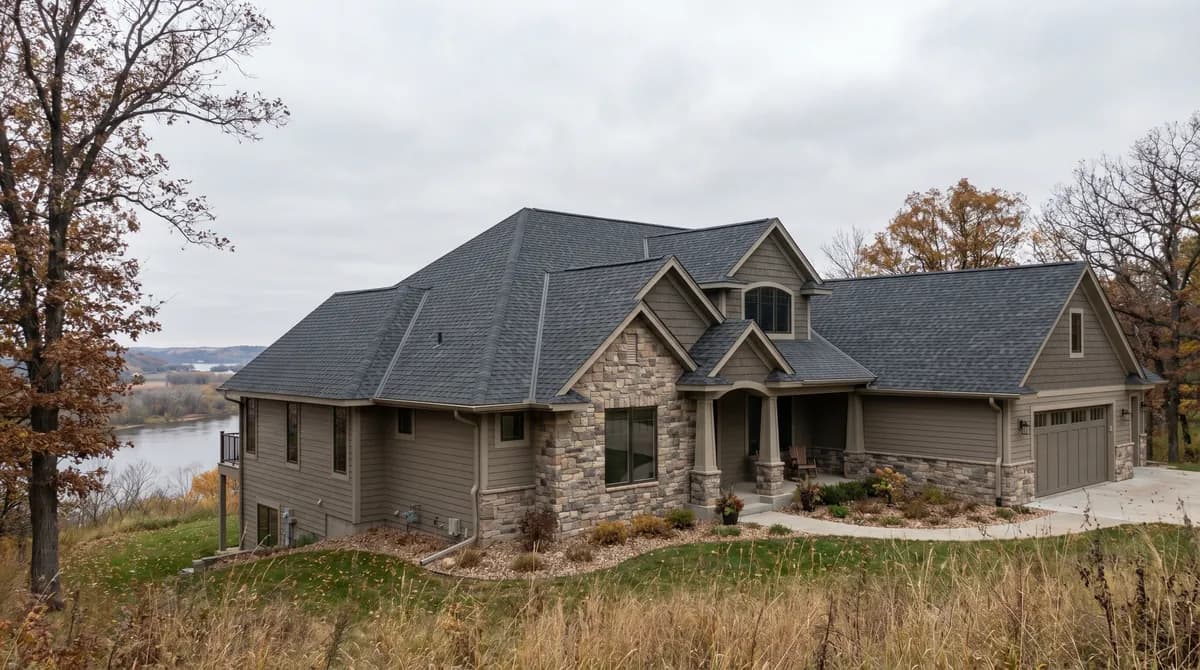
The Mississippi River defines the city's eastern edge in a meaningful way. The Pine Bend Bluffs rise sharply above the river floodplain, and homes built on those slopes have site characteristics — drainage angles, wind exposure, and frost penetration patterns — that flat-lot homes in the western neighborhoods do not share. The Rock Island Swing Bridge at Swing Bridge Park, a double-decker railroad span built in 1894, now functions as a 670-foot pedestrian pier where the rusted steel truss framework and the river views below attract visitors from across the south metro. That bridge is visible from bluff homes, and it is a useful reference point for understanding how exposed that eastern edge of the city actually is. There is nothing between those bluff streets and the open river channel to slow incoming weather from the southeast.
The city has grown steadily through development driven by its position between the St. Paul and Twin Cities south-metro job markets, with Dakota County schools and parks drawing families who want access to the metro without the density of the inner-ring suburbs. The Veterans Memorial Community Center and the Inver Grove Heights Days annual celebration with parades and fireworks reflect a community that is engaged and organized — the type of homeowners who pay attention to property maintenance and do not defer problems until they become emergencies.
Housing stock and market
Inver Grove Heights' housing stock reflects several distinct development eras layered across the city's geography. The older sections nearest the river and Highway 52 carry mid-century construction from the 1960s and 1970s — single-story and split-level homes on modest lots, built to the codes of that era, which means attic insulation depths that fall well below current Minnesota standards in most cases. These homes are the most consistent candidates for ice dam formation in the winter months, because the heat loss through those older decks is sufficient to keep the roof surface above freezing even during sustained cold snaps. The neighborhoods built through the 1980s and 1990s added two-story colonials and four-level splits on larger lots throughout the central and western parts of the city, with more varied roofline geometry that creates additional flashing points at dormers, valleys, and step transitions.
Newer development has brought townhome clusters and single-family subdivisions to the northern and western edges, where homes built to current energy codes carry better attic assemblies but still face the same Dakota County weather load as the older stock. Median home values across Inver Grove Heights have tracked upward through 2024 and 2025, reflecting the city's steady demand from households moving out of closer-in suburbs to find more square footage at accessible prices. Homeowners in this market tend to be practical and research-oriented — they compare estimates, read reviews, and want a written scope before any work starts. That expectation matches how we operate on every project, regardless of size.
Weather and roof realities in Inver Grove Heights
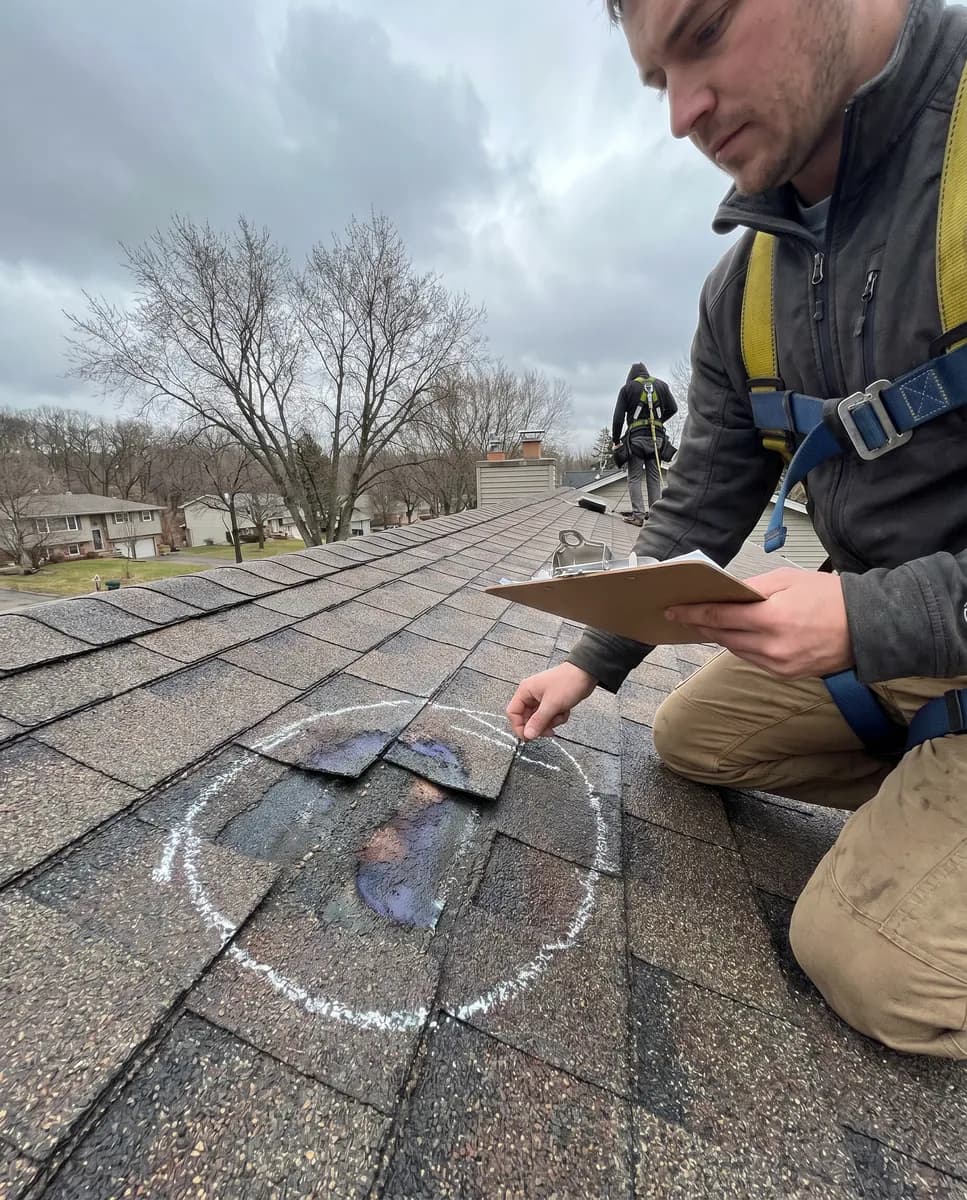
Inver Grove Heights sits in a Dakota County weather corridor that produces some of the most consistent hail exposure in the Twin Cities metro. More than 150 hail reports have been recorded near the city since 2004, and July 2025 storms moved across Dakota County with wind gusts reaching 70 mph and hailstones large enough to cause real damage to asphalt shingles across a wide area. Hail at that velocity and size does not need to punch visibly through a shingle to do structural harm: the granule layer absorbs what it can and the underlying mat bruises or cracks at the impact point. That kind of damage does not show up from the ground and does not produce an immediate interior leak — it shows up two or three seasons later as accelerated granule loss, UV degradation, and then the slow moisture intrusion that was always going to come once the mat was compromised. Impact- resistant Class 4 shingles are worth specifying on any Inver Grove Heights replacement, both for the protection they carry forward and for the homeowners insurance discount they can qualify for under Minnesota policies.
The freeze-thaw cycle is the other persistent threat. Dakota County temperatures cross the 32-degree mark repeatedly through January and February — sometimes several times in a single week during a mild stretch followed by a hard refreeze. On homes where attic insulation was installed to 1970s standards, heat escapes through the deck and warms the roof surface above freezing even when outdoor temperatures stay well below it. Snow melt runs down the slope, reaches the cold eave overhang, and refreezes into a dam. Once the dam backs up enough standing water, that water finds every gap in the assembly: a failed step flashing at a dormer, an unsealed nail penetration, a short run of ice-and-water shield that terminates below the dam line. The ceiling stain appears weeks after the damage started, and by that point the structural problem is already in the framing. Every Silver Loon ice dam call in Inver Grove Heights includes an attic evaluation to identify whether insulation depth and soffit-to-ridge ventilation are adequate to prevent recurrence — not just a surface clearing of the visible dam.
Bluff-area homes along the Mississippi River corridor face an additional exposure factor that does not apply to the city's inland neighborhoods. The open river channel and the elevation drop from the Pine Bend Bluffs to the floodplain below create conditions where southeast storm tracks arrive with less terrain friction than they encounter further west. Ridge caps and hip shingles on bluff-facing rooflines see more wind uplift stress over the course of a storm season than the same product installed on a protected interior lot. We account for that exposure in material specification and in the fastening schedule when writing the estimate — it is not a detail that surfaces as a change order after the job starts. Storm damage work in Inver Grove Heights follows our standard process: we document every impact pattern before the adjuster arrives, attend the inspection, and provide a line-item scope the insurer can read against our written estimate. Dakota County claims move efficiently when the contractor and the adjuster walk the same roof at the same time.
Residential Services
Roofing services in Inver Grove Heights
We offer the full residential menu from our Central Minnesota base — the same crew, the same standards, across all 43 Minnesota cities we serve.
Replacement in Inver Grove Heights
Full residential roof replacement with architectural shingles, metal, or specialty…
Replacement in Inver Grove Heights→Repair in Inver Grove Heights
Targeted roof repairs for Minnesota homes and cabins — leak diagnosis, flashing re…
Repair in Inver Grove Heights→Storm Damage in Inver Grove Heights
Hail and wind damage assessment, insurance claim support, and full restoration for…
Storm Damage in Inver Grove Heights→Get in Touch
Contact Silver Loon Roofing — Inver Grove Heights
- Serving
- Inver Grove Heights, MN (Dakota County)
- Phone
- (970) 555-0199
- Hours
- Mon–Fri 7 am – 6 pm
Sat 8 am – 2 pm
Dispatched from our Central Minnesota home office along the Rum River
Nearby areas we serve from Inver Grove Heights
- South St. Paul
- St. Paul Park
- Eagan
- Sunfish Lake
- Mendota Heights
Need roofing work in a nearby town? Request a free estimate — we cover the surrounding area without a travel surcharge.
Common Questions
Frequently asked questions — Inver Grove Heights
Ready for a straight-talk roof estimate in Inver Grove Heights?
We inspect, document, and give you a written line-item estimate before any work starts. No pressure, no surprises.