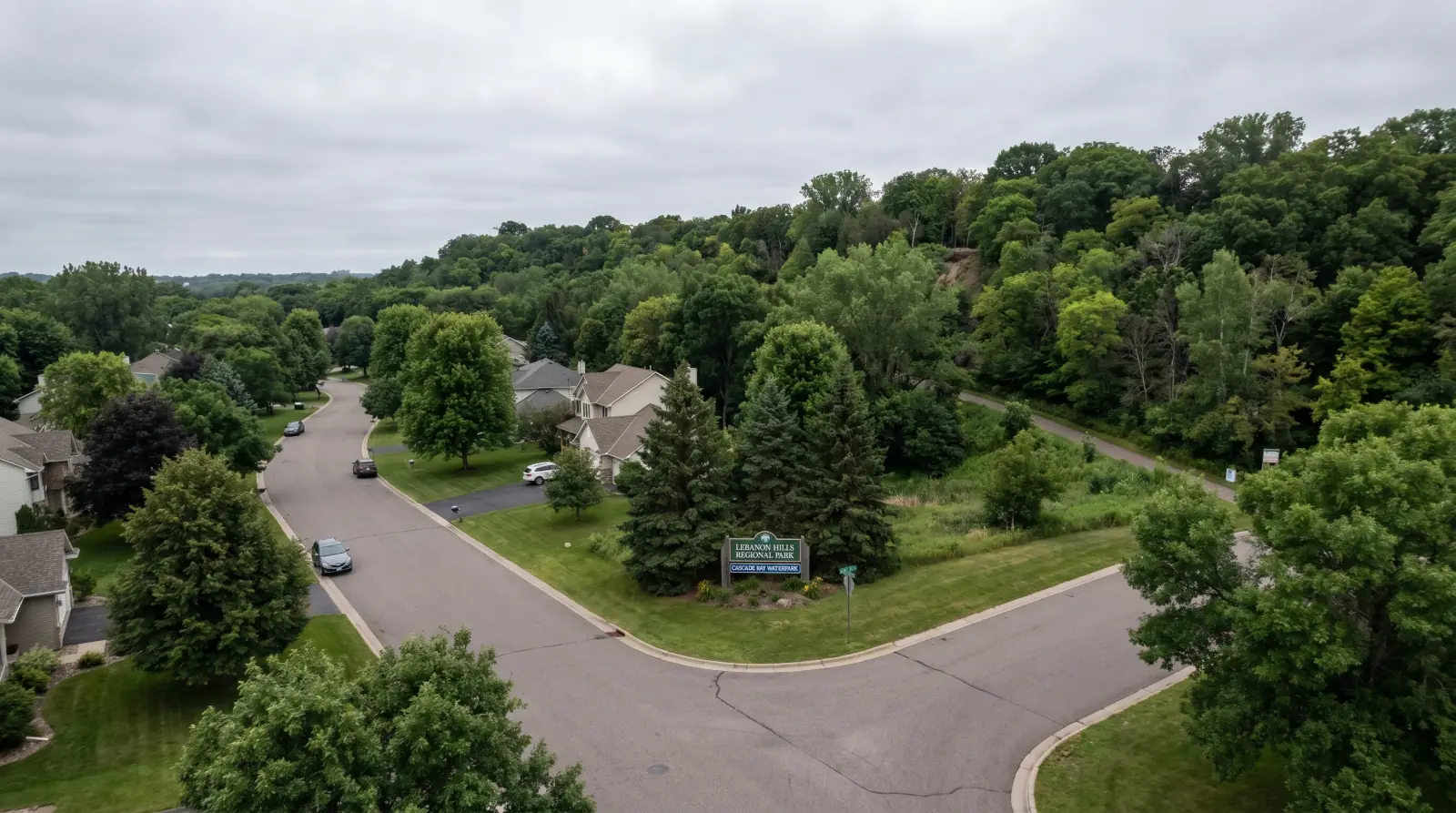
Roofing in Eagan, MN
Eagan roofing — Dakota County neighborhoods, clear scope, no surprises.
Silver Loon covers Eagan (Dakota County): roof replacement, repair, storm damage, and ice dams. Based in Central Minnesota.
Golf-ball hail in July 2025 and an EF0 in August 2022 both hit Dakota County hard enough that homes near Thomas Lake Park and City Center were still getting inspected weeks after the events. If your roof took either of those storms and has not been walked since, the window for a clean insurance claim gets shorter every month you wait.
Eagan developed fast through the 1980s and 1990s, which means a large share of its housing stock is right at the 25- to 35-year mark — the range where shingles begin losing their fight with Minnesota winters regardless of what the storms have done. An inspection tells you what you actually have left, not what the original warranty said you would.
About Eagan, MN
Eagan is a city of approximately 67,500 residents in Dakota County, positioned just south of St. Paul and east of I-35E where the Minnesota River valley begins to flatten into the broader Twin Cities plain. The name connects to the Irish farming families who settled here in the mid-1800s, and the city carried the informal title of “Onion Capital” for decades, a reference to the commercial vegetable farming that covered the county's fertile glacial till well into the twentieth century. That agricultural past is now mostly memory: Eagan incorporated as a city in 1974 and grew rapidly through the 1980s and 1990s as the Twin Cities metro expanded south along the I-35E and I-494 corridors. Today those same corridors bring roughly 150,000 vehicles per day through the city's core interchange — one of the busiest in the state — connecting Eagan workers to downtown St. Paul in fifteen minutes and Minneapolis in under thirty.
Major employers shaped the residential character here. Thomson Reuters operates one of its larger North American campuses in the city, and Blue Cross Blue Shield of Minnesota anchors another employment hub. The Minnesota Vikings relocated their headquarters and practice facility to Viking Lakes, an 85-acre mixed-use development near I-494 in the northeast corner of Eagan — a facility that opened in 2018 and has since added hotels, office space, and retail to what was previously underused industrial land. Eagan also sits within the flight path of Minneapolis-St. Paul International Airport, which keeps the northwest neighborhoods familiar with aircraft noise but also ensures excellent regional connectivity for residents who travel for work. Caponi Art Park, a 60-acre outdoor sculpture garden set into wooded rolling hills in the heart of the city, draws visitors throughout the warmer months and gives Eagan a public-art anchor that most suburbs of comparable size do not have.
Median household income in Eagan runs near $108,000 — well above the state median — and that reflects the professional workforce that has chosen the city for its combination of quality schools, park access, and reasonable commute times. Thomas Lake Park and the network of trails connecting it to other Dakota County green spaces see consistent year-round use. Residents here tend to maintain their properties carefully, and when roofing work is needed, they want the same precision from a contractor that they apply to other decisions: written documentation, clear timelines, work that holds up.
Housing stock and market
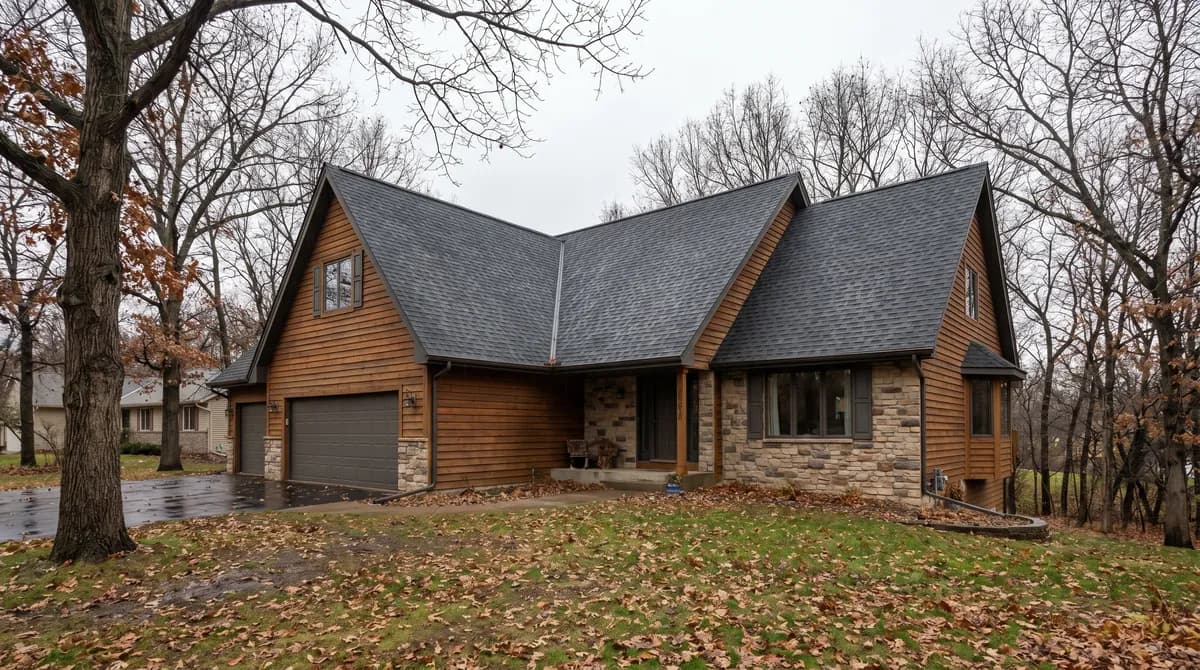
Eagan's residential development happened in concentrated waves that track directly to its growth period. The City Center neighborhoods — the original residential core around the municipal campus — carry homes built largely between 1975 and 1995: split-level and two-story colonials on quarter-acre to half-acre lots, most of them owner-occupied and well maintained. Townhome clusters fill in around the commercial corridors along Cliff Road, Diffley Road, and Pilot Knob Road, providing density that supports the city's parks and trail system without pushing into apartment-tower territory. Newer single-family development in the southwest and near the Viking Lakes area added a layer of construction from the 2000s and early 2010s, where homes sit on slightly smaller lots but with newer mechanical systems and updated insulation depths.
Median home values in Eagan range from $380,000 to $500,000 depending on neighborhood, lot size, and vintage. The city grew from approximately 64,000 residents in 2010 to a peak of around 68,000 in 2020, with modest recent adjustments that reflect broader metro stabilization rather than any structural decline. For roofing purposes, the 1975-to-1995 housing wave is the most active segment: those homes are now 30 to 50 years old, putting them at or past their original asphalt shingle lifespan, and many were built with attic insulation values that were code-compliant at the time but fall well short of what Minnesota winters actually demand. Ventilation in that era was often a soffit vent strip and a ridge vent that did not communicate properly, leaving attic heat accumulation that sets up ice dam conditions every winter with meaningful snowfall.
Weather and roof realities
Eagan sits in a humid continental climate that delivers the full Dakota County version of a Minnesota winter. Average annual snowfall runs 46 inches, and the freeze-thaw cycle runs from roughly January through mid-March in a typical year, with temperatures crossing 32 degrees multiple times per week during the coldest months. That cycling is the direct driver of ice dam formation: when attic heat escapes through an under-insulated deck, it warms the roof surface above freezing while the eave overhang stays cold. Snow melt runs down the slope, hits the cold eave, and refreezes. Once the dam builds to any meaningful height, standing water backs up behind it under pressure and looks for any gap — a failed flashing joint at a chimney or skylight, an unsealed nail penetration, a short ice-and-water-shield termination at the eave edge. On a 1985 split-level in the City Center area with original attic insulation, this scenario plays out most winters.
Snow load is a related concern on the low-pitch roof sections common in Eagan's ranch and split-level stock. A wet Minnesota snowfall deposits 15 to 20 pounds per cubic foot on a flat surface; at 46 inches of accumulation across a typical 2,000-square-foot footprint, the structural loading adds up before most homeowners think to check. Steeper slopes shed snow; low-pitch sections hold it. Homes built in the 1970s and early 1980s in Eagan were framed to the era's structural standards, which predate the snow load revisions added to Minnesota code after several high-profile roof failures in the 1990s.
Summer storm exposure in Eagan is significant. Dakota County sits in a corridor that sees frequent severe thunderstorm tracks moving northeast from the Iowa border through the Twin Cities. Eagan logs more than 13 ground-level hail reports per year on average, and golf ball-sized hail was confirmed in July 2025 events — stones that size hit asphalt shingles at speeds that cause granule loss and mat bruising whether or not they punch through outright. The August 2022 EF0 tornado that moved through Eagan snapped mature trees onto roofs and produced the kind of impact damage — cracked decking, split ridge caps, torn flashing — that requires more than a shingle swap to address properly. Impact-resistant Class 4 shingles are worth specifying on any Eagan replacement, both for the protection they carry through future storm seasons and for the homeowners insurance discounts they can qualify for in Minnesota. We inspect suspected storm damage the same day or the morning after a major event and provide written documentation with photo records suitable for insurance claim submission.
For Eagan homeowners whose properties were in the path of the July 2025 hail or the August 2022 tornado event: post-storm hail damage on asphalt shingles does not always show from the ground. Granule loss concentrates on flat ridge sections and the low-slope areas near dormers and valleys; mat bruising under the granule layer will not be obvious until a second storm season accelerates the failure. We attend adjuster inspections so no damage gets missed or undervalued in the initial claim review. Dakota County adjusters who have worked claims with Silver Loon documentation know our field reports hold up through the settlement process.

Residential Services
Roofing services in Eagan
We offer the full residential menu from our Central Minnesota base — the same crew, the same standards, across all 43 Minnesota cities we serve.
Replacement in Eagan
Full residential roof replacement with architectural shingles, metal, or specialty…
Replacement in Eagan→Repair in Eagan
Targeted roof repairs for Minnesota homes and cabins — leak diagnosis, flashing re…
Repair in Eagan→Storm Damage in Eagan
Hail and wind damage assessment, insurance claim support, and full restoration for…
Storm Damage in Eagan→Get in Touch
Contact Silver Loon Roofing — Eagan
- Serving
- Eagan, MN (Dakota County)
- Phone
- (970) 555-0199
- Hours
- Mon–Fri 7 am – 6 pm
Sat 8 am – 2 pm
Dispatched from our Central Minnesota home office along the Rum River
Nearby areas we serve from Eagan
- Burnsville
- Apple Valley
- Mendota Heights
- Inver Grove Heights
- Sunfish Lake
Need roofing work in a nearby town? Request a free estimate — we cover the surrounding area without a travel surcharge.
Common Questions
Frequently asked questions — Eagan
Ready for a straight-talk roof estimate in Eagan?
We inspect, document, and give you a written line-item estimate before any work starts. No pressure, no surprises.