Roofing in Chaska, MN
Chaska roofing — Carver County seat on the Minnesota River, straightforward work.
Silver Loon covers Chaska (Carver County): roof replacement, repair, storm damage, and ice dams. Based in Central Minnesota.
The 2024 tornado-warned storms brought large hail to Carver County, and Chaska was in that path. For homeowners in the Jonathan planned community — where the original design ethos emphasized natural materials and long-term quality — the question after a storm like that is not just whether there is visible damage but whether the roof system is still doing what it was built to do.
Chaska's downtown goes back to 1851, and the older homes along the river carry roof assemblies that have been through a lot of Minnesota history. The 1925 tornado that hit downtown is a reminder that this part of Carver County is not sheltered from severe weather. If your home dates to the original buildout — or if it sat in the track of the 2024 events — an inspection is the practical next step.
About Chaska, MN
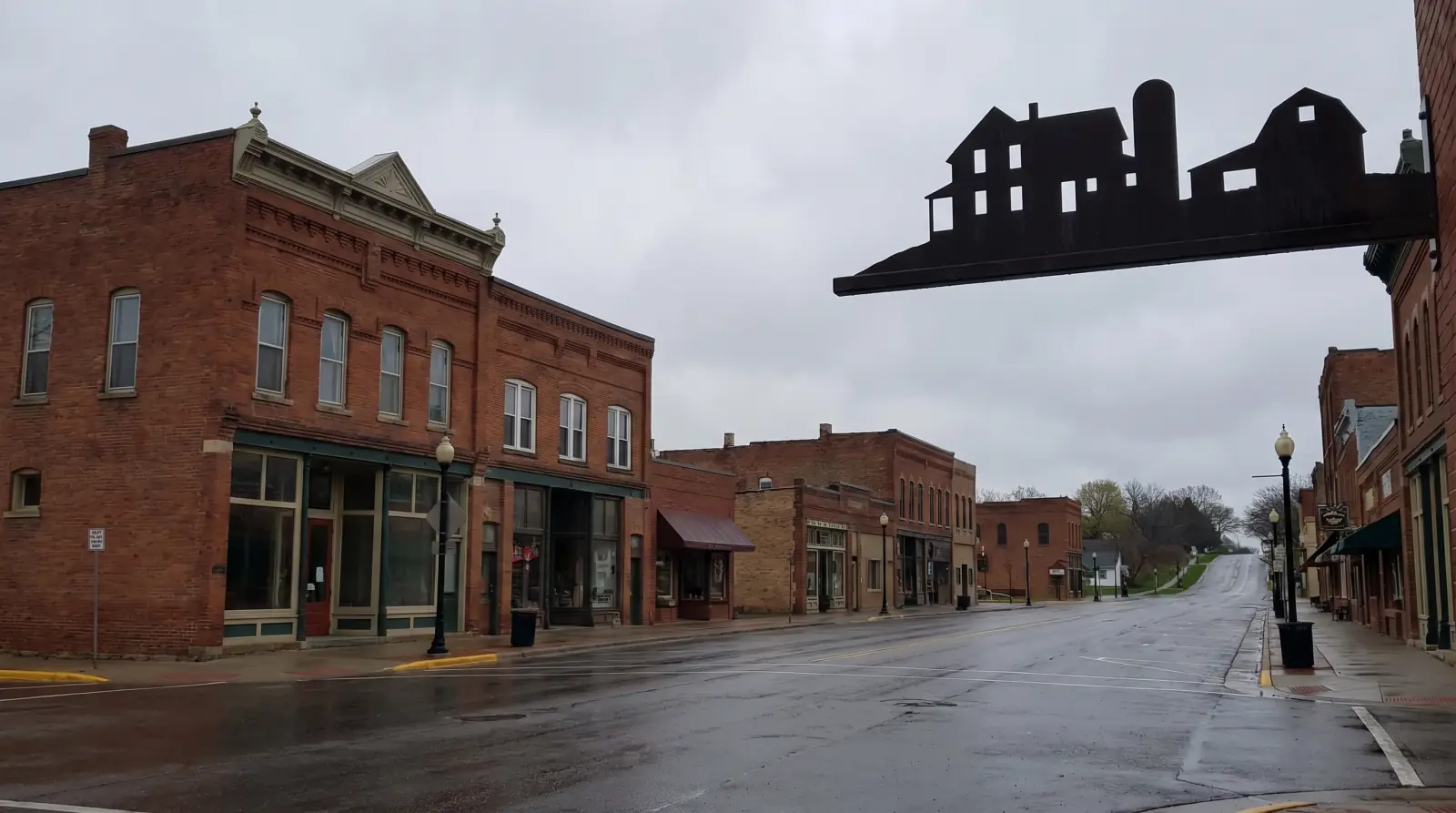
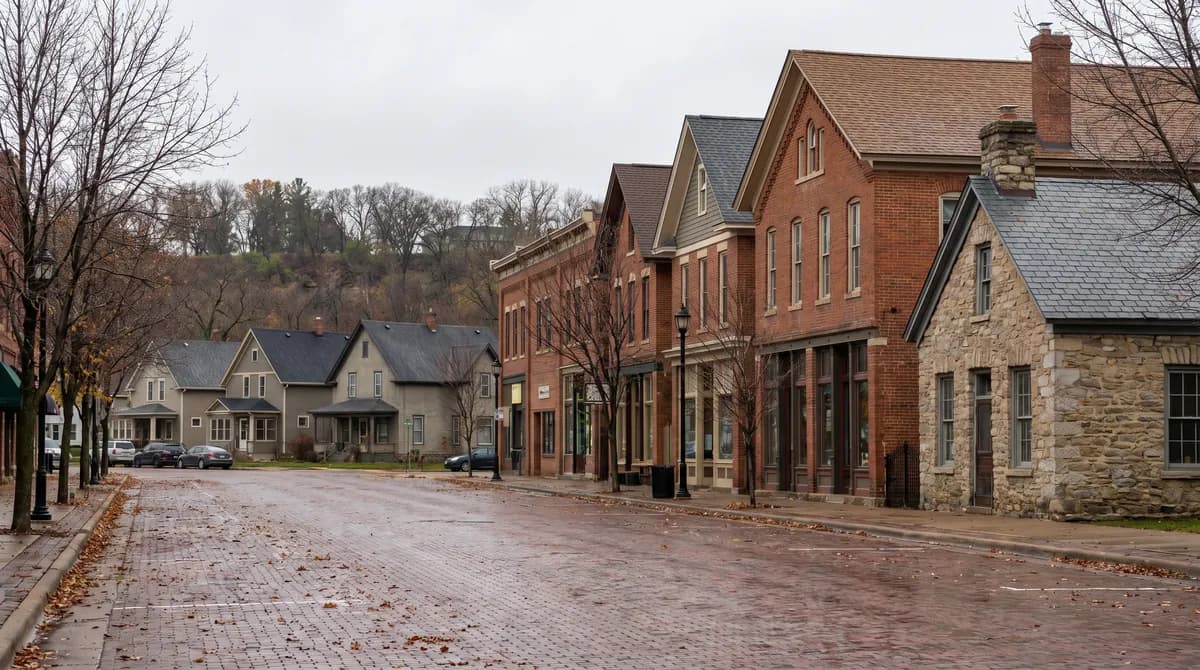
Chaska is the Carver County seat, sitting about 25 miles southwest of Minneapolis where Highway 212 crosses the Minnesota River valley. The city of roughly 30,000 residents has a character that does not quite fit the standard outer-ring suburb template: the downtown along the river carries 19th-century commercial brick buildings built from locally manufactured Chaska yellow brick, a cream-colored clay product that local brickworks produced in quantity from the 1860s through the early 1900s. That brick ended up in the Minnesota State Capitol, in county courthouses across the state, and in hundreds of structures still standing in the region. The 1875 Brinkhaus Saloon Livery Barn — one of the few surviving examples of its type in Minnesota — is listed on the National Register of Historic Places and now houses the Chaska Historical Society. Walking past it in January tells you something about how this community was built.
Hazeltine National Golf Club, on the western edge of the city near Lake Hazeltine, has hosted U.S. Opens and Ryder Cups — events that put Chaska on a wider map for a few weeks at a time. But the more persistent identity is the Jonathan planned community, a 1960s new-town development that brought a then-unusual approach to suburban planning: mixed-use neighborhoods, varied housing densities, and preserved green corridors built into the grid. Jonathan's neighborhoods now make up a significant portion of Chaska's residential footprint. They range from small starter homes to larger two-story colonials, and the streets have the mature trees and varied lot configurations that planned communities often produce better than conventional subdivisions.
Chaska adds 100 to 300 new homes annually and has maintained steady population growth through the 2020s. The newer developments on the south and west edges of the city build to current energy codes and carry modern insulation depths, but the older Jonathan neighborhoods and the historic downtown-adjacent streets present the full range of construction eras. A home from 1968 in the Jonathan core and a home completed in 2022 in a new Chaska subdivision face the same Minnesota River valley weather — but their roofs and attics are built very differently.
Housing stock and market
Chaska's housing stock spans a wider era range than many Twin Cities suburbs its size. The downtown core and the oldest Jonathan neighborhoods carry homes built from the late 1960s through the 1980s — two-story colonials, split-levels, and ranch plans on lots with established tree canopy. Attic insulation in that generation of construction was rarely installed to the R-49 to R-60 depth current Minnesota code requires, and many of those attics have never been retrofitted. Heat escaping through those decks is the direct cause of the ice dams that appear on Jonathan-area roofs every significant snowfall season.
Newer construction on the west and south edges of Chaska — developments that have come in over the last decade — is built to tighter energy standards, but they face their own set of roofing considerations. Hip-and-valley plans, which are common in newer Chaska subdivisions, create more flashing intersections than simpler gable plans. Every valley and hip is a point where water concentrates and where an improperly sealed or worn flashing can admit water into the structure. Townhome clusters near the Highway 212 corridor add party walls and shared roof sections that require coordination with adjacent owners before any repair or replacement work begins.
Median home values in Chaska run between $360,000 and $430,000 depending on neighborhood and property type, with lakefront properties near Lake Hazeltine at the upper end. Homeowners in this market tend to be specific about their expectations: written scope before anything starts, a crew that shows up when scheduled, and an invoice that matches the estimate. That is how we operate on every Chaska job, from a targeted repair on a Jonathan colonial to a full replacement on a newer south-edge home.
Weather and roof realities in Chaska
Chaska sits inside the standard Twin Cities winter envelope: roughly 52 inches of annual snowfall, freeze-thaw cycles that cross the 32-degree line multiple times per week from January through March, and a frost depth that reaches 42 to 48 inches in a hard winter. Those freeze-thaw cycles are the primary driver of ice dam formation. When attic heat escapes through an under-insulated deck, it warms the roof surface enough to melt snow; meltwater runs down the slope, hits the cold eave overhang, and refreezes into a dam. Water backs up behind the dam and finds any gap — a short ice-and-water-shield termination, a failed step flashing at a dormer, an unsealed nail penetration through the underlayment. The damage presents as a ceiling stain, but the problem is structural and starts in the attic assembly. On Jonathan-area homes where the attic has never been insulated past the original 1970s depth, this sequence plays out nearly every winter that brings meaningful snow.
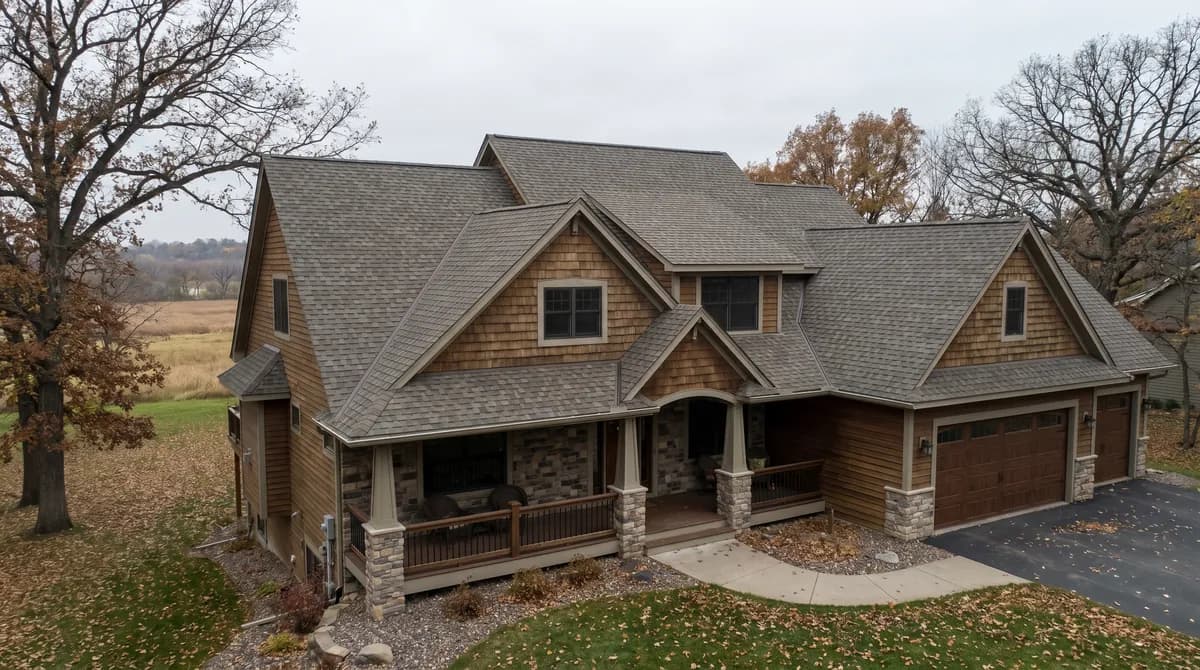
The Minnesota River valley amplifies storm risk. The open river corridor south and west of Chaska does not slow incoming fronts the way developed terrain does, and the elevation change between the valley floor and the upland neighborhoods concentrates wind gusts in ways that show up clearly in post-storm damage patterns. Severe thunderstorm warnings with gusts exceeding 70 mph are not unusual in Carver County summer seasons. Tornado history here is documented and specific: a devastating tornado destroyed much of downtown Chaska in 1925 — still remembered in local accounts and referenced in city planning documents — and tornado-warned storms returned in 2024 along with large hail events. Cedar shake roofs on older homes are particularly exposed to that combination: hail splits shake faces and creates channels for moisture entry, while the humid Minnesota summer climate accelerates the rot that follows if the damage is not addressed within a season or two.
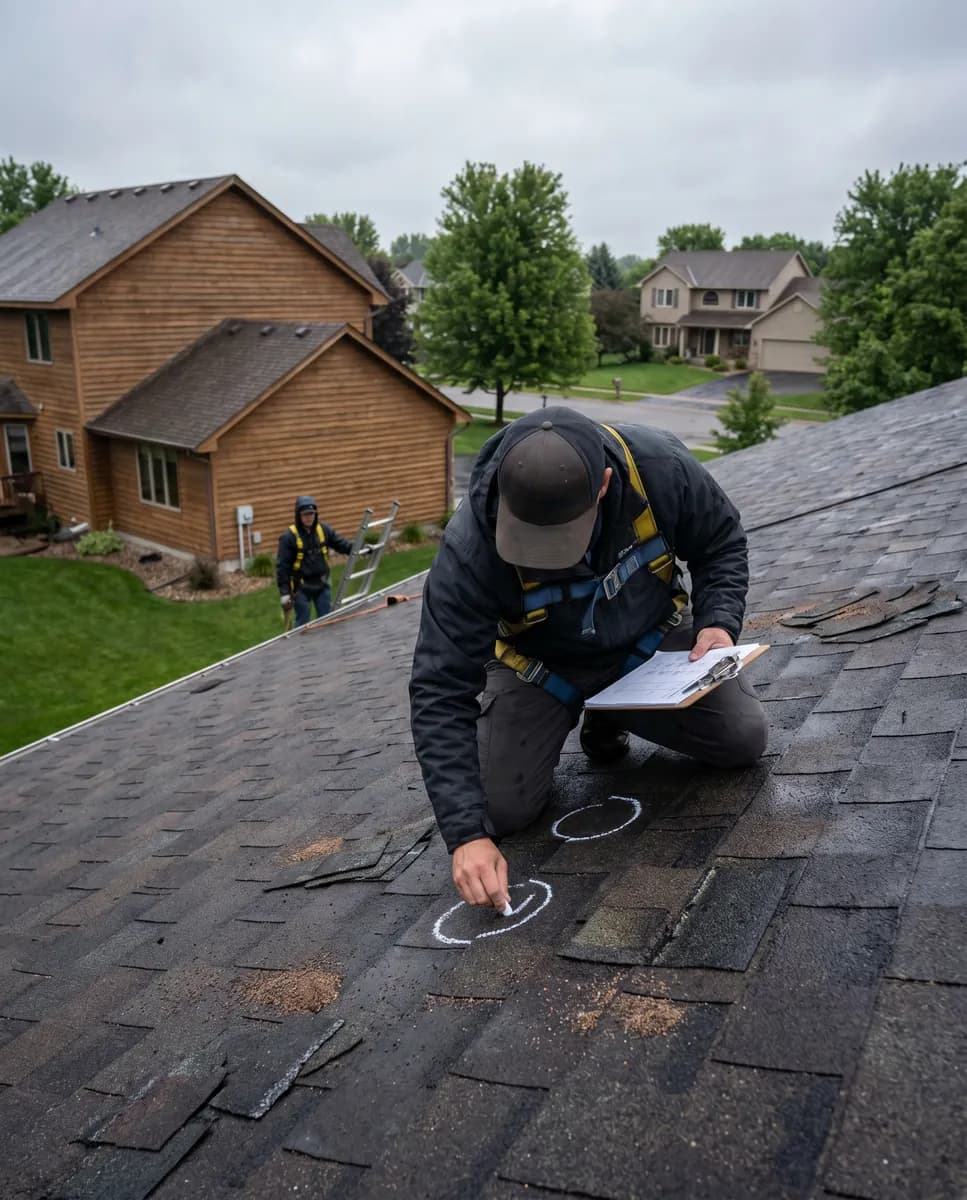
Hail is the more consistent annual threat. Quarter-sized to golf ball-sized hail struck the Chaska and Carver County area multiple times in the 2024 severe weather season, leaving granule loss and mat bruising on asphalt shingles that does not show from the ground but shortens the roof's serviceable life by years. Impact-resistant Class 4 shingles are worth specifying on any Chaska replacement, both for the added protection through subsequent storm seasons and for the homeowners insurance discounts that Minnesota carriers apply when Class 4 materials are documented. We photograph every impact pattern after a storm event, walk the adjuster inspection with you, and provide a line-item scope the insurer can read against our written estimate without interpretation. Most Chaska storm claims settle without requiring a second adjuster visit when the documentation is thorough from the start.
Residential Services
Roofing services in Chaska
We offer the full residential menu from our Central Minnesota base — the same crew, the same standards, across all 43 Minnesota cities we serve.
Replacement in Chaska
Full residential roof replacement with architectural shingles, metal, or specialty…
Replacement in Chaska→Repair in Chaska
Targeted roof repairs for Minnesota homes and cabins — leak diagnosis, flashing re…
Repair in Chaska→Storm Damage in Chaska
Hail and wind damage assessment, insurance claim support, and full restoration for…
Storm Damage in Chaska→Get in Touch
Contact Silver Loon Roofing — Chaska
- Serving
- Chaska, MN (Carver County)
- Phone
- (970) 555-0199
- Hours
- Mon–Fri 7 am – 6 pm
Sat 8 am – 2 pm
Dispatched from our Central Minnesota home office along the Rum River
Nearby areas we serve from Chaska
- Chanhassen
- Shakopee
- Eden Prairie
- Victoria
- Cologne
Need roofing work in a nearby town? Request a free estimate — we cover the surrounding area without a travel surcharge.
Common Questions
Frequently asked questions — Chaska
Ready for a straight-talk roof estimate in Chaska?
We inspect, document, and give you a written line-item estimate before any work starts. No pressure, no surprises.