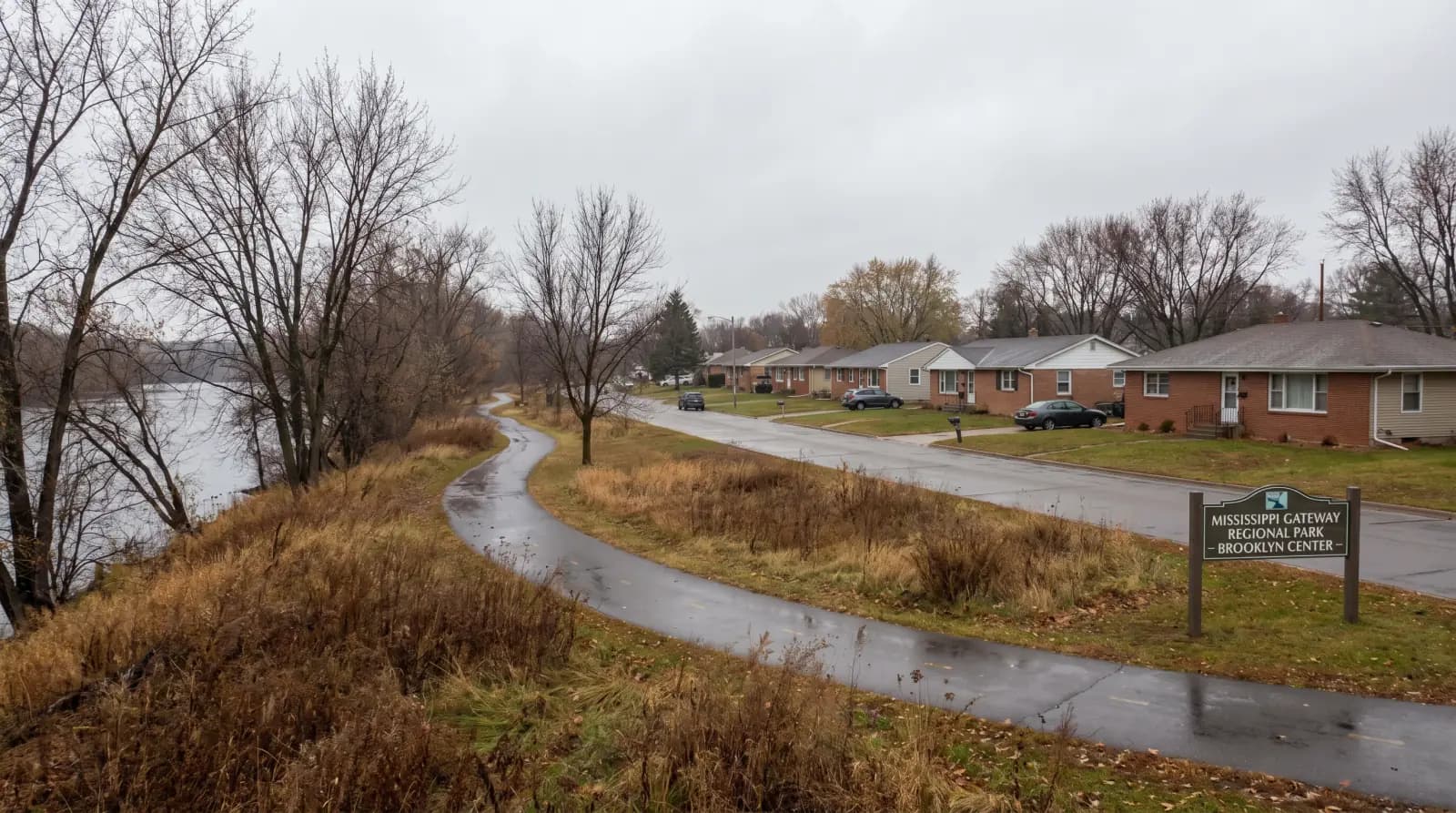
Roofing in Brooklyn Center, MN
Brooklyn Center roofing — north metro's most diverse community, honest estimates.
Silver Loon covers Brooklyn Center (Hennepin County): roof replacement, repair, storm damage, and ice dams. Based in Central Minnesota.
Brooklyn Center has recorded 62 hail reports in the area since 2004, and the 1951 F4 tornado that hit this part of Hennepin County is the kind of event that shapes how a community thinks about storm readiness. The storms are not hypothetical here — they hit regularly, and they hit hard enough that roofs near Shingle Creek and Palmer Lake have been tested more than once in the past decade.
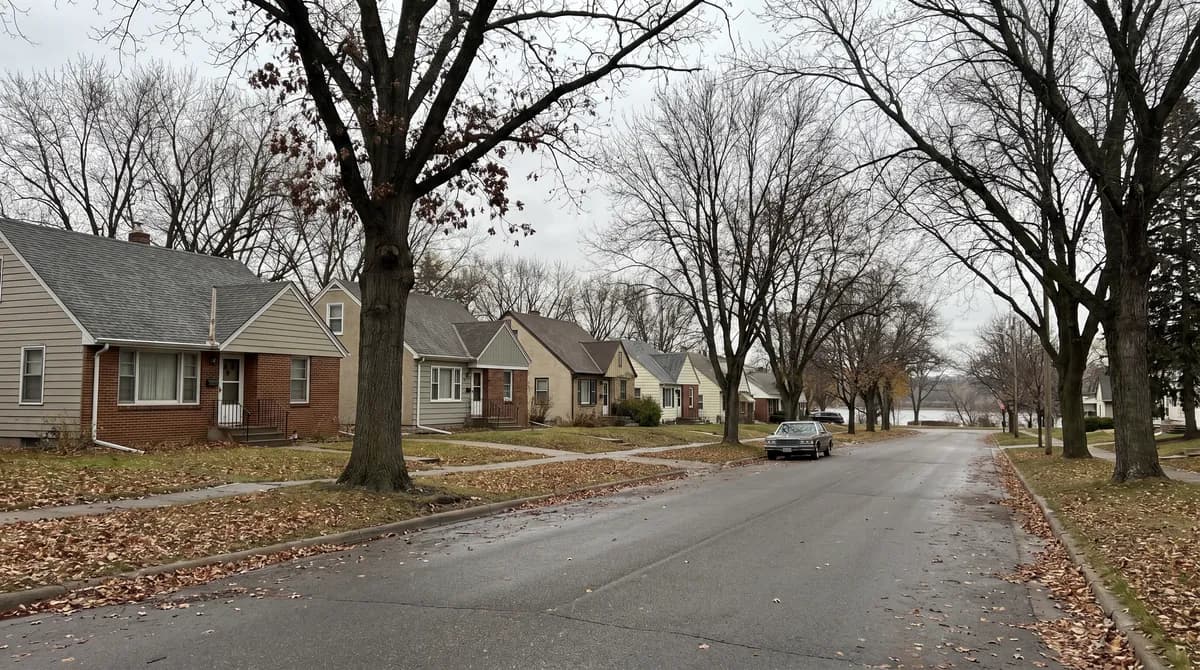
The housing stock along the Shingle Creek corridor runs mostly 1960s and 1970s construction — honest postwar building that is aging into the window where deferred maintenance starts compounding. If the shingles on your home date to the last century, the question is not whether you will need to replace them but when. An inspection gives you that answer on your timeline, not after a leak makes it urgent.
About Brooklyn Center, MN
Brooklyn Center is a first-ring Hennepin County suburb directly north of Minneapolis, bounded by the Mississippi River corridor to the east and Shingle Creek running through its midsection toward Palmer Lake. The city carries the distinction of being the most ethnically diverse community in Minnesota — a population of roughly 32,500 residents that spans significant Black, White, Hispanic, and Asian communities, connected by I-694 and Highway 100 to the broader metro. It is not a commuter waypoint that grew up around a single employer; it is a built-out suburb that filled in during the postwar decades and has been home to multiple generations of families who stayed. Target Field sits about eight miles south, and the Regal Entertainment complex along the I-694 corridor draws traffic from neighboring Brooklyn Park, Crystal, and Robbinsdale.
The Earle Brown Heritage Center is Brooklyn Center's most recognizable landmark — a preserved 19th-century farmstead with red barns, a white farmhouse, heritage markers, and early aviation hangars set on expansive grounds that now function as a conference and event center. The contrast between those heritage buildings and the surrounding suburban grid tells you something about how the city developed: it grew fast in the 1950s and 1960s, absorbing farmland and replacing it with modest single-family homes on regular lots, and the Earle Brown property is one of the few places where an earlier landscape survived intact. The 26 parks and the Shingle Creek trail system give the city more green space than the aerial view suggests.
The community has navigated real change over the past two decades — population fluctuations, commercial corridor redevelopment along Brooklyn Boulevard, and a housing stock that is aging into its sixth and seventh decade of service. That last point is the one that matters most to homeowners thinking about their roofs. A home built in 1962 with its original low-pitch design and a deck that has seen three or four shingle cycles is not the same as a house built in 2005. The bones are solid, but the roof system — insulation, ventilation, flashing, underlayment — needs honest attention.
Housing stock and market
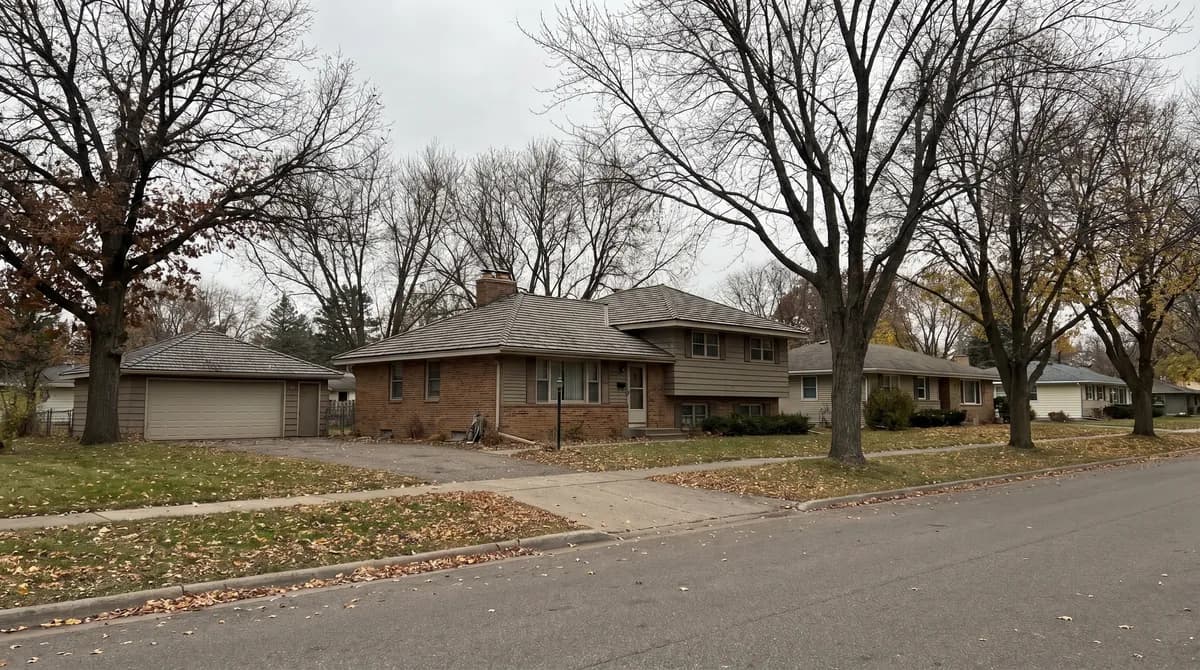
Brooklyn Center's residential neighborhoods were built almost entirely between 1950 and 1975. The typical home is a modest single-story or split-level on a standard suburban lot — compact footprints, low to moderate roof pitch, attached or detached single-car garages, and attic spaces that were insulated to the standards of the era rather than current Minnesota code. Median home values in the city run between $295,000 and $308,000, a range that reflects the postwar character of the housing stock and the city's first-ring position in the metro. Buyers here are typically purchasing a home that has had multiple owners, and the maintenance history on the roof is not always well documented.
Low-pitch roofs common on 1950s and 1960s ranch-style homes in Brooklyn Center accumulate snow differently than steeper designs. Snow does not shed readily from a 3-in-12 or 4-in-12 pitch; it sits, compresses, and adds weight over time. When attic heat escapes through insulation that has settled to R-19 or below — common in unimproved homes of this era — it warms the deck surface enough to melt the bottom layer of that snowpack. The meltwater runs down the slope, hits the cold eave overhang, and refreezes. The resulting dam backs standing water up the slope. Water under that pressure finds every gap: an unsealed nail penetration, a short ice-and-water-shield termination, a failed drip-edge joint. The ceiling stain that appears in February is often the first visible sign of a problem that started in November.
The split-level homes built in Brooklyn Center through the late 1960s and into the 1970s add complexity at the roofline junctions where different roof planes meet the split-level step. Those transitions require step flashing and counter flashing installed correctly to the decking — work that is straightforward on a new build but requires careful attention when replacing an aging roof system over an existing assembly. We account for every flashing run in the estimate before the crew arrives, so the scope does not expand as a surprise during tear-off.
Weather and roof realities in Brooklyn Center
Brooklyn Center averages 53 inches of annual snowfall under a humid continental climate, and the freeze-thaw cycle runs from November through late March in most years. The 32-degree threshold crosses multiple times per week during January and February — exactly the pattern that keeps ice dams forming and reforming on homes where the attic assembly has not been updated. The Mississippi River corridor to the east and the open ground around Palmer Lake do not provide meaningful wind shelter; storm fronts tracking northeast across the metro reach Brooklyn Center at full speed, and the I-694 corridor runs parallel to the direction of most severe storm tracks in this part of Hennepin County.
The storm history here is documented and specific. Radar has confirmed hail near Brooklyn Center 62 times historically — a number that reflects the city's position in a corridor where convective cells intensify as they move northeast from the Minnesota River valley. Quarter-sized and golf ball-sized hail events are not rare; they are a recurring part of the summer thunderstorm season that runs from late May through August. Hail that size hits asphalt shingles at velocities that cause granule loss and mat bruising even when the shingles do not crack through. That hidden damage shortens the roof's serviceable life by several years and is not visible from the ground. An inspection after any event larger than quarter-sized hail is worth scheduling regardless of whether interior staining has appeared.
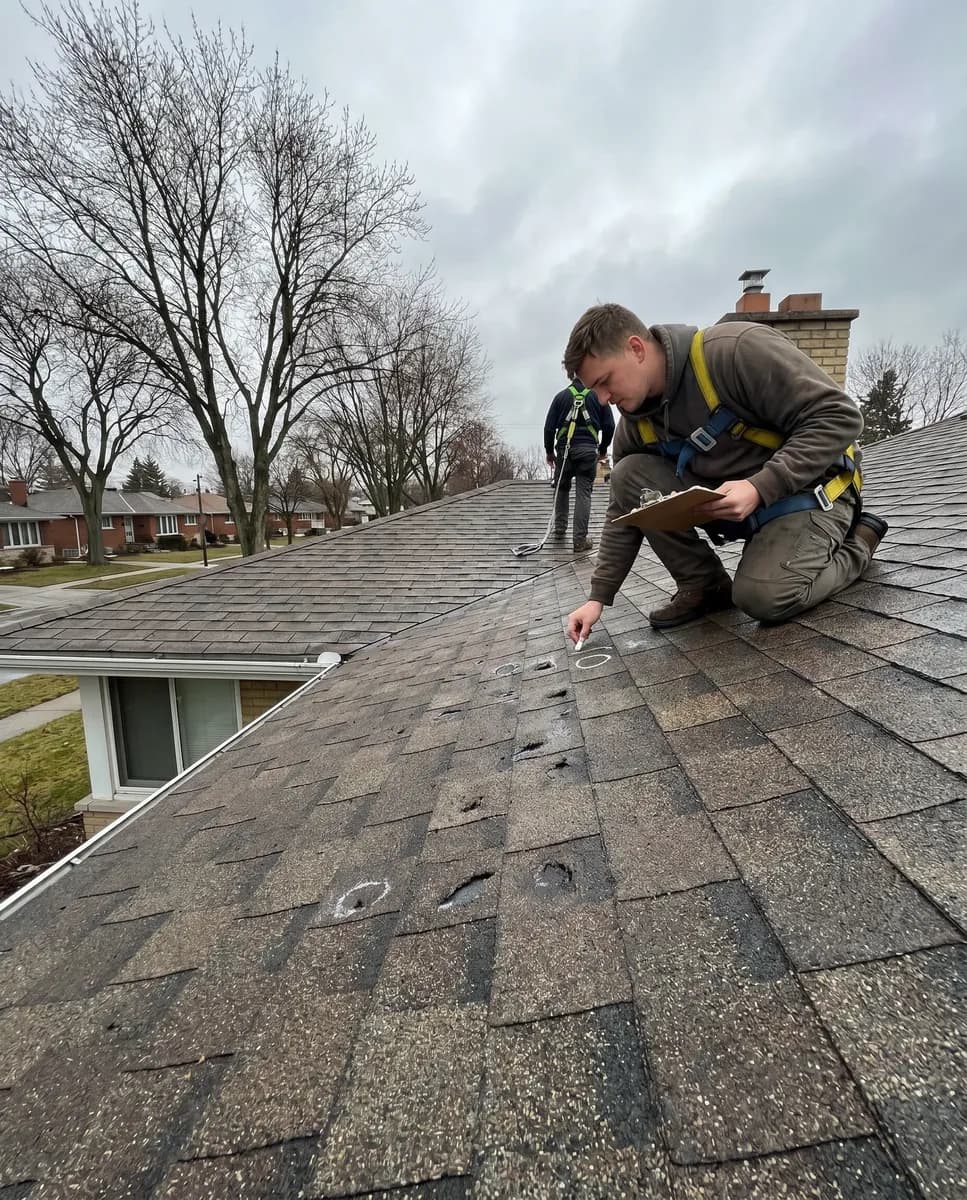
The tornado history in Brooklyn Center is not abstract. An F4 tornado struck the area on June 20, 1951, as part of a major outbreak — a storm that caused structural damage well beyond what the rooflines alone absorbed. Supercells in September 2005 again affected the area with damaging wind and hail. Wind gusts during severe thunderstorm warnings in this corridor regularly exceed 60 mph, which is enough to lift unsealed shingles on low-pitch roofs and stress ridge caps that have aged past their adhesive strip's effective life. Impact-resistant Class 4 shingles are worth specifying on any Brooklyn Center replacement — the protection they provide through subsequent storm seasons is real, and Minnesota homeowners insurance policies commonly offer a discount for that specification. We document every impact pattern before the adjuster arrives, walk the inspection with your insurer, and provide a line-item scope the claim handler can read without interpretation. Claims in this market move faster when the contractor and the adjuster are looking at the same roof at the same time.
Residential Services
Roofing services in Brooklyn Center
We offer the full residential menu from our Central Minnesota base — the same crew, the same standards, across all 43 Minnesota cities we serve.
Replacement in Brooklyn Center
Full residential roof replacement with architectural shingles, metal, or specialty…
Replacement in Brooklyn Center→Repair in Brooklyn Center
Targeted roof repairs for Minnesota homes and cabins — leak diagnosis, flashing re…
Repair in Brooklyn Center→Storm Damage in Brooklyn Center
Hail and wind damage assessment, insurance claim support, and full restoration for…
Storm Damage in Brooklyn Center→Get in Touch
Contact Silver Loon Roofing — Brooklyn Center
- Serving
- Brooklyn Center, MN (Hennepin County)
- Phone
- (970) 555-0199
- Hours
- Mon–Fri 7 am – 6 pm
Sat 8 am – 2 pm
Dispatched from our Central Minnesota home office along the Rum River
Nearby areas we serve from Brooklyn Center
- Brooklyn Park
- Robbinsdale
- Crystal
- New Hope
- Fridley
Need roofing work in a nearby town? Request a free estimate — we cover the surrounding area without a travel surcharge.
Common Questions
Frequently asked questions — Brooklyn Center
Ready for a straight-talk roof estimate in Brooklyn Center?
We inspect, document, and give you a written line-item estimate before any work starts. No pressure, no surprises.